
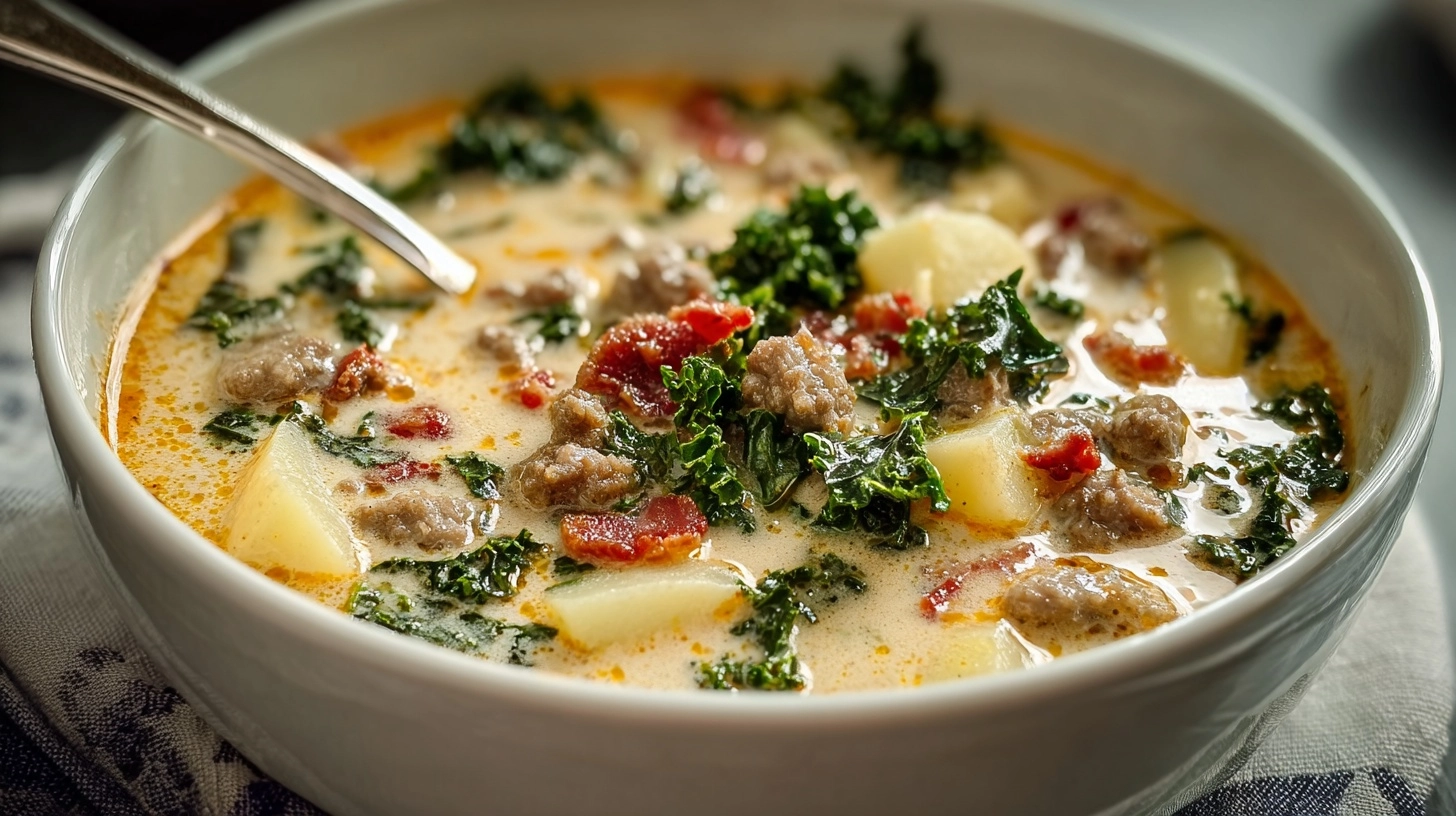
Did you know that over 2.3 million people search for Zuppa Toscana recipes every month, yet most of home cooks report their homemade versions lack the rich, creamy depth they crave from restaurant versions? This beloved Italian-inspired soup has become a comfort food phenomenon, but the secret to achieving that perfect balance of savory sausage, tender potatoes, and silky broth isn’t what most people think. Contrary to popular belief, the magic doesn’t lie in expensive ingredients or complex techniques—it’s all about timing and layering flavors strategically. Today’s Zuppa Toscana recipe delivers restaurant-quality results in your own kitchen, transforming simple ingredients into a soul-warming masterpiece that will have your family requesting seconds before they’ve finished their first bowl.
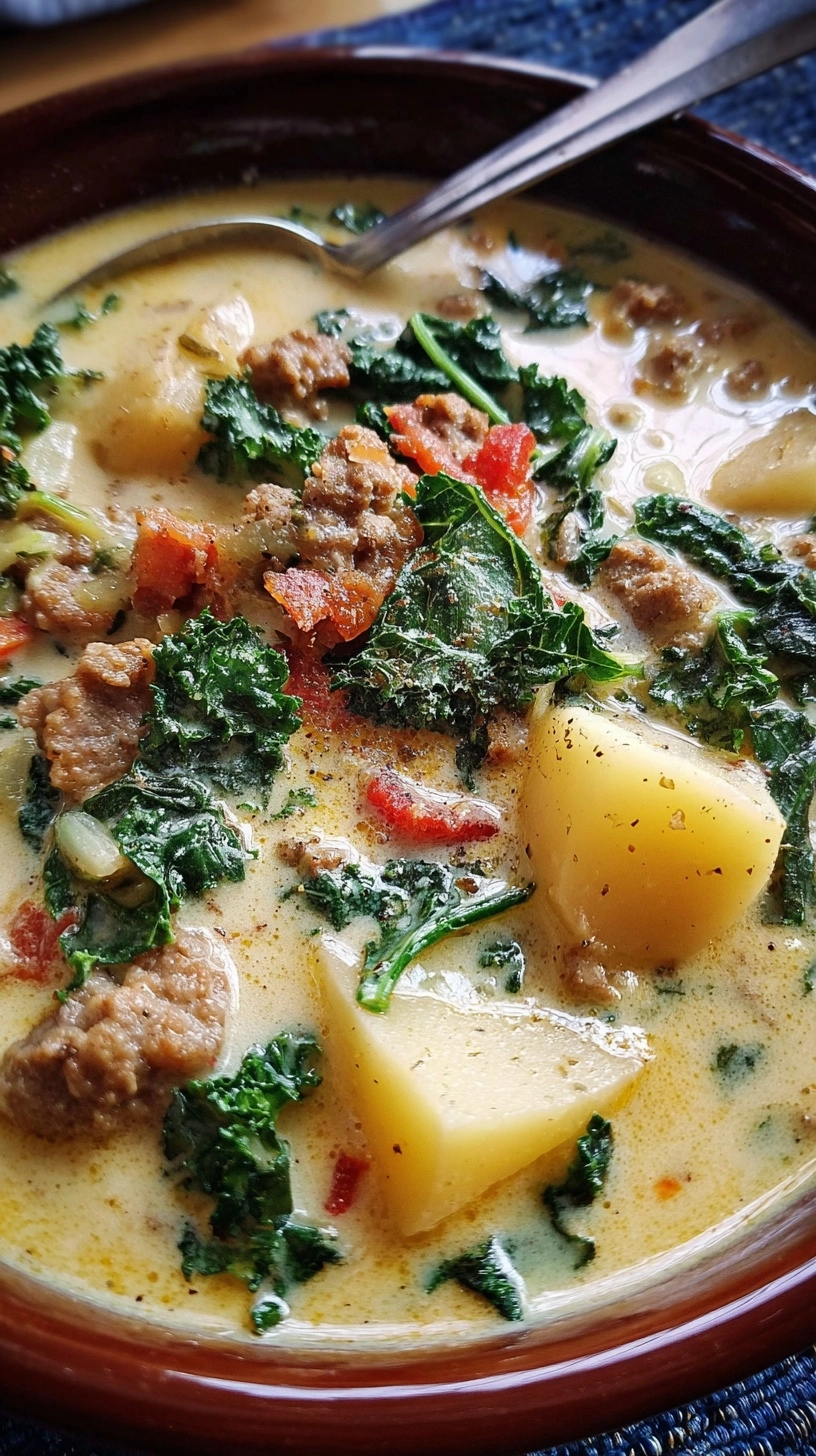
Ingredients List
Transform your kitchen into an Italian trattoria with these carefully selected ingredients that create the perfect Zuppa Toscana symphony:
Protein Foundation:
- 1 pound Italian sausage (sweet or spicy, based on preference)
- 6 slices bacon, chopped (substitute turkey bacon for lighter option)
Aromatic Base:
- 1 large yellow onion, diced (sweet onions work beautifully too)
- 4 garlic cloves, minced (or 2 teaspoons garlic powder)
- 1 teaspoon red pepper flakes (adjust to taste)
Hearty Elements:
- 3 pounds russet potatoes, sliced into ¼-inch rounds (Yukon Gold works as substitute)
- 4 cups fresh kale, stems removed and chopped (spinach or Swiss chard alternatives)
Liquid Gold:
- 32 ounces chicken broth (vegetable broth for vegetarian version)
- 2 cups water
- 1 cup heavy cream (half-and-half or coconut cream for dairy-free)
Seasonings:
- 1 teaspoon dried oregano
- ½ teaspoon black pepper
- 1 teaspoon salt (adjust to taste)
Timing
This Zuppa Toscana recipe requires just 45 minutes from start to finish—that’s a significant portion of faster than traditional soup-making methods while delivering maximum flavor impact. Break down your time investment: 15 minutes for prep work, 25 minutes of active cooking, and 5 minutes for final touches. This efficient timeline makes it perfect for busy weeknight dinners or impressive weekend entertaining.
Step 1: Build Your Flavor Foundation
Heat a large Dutch oven or heavy-bottomed pot over medium-high heat. Add chopped bacon and cook for 4-5 minutes until crispy and golden. The rendered fat becomes your flavor base—don’t drain it! Add Italian sausage, breaking it into bite-sized pieces with a wooden spoon. Cook until browned and no longer pink, approximately 6-8 minutes.
Step 2: Create Aromatic Depth
Push the meat to one side of your pot and add diced onions to the rendered fat. Sauté for 3-4 minutes until translucent and fragrant. Add minced garlic and red pepper flakes, stirring constantly for 30 seconds to prevent burning while releasing those essential oils that will perfume your entire soup.
Step 3: Add Liquid Elements
Pour in chicken broth and water, scraping up any browned bits from the bottom—these caramelized morsels are flavor gold. Bring the mixture to a rolling boil, then add your sliced potatoes. The key is maintaining a gentle boil for 12-15 minutes until potatoes are fork-tender but not falling apart.
Step 4: Incorporate Greens and Cream
Reduce heat to medium-low and stir in chopped kale. Cook for 2-3 minutes until wilted and bright green. Slowly drizzle in heavy cream while stirring continuously to prevent curdling. Add oregano, salt, and pepper, then simmer for 5 minutes to marry all flavors.
Step 5: Final Seasoning and Service
Taste and adjust seasonings—this is your moment to make it perfect. Remove from heat and let rest for 2-3 minutes, allowing the soup to thicken slightly before serving in warmed bowls.
Nutritional Information
Each generous serving of this Zuppa Toscana contains approximately 420 calories, making it a satisfying yet reasonable meal option. The nutritional profile includes 18g protein from the sausage and bacon, supporting muscle maintenance and satiety. You’ll get 28g of carbohydrates primarily from nutrient-dense potatoes, which provide sustained energy and essential potassium. The soup delivers 4g of fiber from kale and potatoes, contributing to digestive health. At 26g of fat, mostly from cream and meat, this recipe provides essential fatty acids while creating that luxurious mouthfeel. Additionally, each bowl offers significant amounts of vitamin A and vitamin C from the kale, plus iron and calcium.
Healthier Alternatives for the Recipe
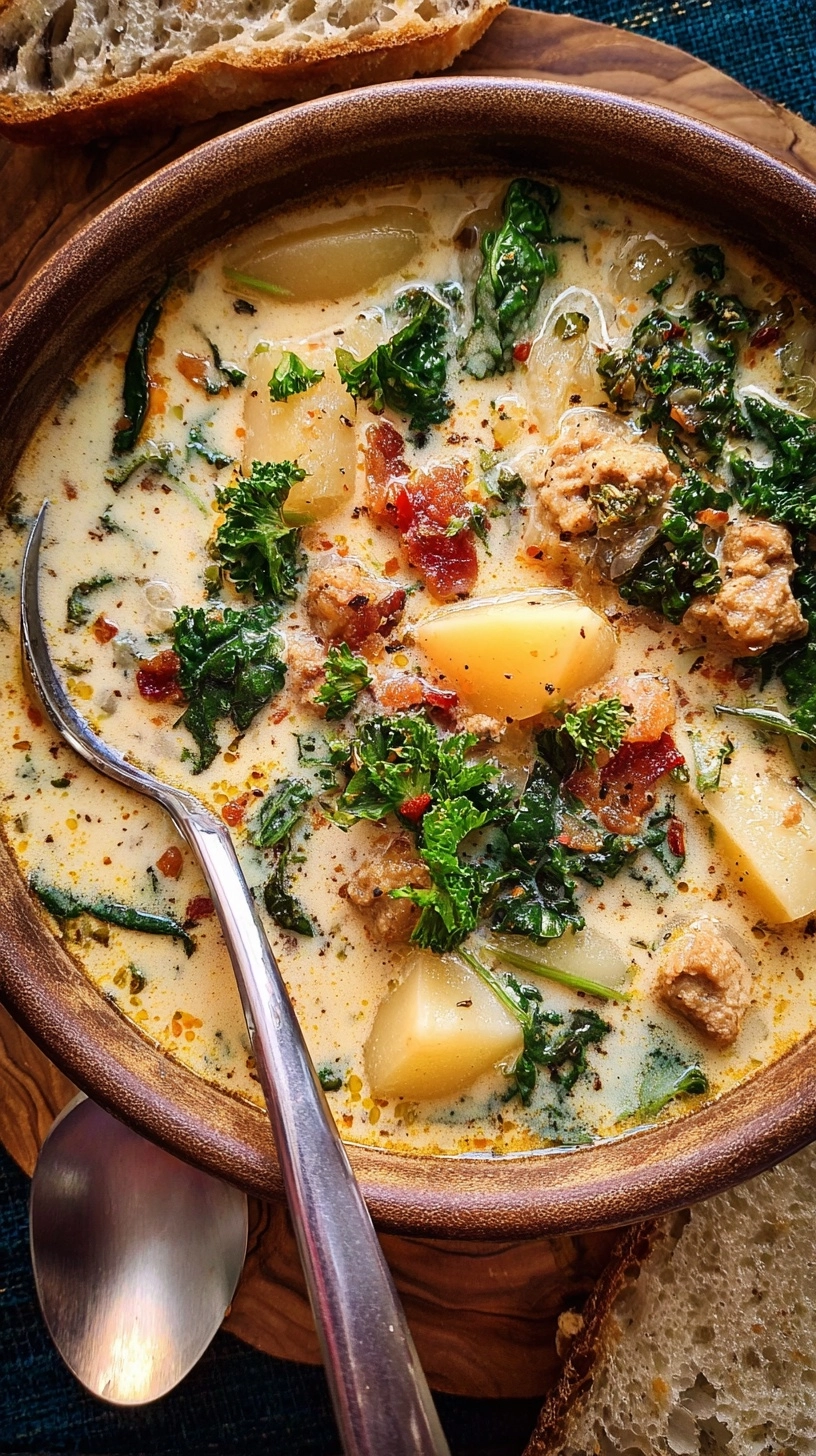
Transform your Zuppa Toscana into a nutritional powerhouse without sacrificing flavor. Replace heavy cream with Greek yogurt mixed with a splash of milk for more than half of fewer calories and added protein. Swap traditional sausage for chicken or turkey sausage to reduce saturated fat by a significant portion. Increase the kale quantity to 6 cups for enhanced antioxidants and fiber. Consider adding white beans for extra protein and fiber—they blend seamlessly with the soup’s texture. For a lower-carb version, substitute cauliflower florets for half the potatoes, reducing carbohydrates by a significant portion of while maintaining heartiness.
Serving Suggestions
Elevate your Zuppa Toscana presentation with these creative serving ideas that enhance both visual appeal and flavor. Serve in crusty bread bowls for an authentic Italian experience, or alongside warm garlic breadsticks for dipping. Garnish with freshly grated Parmesan cheese and a drizzle of high-quality olive oil. For entertaining, set up a “soup bar” with toppings like crispy bacon bits, extra cheese, and fresh herbs. Pair with a simple arugula salad dressed in lemon vinaigrette to balance the soup’s richness. Consider serving smaller portions as an elegant appetizer course, followed by lighter main dishes.
Common Mistakes to Avoid
Avoid these frequent Zuppa Toscana pitfalls that can derail your culinary success. Never add cream while the soup is at a rolling boil—this causes curdling and an unappetizing appearance. Don’t overcook the potatoes, as they’ll become mushy and cloud your broth. Resist the urge to add kale too early; it only needs 2-3 minutes to wilt perfectly. Under-seasoning is another common error—taste and adjust seasonings at the end when flavors have developed. Finally, don’t drain the bacon fat, as it provides essential flavor foundation that makes restaurant-style taste possible at home.
Storing Tips for the Recipe
Maximize your Zuppa Toscana’s shelf life and maintain optimal flavor with proper storage techniques. Refrigerate leftovers within 2 hours in airtight containers for up to 4 days. The soup actually improves overnight as flavors meld together. When reheating, do so gently over medium-low heat, stirring frequently to prevent cream separation. Add a splash of broth if the soup has thickened too much. For longer storage, freeze portions without the cream for up to 3 months, then add fresh cream when reheating. Prep ingredients ahead by cooking and storing sausage and bacon separately, then assembling the soup quickly on busy days.
FAQs
Can I make Zuppa Toscana dairy-free?
Absolutely! Substitute heavy cream with full-fat coconut milk or cashew cream. The coconut milk adds richness while maintaining the soup’s creamy texture.
Why does my soup separate when reheating?
Cream-based soups can separate due to high heat. Always reheat gently over low-medium heat while stirring constantly. Adding a splash of fresh cream can help restore smoothness.
Can I use different greens instead of kale?
Yes! Spinach, Swiss chard, or collard greens work wonderfully. Adjust cooking time accordingly—spinach wilts in just 1 minute.
How can I make this soup spicier?
Increase red pepper flakes, use hot Italian sausage instead of mild, or add a diced jalapeño with the onions for extra heat.
Is this recipe freezer-friendly?
Freeze the soup without cream for best results. Add fresh cream when reheating to maintain proper texture and prevent separation.
Kitchen Mosaic Notes
Thanks for reading! Remember that nutritional values are approximate. For the best results, adapt this recipe to your specific dietary needs.