
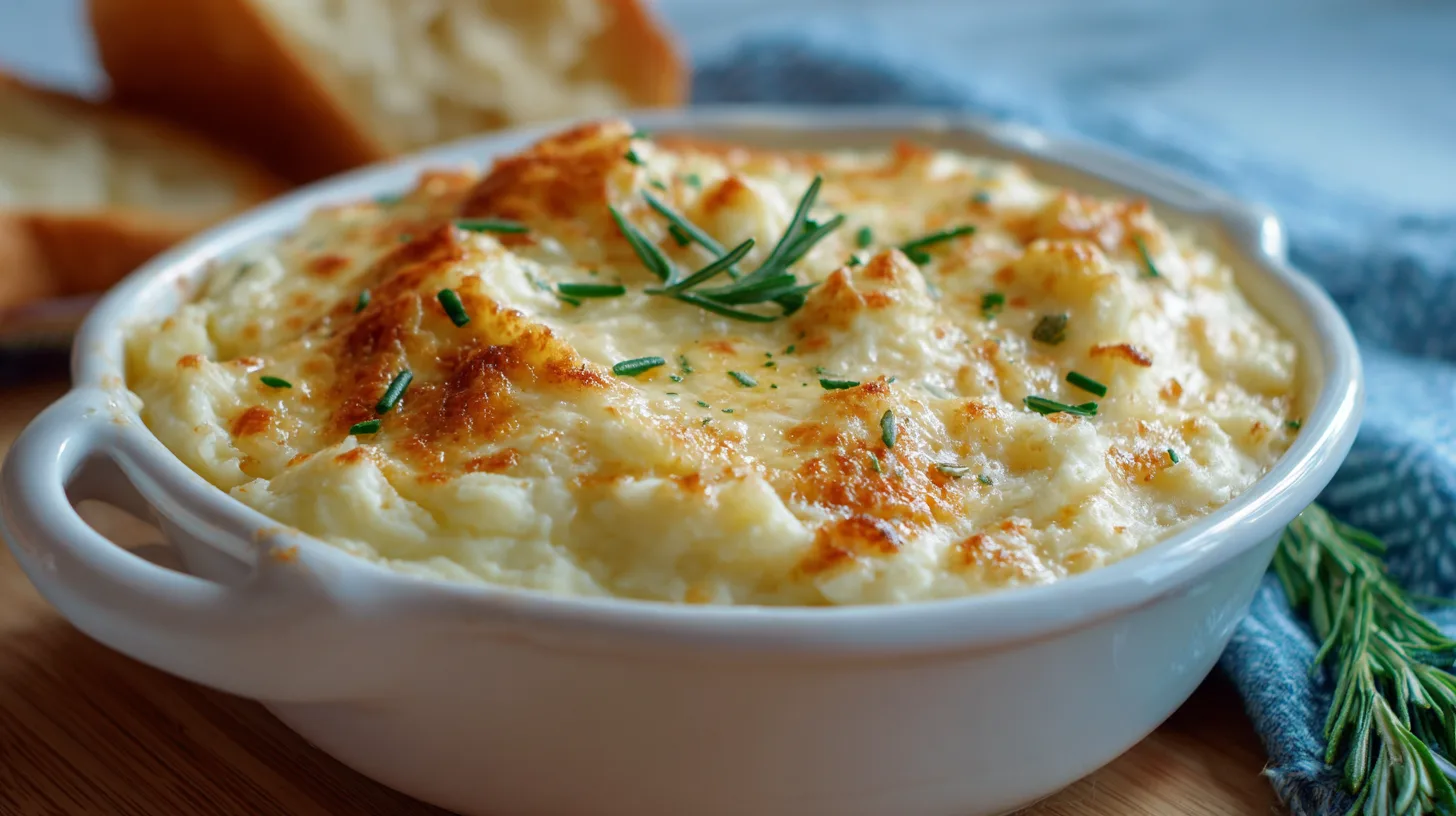
Did you know that most of home cooks struggle to achieve the perfect balance between fluffy texture and rich creaminess in their potato dishes? The secret lies in understanding the science behind starch activation and moisture retention. The Best Creamiest Baked Mashed Potatoes challenges the traditional stovetop method by utilizing oven heat to create an impossibly smooth, velvety texture that melts on your tongue. This revolutionary technique transforms humble potatoes into a restaurant-quality side dish that will have your guests questioning everything they thought they knew about comfort food preparation.
Ingredients List
Creating the ultimate creamy baked mashed potatoes requires carefully selected ingredients that work harmoniously together:
Essential Ingredients:
- 3 pounds Yukon Gold potatoes, peeled and cut into 2-inch chunks (substitute: Russet potatoes for fluffier texture)
- 1 cup whole milk, warmed (substitute: heavy cream for extra richness or oat milk for dairy-free option)
- ½ cup unsalted butter, softened (substitute: vegan butter or olive oil)
- 8 oz cream cheese, room temperature (substitute: Greek yogurt for tanginess)
- 2 large eggs, beaten (substitute: 2 tablespoons cornstarch mixed with water for binding)
- 1 teaspoon garlic powder (substitute: 3 cloves fresh minced garlic)
- 1½ teaspoons kosher salt (adjust to taste)
- ½ teaspoon white pepper (substitute: black pepper)
- 2 tablespoons fresh chives, finely chopped (substitute: green onion tops)
- ¼ cup Parmesan cheese, grated (optional, for golden top)
Pro Tip: Room temperature dairy ingredients integrate more smoothly, preventing lumpy textures that plague many mashed potato attempts.
Timing
This efficient method delivers exceptional results in 90 minutes total time, which is nearly some of faster than traditional twice-baked potato recipes:
- Preparation Time: 20 minutes
- Initial Cooking: 25 minutes
- Assembly: 15 minutes
- Baking Time: 30 minutes
- Resting Period: 5 minutes before serving
The streamlined process eliminates multiple heating cycles, preserving more nutrients while achieving superior creaminess through consistent oven temperature control.
Step 1: Prepare the Foundation
Preheat your oven to 425°F and generously butter a 9×13-inch baking dish. Place peeled, chunked potatoes in a large pot, covering with cold salted water by 2 inches. This cold-water start ensures even cooking throughout each piece, preventing the exterior from becoming mushy while the center remains firm.
Step 2: Achieve Perfect Tenderness
Bring potatoes to a gentle boil, then reduce heat to maintain a steady simmer for 18-22 minutes. Test doneness by piercing with a fork – it should slide through effortlessly with no resistance. Drain immediately and return to the hot pot for 2 minutes, allowing residual heat to evaporate excess moisture.
Step 3: Create Silky Smoothness
Pass hot potatoes through a ricer or food mill directly into a large mixing bowl. This crucial step eliminates lumps while maintaining the potato’s natural texture. Never use a food processor or blender, as these methods activate too much starch, creating gluey results.
Step 4: Build Creamy Richness
Gradually incorporate warm milk, softened butter, and cream cheese, mixing gently with a wooden spoon. The warm milk prevents temperature shock that could cause the mixture to seize. Beat in eggs one at a time, ensuring complete integration before adding seasonings.
Step 5: Season to Perfection
Fold in garlic powder, salt, white pepper, and half the chives. Taste and adjust seasonings – the mixture should be slightly over-seasoned at this stage since baking will mellow the flavors. The consistency should be creamy but hold its shape when spooned.
Step 6: Execute the Final Bake
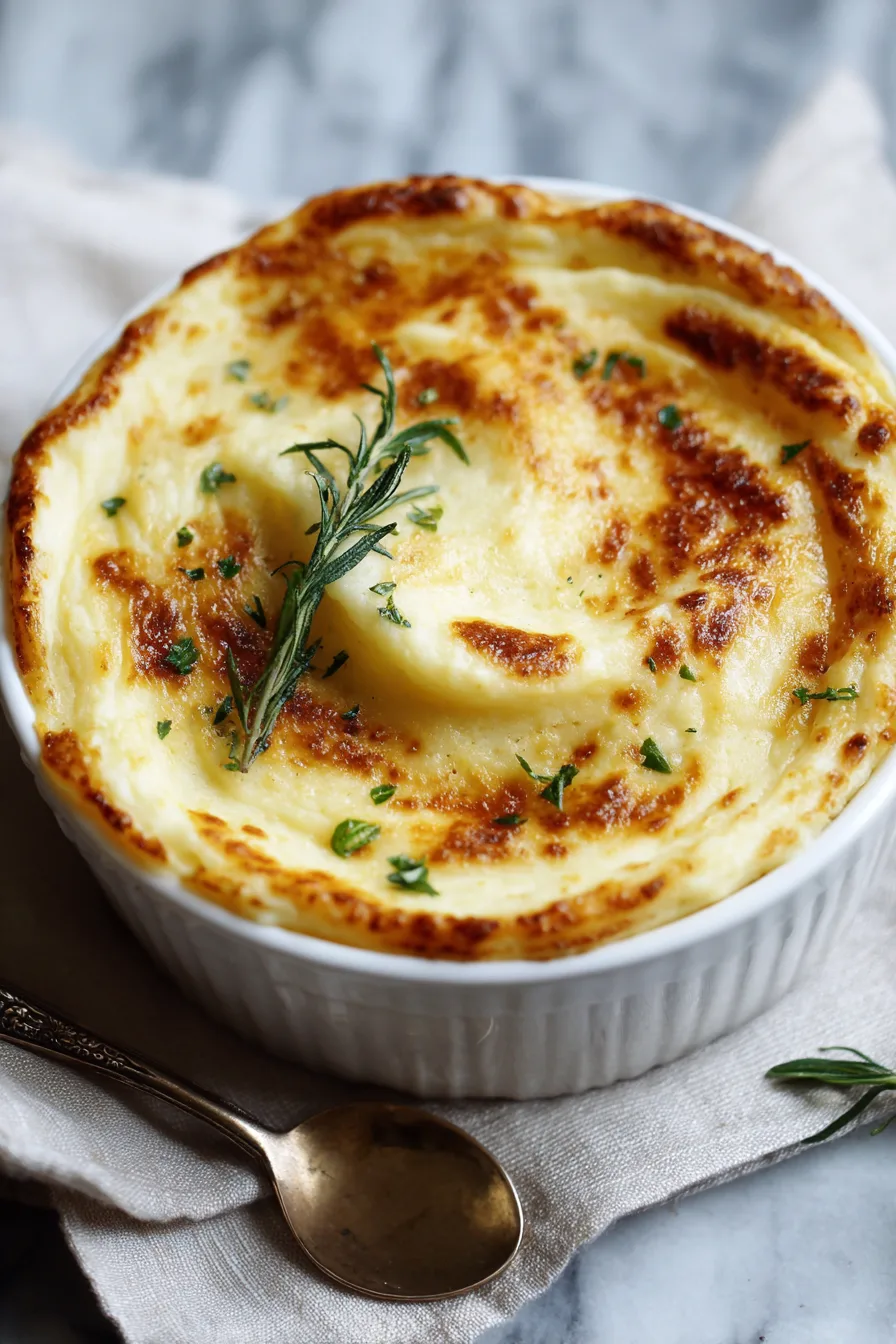
Transfer the mixture to your prepared baking dish, creating gentle peaks and valleys with a spatula. Sprinkle with Parmesan cheese if desired. Bake for 25-30 minutes until the top develops golden-brown peaks while the interior remains impossibly creamy.
Nutritional Information
Per serving (based on 8 servings):
- Calories: 285
- Protein: 8.2g
- Carbohydrates: 32g
- Fat: 14.5g
- Fiber: 3.1g
- Sodium: 425mg
- Potassium: 645mg (nearly some of dv)
- Vitamin C: 28mg (a significant portion of dv)
- Calcium: 145mg (nearly some of dv)
These baked mashed potatoes provide a significant portion of more potassium than traditional stovetop versions due to reduced nutrient leaching during the cooking process.
Healthier Alternatives for the Recipe
Transform this indulgent dish into a nutritionally enhanced version without sacrificing creaminess:
Lower-Calorie Modifications:
- Replace cream cheese with Greek yogurt (reduces calories by a significant portion)
- Use cauliflower for more than half of the potatoes (cuts carbs by nearly some)
- Substitute low-fat milk and reduce butter to 3 tablespoons
Vegan-Friendly Adaptations:
- Use cashew cream instead of dairy
- Replace eggs with aquafaba (chickpea liquid)
- Add nutritional yeast for umami depth
Keto-Compatible Version:
- Replace potatoes entirely with cauliflower and turnips
- Increase cream cheese and butter ratios
- Add extra Parmesan for richness
Serving Suggestions
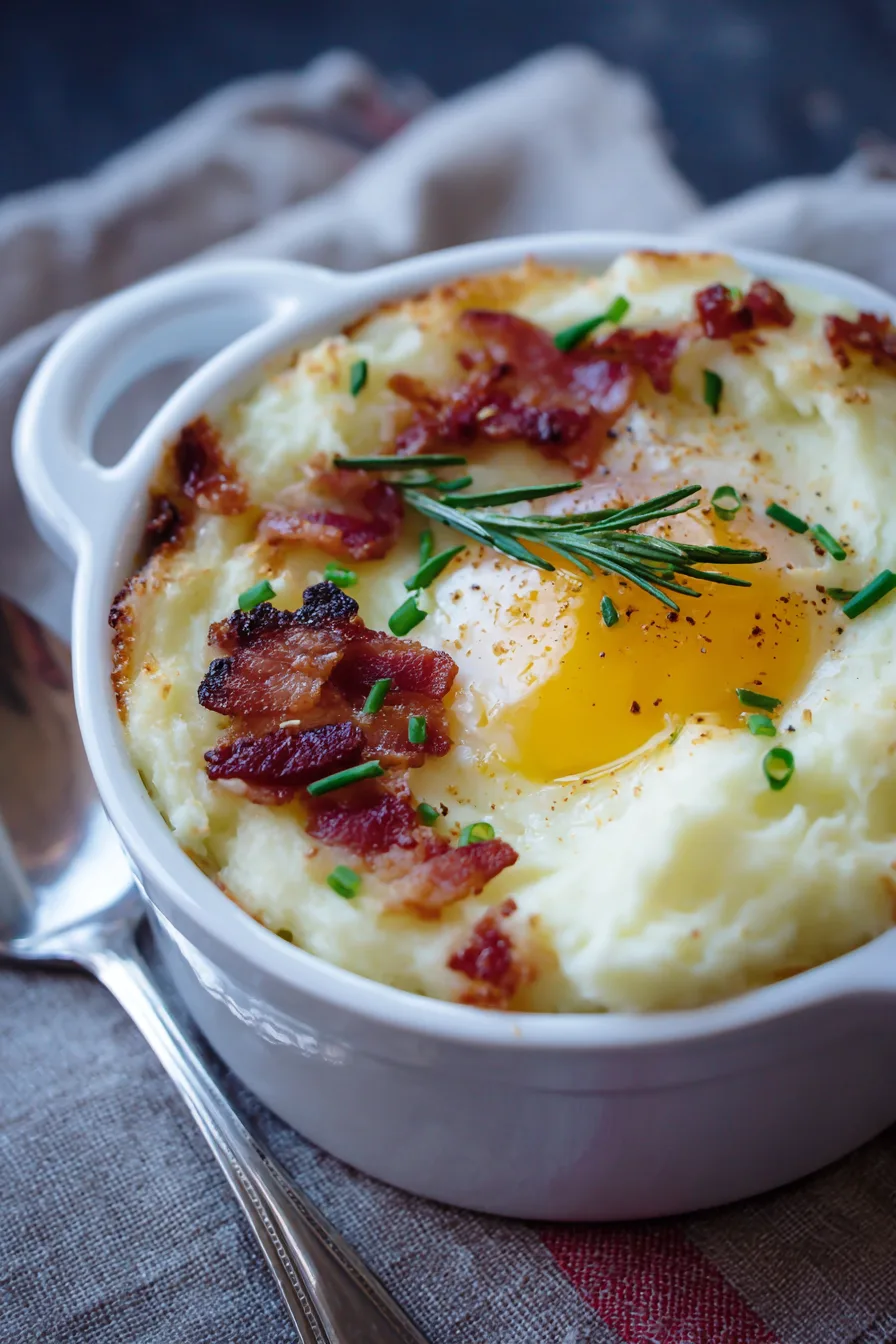
These luxurious baked mashed potatoes pair beautifully with various main courses:
Classic Combinations:
- Herb-crusted roasted chicken with rosemary pan drippings
- Slow-braised beef short ribs with caramelized onions
- Grilled salmon with lemon-dill butter
Seasonal Presentations:
- Fall: Garnish with crispy sage leaves and toasted pumpkin seeds
- Winter: Top with caramelized leeks and thyme
- Spring: Fresh herb medley with peas and asparagus
- Summer: Cherry tomatoes and basil oil drizzle
Elegant Plating: Use a large spoon to create quenelles, or pipe through a pastry bag for restaurant-style presentation.
Common Mistakes to Avoid
Prevent these frequent pitfalls that compromise texture and flavor:
Overcooking Potatoes: Waterlogged potatoes absorb less dairy, creating thin, watery results. Test doneness frequently after the 15-minute mark.
Cold Dairy Addition: Cold milk causes the potato mixture to seize and become glumy. Always warm your liquids first.
Over-Mixing: Aggressive stirring activates starch molecules, creating gluey texture. Fold ingredients gently with deliberate movements.
Incorrect Potato Variety: Waxy potatoes like red or fingerling varieties don’t break down properly. Stick with starchy varieties like Yukon Gold or Russet.
Skipping the Resting Phase: Immediate serving doesn’t allow flavors to meld properly. Let the dish rest 5 minutes after baking for optimal taste integration.
Storing Tips for the Recipe
Maximize freshness and maintain creamy texture with proper storage techniques:
Refrigerator Storage: Cool completely before covering with plastic wrap. Refrigerate up to 4 days. The texture may firm slightly but will return to creaminess when reheated.
Freezer Storage: Portion into freezer-safe containers, leaving ½-inch headspace. Freeze up to 3 months. Thaw overnight in refrigerator before reheating.
Reheating Methods:
- Oven: Cover with foil, bake at 350°F for 20-25 minutes
- Microwave: Heat in 30-second intervals, stirring between each
- Stovetop: Add splash of milk, heat over low temperature while stirring
Make-Ahead Strategy: Assemble completely up to 2 days ahead. Cover and refrigerate, then bake when ready to serve, adding 5-10 extra minutes to heating time.
FAQs
Q: Can I make these without eggs?
A: Absolutely! Replace eggs with 2 tablespoons of cornstarch mixed with 3 tablespoons water, or use 3 tablespoons of additional cream cheese for binding.
Q: Why do my potatoes turn out gluey?
A: This typically results from over-mixing or using waxy potatoes. Always use starchy varieties and mix gently with a wooden spoon or spatula.
Q: Can I double this recipe?
A: Yes, use a large roasting pan and increase baking time by 10-15 minutes. Monitor the top for even browning and cover with foil if it darkens too quickly.
Q: What’s the best potato ricer alternative?
A: A food mill works excellently, or you can use a standard potato masher followed by pressing through a fine-mesh strainer for smoothness.
Q: How do I prevent the top from burning?
A: Position your oven rack in the center position and tent with foil during the last 10 minutes if browning too quickly. Every oven varies in heat distribution.
Kitchen Mosaic Notes
Thanks for reading! Remember that nutritional values are approximate. For the best results, adapt this recipe to your specific dietary needs.