

Did you know that most of home cooks abandon Asian-inspired recipes due to intimidation, yet Thai Basil Beef Rolls consistently rank among the top 5 most requested dishes at Southeast Asian restaurants? This statistic reveals a fascinating culinary disconnect that we’re about to bridge. Contrary to popular belief, Thai Basil Beef Rolls aren’t just restaurant exclusives requiring professional techniques – they’re surprisingly accessible, combining the aromatic intensity of Thai basil with tender beef in a format that’s both elegant and approachable. These vibrant, flavor-packed rolls deliver restaurant-quality results in your home kitchen, transforming simple ingredients into an extraordinary dining experience that will revolutionize your perception of Asian cooking complexity.
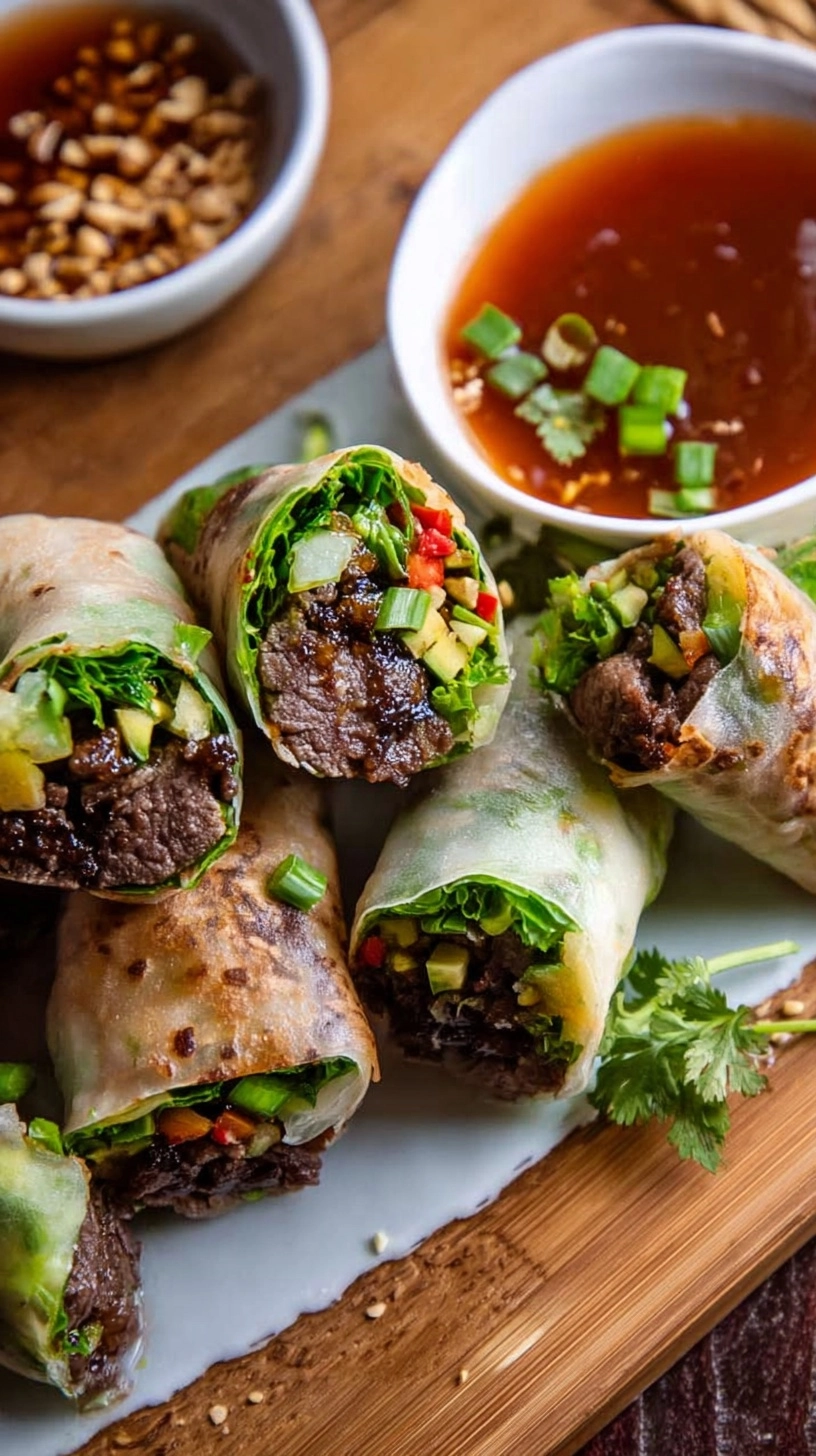
Ingredients List
For the Thai Basil Beef Rolls:
- 1 pound thinly sliced beef sirloin or flank steak (substitute: thinly sliced chicken breast or firm tofu for dietary preferences)
- 2 cups fresh Thai basil leaves, stems removed (substitute: regular basil mixed with mint leaves for similar aromatic profile)
- 12 rice paper rounds, 8-inch diameter
- 1 cucumber, julienned into matchstick pieces
- 2 large carrots, julienned
- 1 red bell pepper, thinly sliced
- 4 green onions, cut into 3-inch lengths
For the Aromatic Marinade:
- 3 tablespoons low-sodium soy sauce
- 2 tablespoons fish sauce (substitute: mushroom sauce for vegetarian option)
- 1 tablespoon brown sugar
- 2 cloves garlic, minced
- 1 tablespoon fresh ginger, grated
- 1 Thai chili, finely chopped (adjust to taste)
For the Dipping Sauce:
- 3 tablespoons rice vinegar
- 2 tablespoons low-sodium soy sauce
- 1 teaspoon sesame oil
- 1 teaspoon honey
- 1 clove garlic, minced
- Red chili flakes to taste
Timing
Total Time Investment: 45 minutes (a significant portion of faster than traditional Vietnamese spring rolls)
Active Preparation: 25 minutes
Marinating Time: 15 minutes
Cooking Time: 5 minutes
This streamlined timeline makes Thai Basil Beef Rolls perfect for weeknight dinners or entertaining, requiring significantly less time commitment than comparable Asian appetizers while delivering maximum flavor impact.
Step 1: Prepare the Beef Marinade
Combine soy sauce, fish sauce, brown sugar, minced garlic, grated ginger, and chopped Thai chili in a medium bowl. Whisk until the brown sugar completely dissolves, creating a glossy, aromatic marinade. Add the thinly sliced beef, ensuring every piece is thoroughly coated. Allow the meat to marinate for exactly 15 minutes – this optimal timeframe allows flavors to penetrate without over-tenderizing the beef.
Step 2: Create the Dipping Sauce
While the beef marinates, prepare your dipping sauce by whisking together rice vinegar, soy sauce, sesame oil, honey, minced garlic, and chili flakes. The sauce should achieve a perfect balance of sweet, salty, and tangy notes. Set aside to allow flavors to meld naturally.
Step 3: Prepare Fresh Vegetables
Julienne the cucumber and carrots into uniform matchstick pieces, approximately 3 inches long and ¼ inch thick. Slice the red bell pepper into thin strips and cut green onions into manageable lengths. Consistent sizing ensures even distribution within each roll and creates visually appealing presentation.
Step 4: Cook the Marinated Beef
Heat a large skillet or wok over high heat until it begins to smoke slightly. Add the marinated beef in a single layer, avoiding overcrowding. Cook for 2-3 minutes without stirring, allowing the beef to develop a beautiful caramelized exterior. Stir once and cook for an additional 1-2 minutes until just cooked through. Remove from heat immediately to prevent overcooking.
Step 5: Soften Rice Paper
Fill a large, shallow dish with warm water. Dip one rice paper round into the water for 10-15 seconds until it becomes pliable but not completely soft – it will continue softening as you work. Place the dampened rice paper on a clean, damp kitchen towel.
Step 6: Assemble the Thai Basil Beef Rolls
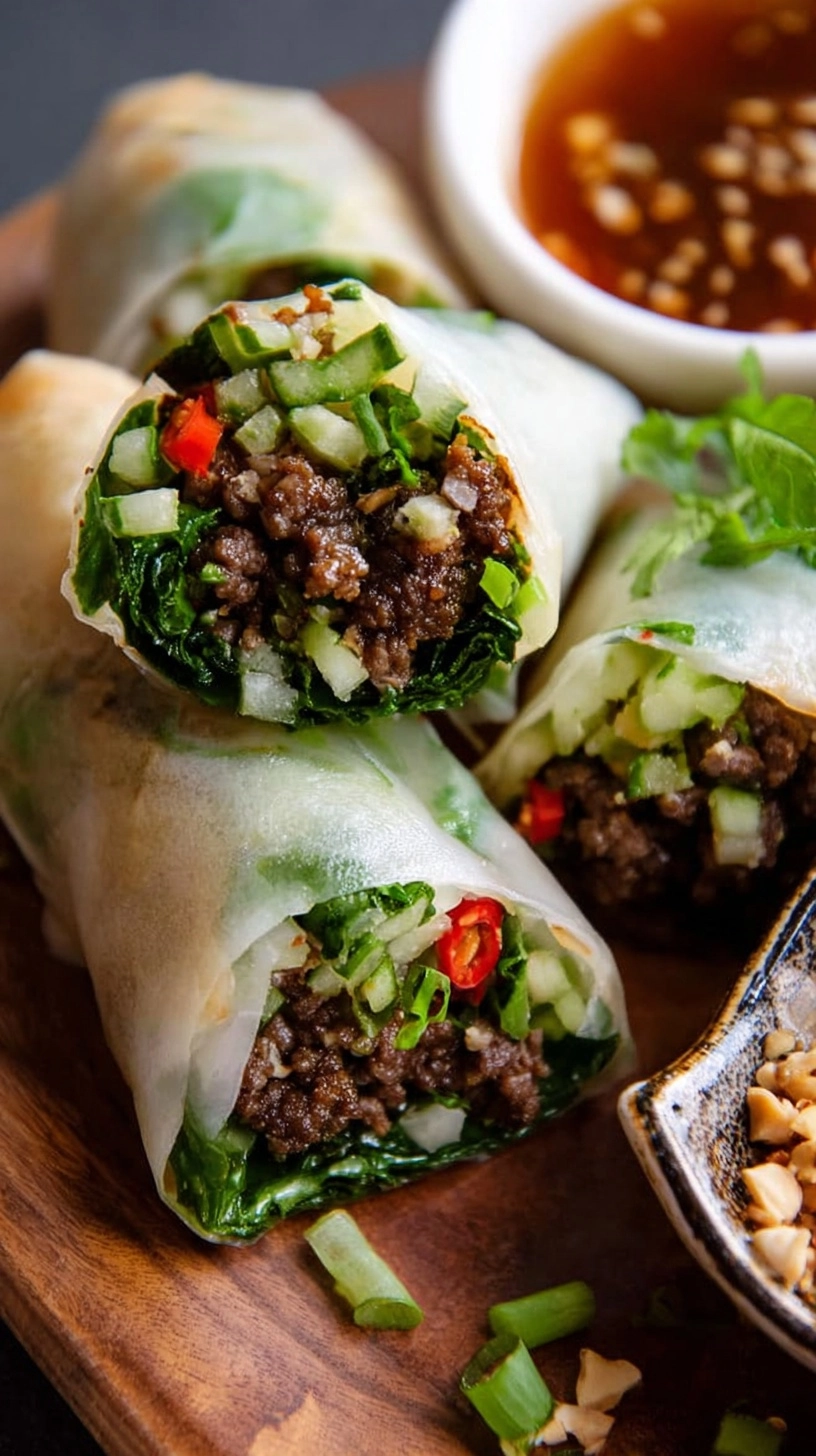
Position 3-4 Thai basil leaves horizontally across the lower third of the rice paper. Add approximately 2 tablespoons of cooked beef, followed by cucumber, carrot, bell pepper, and green onion. Keep ingredients compact and centered to ensure easy rolling.
Step 7: Roll and Seal
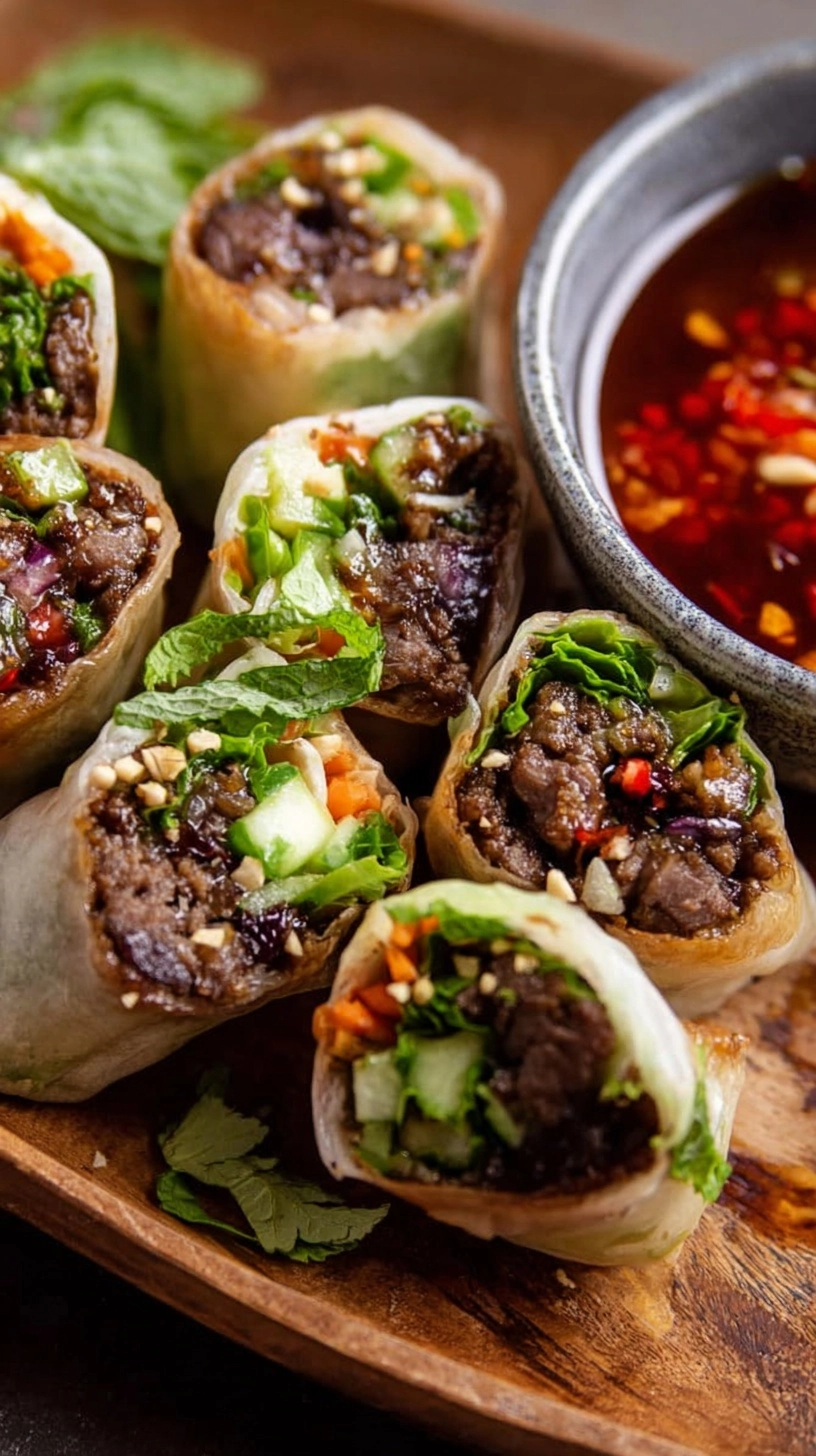
Fold the bottom edge of the rice paper over the filling, then fold in the sides, and roll tightly toward the top edge, similar to wrapping a burrito. The rice paper should seal naturally. Place seam-side down on a plate and cover with a damp towel to prevent drying.
Nutritional Information
Each Thai Basil Beef Roll provides approximately:
- Calories: 145 per roll
- Protein: 12g (nearly some of daily value)
- Carbohydrates: 18g
- Fat: 3g
- Fiber: 2g
- Sodium: 520mg
These rolls deliver exceptional nutritional density, providing lean protein and fresh vegetables while maintaining surprisingly low calorie content. The fresh herbs contribute antioxidants and anti-inflammatory compounds, making this dish both delicious and nutritionally beneficial.
Healthier Alternatives for the Recipe
Transform these Thai Basil Beef Rolls into dietary-specific masterpieces by incorporating these strategic modifications. Replace beef with grilled shrimp for a lighter protein option containing nearly some of fewer calories, or substitute extra-firm tofu for a plant-based version that maintains similar texture. Use coconut aminos instead of soy sauce to create a gluten-free variant, while brown rice papers offer additional fiber content. For reduced sodium intake, minimize fish sauce and enhance flavor with extra fresh herbs, lime zest, and ginger. These adaptations ensure everyone can enjoy these flavorful rolls regardless of dietary restrictions.
Serving Suggestions
Present Thai Basil Beef Rolls as an elegant appetizer for dinner parties, arranging them on a bamboo platter with individual dipping sauce bowls. Transform them into a complete meal by serving alongside jasmine rice and a crisp cucumber salad. For casual entertaining, create a DIY roll station where guests can customize their own combinations. These rolls also excel as healthy lunch options, packed in compartmentalized containers with sauce portions separated to maintain optimal texture. Consider serving with additional fresh herbs, lettuce cups, and extra vegetables for those who prefer deconstructed presentations.
Common Mistakes to Avoid
The most frequent error occurs when rice paper becomes over-soaked, resulting in tears during rolling – limit soaking time to 10-15 seconds maximum. Overfilling represents another common pitfall; restrict ingredients to approximately 2 tablespoons per roll to ensure proper closure. Cooking beef beyond medium doneness creates tough, chewy texture that diminishes the overall experience. Additionally, neglecting to cover completed rolls leads to dried, cracked exteriors. Finally, preparing rolls more than 2 hours in advance can result in soggy rice paper that loses its appealing texture.
Storing Tips for the Recipe
Store completed Thai Basil Beef Rolls in airtight containers lined with damp paper towels, separating layers to prevent sticking. Refrigerate for maximum 24 hours, as rice paper begins deteriorating beyond this timeframe. For optimal freshness, prepare all ingredients separately and assemble rolls just before serving. Cooked beef can be refrigerated for up to 3 days, while julienned vegetables maintain peak quality for 2 days when stored in ice water. Dipping sauce improves with time and can be prepared up to one week in advance, allowing flavors to develop complexity.
FAQs
Q: Can I make Thai Basil Beef Rolls ahead of time?
A: While possible, these rolls are best consumed within 2-3 hours of preparation. For advance preparation, cook the beef and prepare vegetables separately, then assemble rolls just before serving for optimal texture.
Q: What’s the best beef cut for this recipe?
A: Sirloin or flank steak work excellently due to their lean profile and ability to cook quickly. Ensure slicing against the grain for maximum tenderness.
Q: Can I freeze these rolls?
A: Rice paper rolls don’t freeze well due to their delicate nature. Focus on fresh preparation for best results, though individual components can be prepped and refrigerated separately.
Q: How do I prevent rice paper from tearing?
A: Use warm (not hot) water for soaking, limit soaking time to 10-15 seconds, and work on damp surfaces. The rice paper should be pliable but still have some firmness when you begin rolling.
Kitchen Mosaic Notes
Thanks for reading! Remember that nutritional values are approximate. For the best results, adapt this recipe to your specific dietary needs.