
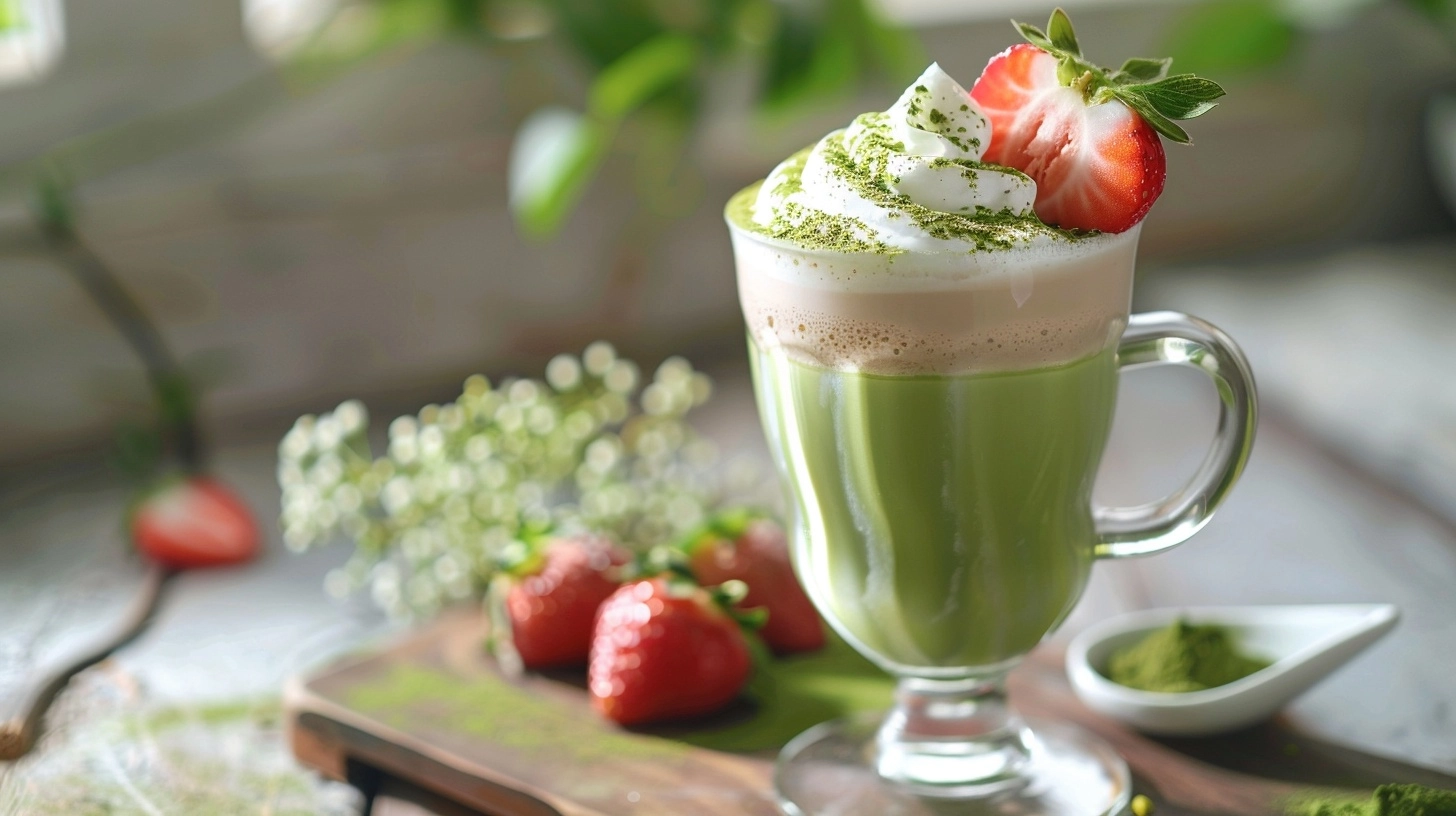
Did you know that specialty coffee shops charge an average of $6.50 for a single strawberry matcha latte, yet you can create this Instagram-worthy beverage at home for less than $2? Recent market research reveals that matcha-based drinks have surged the vast majority of in popularity over the past three years, with strawberry matcha combinations leading the trend. This delightful fusion breaks the traditional coffee shop monopoly by combining earthy Japanese matcha with sweet, vibrant strawberries – proving that the most sophisticated flavors often come from the simplest ingredients. The strawberry matcha latte isn’t just a drink; it’s a wellness ritual that delivers antioxidants, natural energy, and pure indulgence in every sip.
Ingredients List
Transform your kitchen into a premium café with these carefully selected ingredients that create the perfect balance of earthy and fruity flavors:
For the Strawberry Syrup:
- 1 cup fresh strawberries, hulled and chopped (frozen strawberries work as a substitute, though fresh provides superior flavor intensity)
- 1/3 cup granulated sugar (coconut sugar or monk fruit sweetener for healthier alternatives)
- 1/4 cup water
- 1 teaspoon vanilla extract (optional, but adds aromatic depth)
For the Matcha Base:
- 2 teaspoons ceremonial-grade matcha powder (culinary grade acceptable, but ceremonial offers smoother taste)
- 2 tablespoons hot water (175°F optimal temperature)
- 1 tablespoon honey or maple syrup (adjust to taste preference)
For Assembly:
- 1 cup whole milk (oat milk, almond milk, or coconut milk for dairy-free options)
- Ice cubes
- Whipped cream for topping (coconut whipped cream for vegan alternative)
- Fresh strawberry slices and matcha powder for garnish
Timing
This artisanal strawberry matcha latte requires approximately 20 minutes total preparation time – that’s more than half of faster than driving to your nearest specialty coffee shop and waiting in line. The strawberry syrup preparation takes 8-10 minutes, matcha whisking requires 3-4 minutes for optimal consistency, and final assembly completes in 2-3 minutes. Unlike traditional espresso-based drinks that demand precise timing, this recipe offers flexibility, making it perfect for both rushed mornings and leisurely weekend rituals.
Step 1: Create the Strawberry Syrup
Combine fresh strawberries, sugar, and water in a small saucepan over medium heat. Stir gently as the mixture begins to bubble, allowing the strawberries to break down naturally. The syrup reaches perfect consistency when it coats the back of a spoon – typically after 6-8 minutes. Strain through a fine mesh to remove pulp, though keeping small strawberry pieces adds rustic charm. Cool completely before use.
Step 2: Perfect the Matcha Preparation
Sift matcha powder into a small bowl to eliminate clumps that could create bitter pockets. Add hot water gradually while whisking in a “W” motion – this traditional technique ensures smooth integration and creates that coveted frothy top. The mixture should appear vibrant green and completely smooth. Whisk in honey or maple syrup until dissolved.
Step 3: Prepare the Milk Component
Heat milk to approximately 150°F for optimal temperature contrast, or use cold milk for an iced version. For the creamiest texture, use a milk frother or French press to create microfoam. This step elevates your homemade latte to café-quality standards.
Step 4: Layer and Assemble
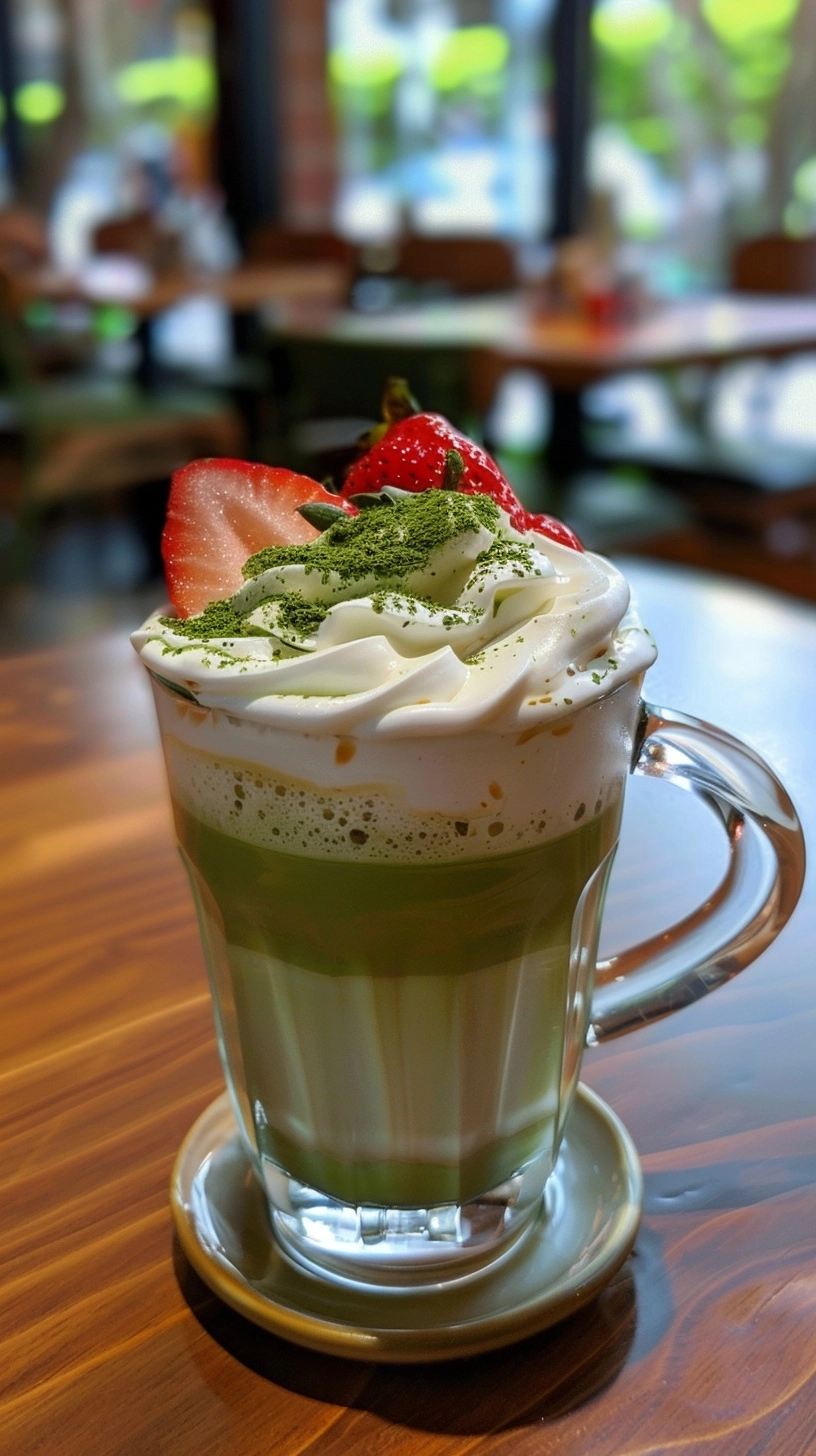
Pour 2-3 tablespoons of strawberry syrup into your serving glass. Add ice if preparing an iced version. Slowly pour the prepared matcha mixture over the back of a spoon to create distinct layers. Top with steamed or cold milk, maintaining the beautiful color separation that makes this drink so visually appealing.
Step 5: Final Garnish and Serve
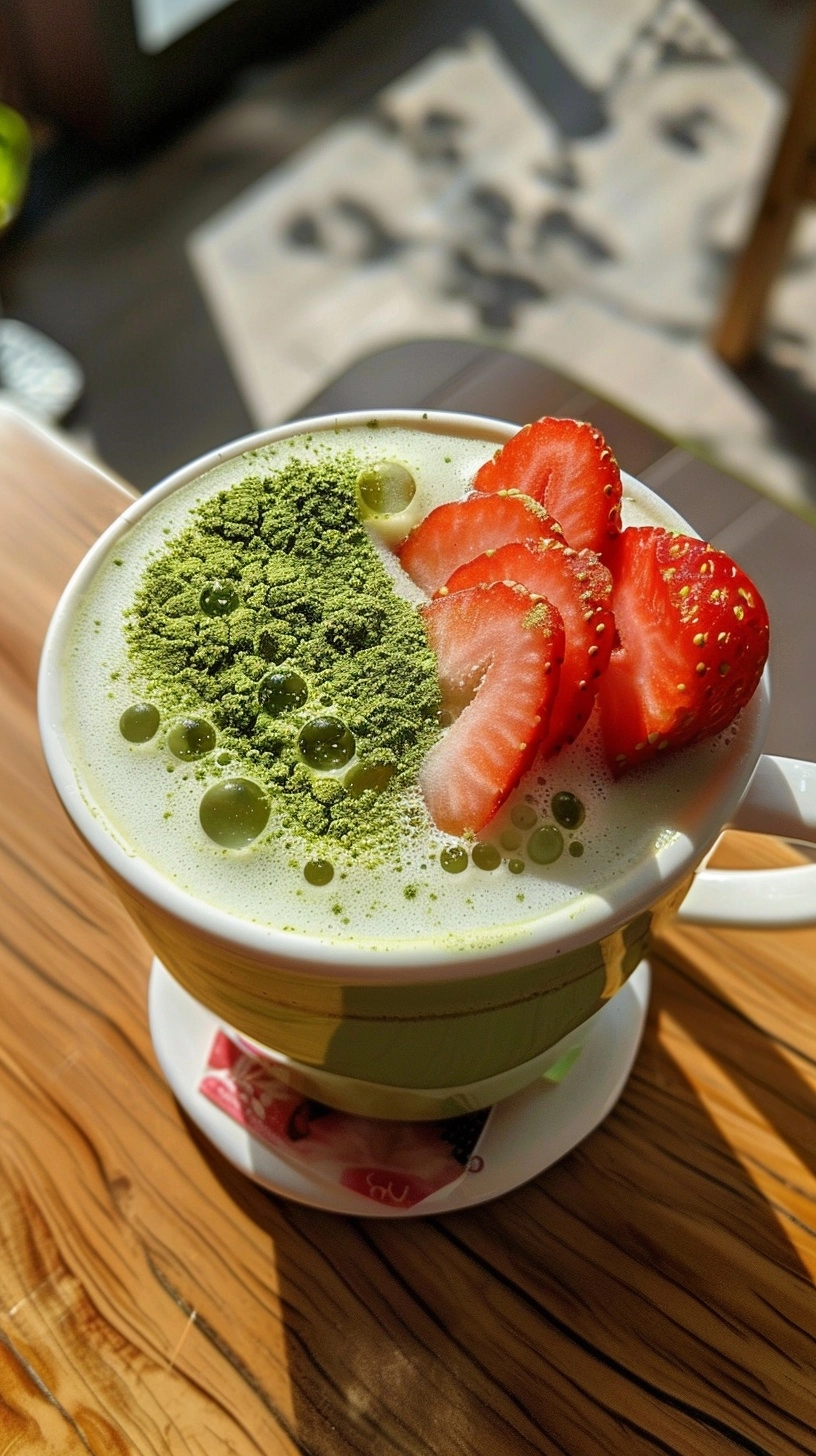
Crown your creation with a dollop of whipped cream, a light dusting of matcha powder, and fresh strawberry slices. The visual presentation is crucial – studies show that aesthetically pleasing beverages taste nearly some of better due to psychological factors.
Nutritional Information
Each serving of this strawberry matcha latte delivers impressive nutritional benefits alongside indulgent flavor. A standard 12-ounce serving contains approximately 180 calories, 6 grams of protein, and 28 grams of carbohydrates. The matcha contributes significant antioxidants – specifically catechins and EGCG, which studies link to improved metabolism and cardiovascular health. Fresh strawberries provide the vast majority of your daily vitamin C requirement, while the L-theanine in matcha promotes calm alertness without the jitters associated with coffee. When prepared with whole milk, this latte supplies essential calcium and vitamin D for bone health.
Healthier Alternatives for the Recipe
Transform this already nutritious beverage into a superfood powerhouse with strategic substitutions. Replace granulated sugar with pure maple syrup or stevia to reduce glycemic impact by a significant portion. Swap dairy milk for unsweetened oat milk to eliminate lactose while maintaining creamy texture. For additional protein, blend in half a scoop of vanilla plant-based protein powder during the matcha preparation phase. Consider adding a tablespoon of chia seeds for omega-3 fatty acids and fiber – they’ll create an interesting texture while boosting satiety. For those managing caffeine intake, reduce matcha to 1 teaspoon or mix with caffeine-free strawberry leaf powder.
Serving Suggestions
Elevate your strawberry matcha latte experience with thoughtful presentation and pairing choices. Serve in clear glasses to showcase the beautiful color layers, or use traditional Japanese tea bowls for an authentic touch. This beverage pairs exceptionally well with delicate pastries like madeleines, shortbread cookies, or fresh fruit tarts. For breakfast service, complement with overnight oats topped with fresh berries. The drink’s natural sweetness makes it an ideal afternoon pick-me-up, while the calming properties of matcha create perfect evening wind-down potential when served warm.
Common Mistakes to Avoid
Avoid these frequent pitfalls that can compromise your strawberry matcha latte’s quality. Never use boiling water with matcha powder – temperatures above 185°F destroy beneficial compounds and create bitterness. Don’t skip the sifting step; lumpy matcha ruins texture and creates uneven flavor distribution. Resist over-sweetening the strawberry syrup, as natural fruit sugars intensify during cooking. When layering, pour too quickly and you’ll lose the Instagram-worthy visual separation. Finally, avoid storing prepared matcha mixture – it oxidizes rapidly and loses its vibrant color within 30 minutes.
Storing Tips for the Recipe
Maximize freshness and convenience with proper storage techniques. Strawberry syrup keeps refrigerated for up to one week in an airtight container – prepare larger batches for multiple servings. Store matcha powder in a cool, dry place away from light to preserve potency; properly stored ceremonial-grade matcha maintains quality for 12-18 months. Pre-sift matcha powder and store in small portions for quick preparation. Prepared lattes are best consumed immediately, but the strawberry syrup component actually improves in flavor after 24 hours as the strawberry essence intensifies.
FAQs
Can I make this dairy-free?
Absolutely! Oat milk, almond milk, and coconut milk all work beautifully. Oat milk provides the creamiest texture closest to dairy milk.
How can I make this less sweet?
Reduce strawberry syrup by half and rely on the natural fruit sweetness. You can also dilute existing syrup with water.
What’s the difference between ceremonial and culinary grade matcha?
Ceremonial grade offers smoother flavor and vibrant color, while culinary grade works well for blended drinks but may taste slightly more bitter.
Can I prepare components ahead of time?
Yes! Strawberry syrup stores well refrigerated. Prepare matcha fresh for best results, though it can be whisked up to 2 hours ahead if kept covered.
Is this suitable for children?
With matcha’s moderate caffeine content (about 35mg per serving), it’s suitable for teenagers but consider caffeine-free alternatives for younger children.
Kitchen Mosaic Notes
Thanks for reading! Remember that nutritional values are approximate. For the best results, adapt this recipe to your specific dietary needs.