
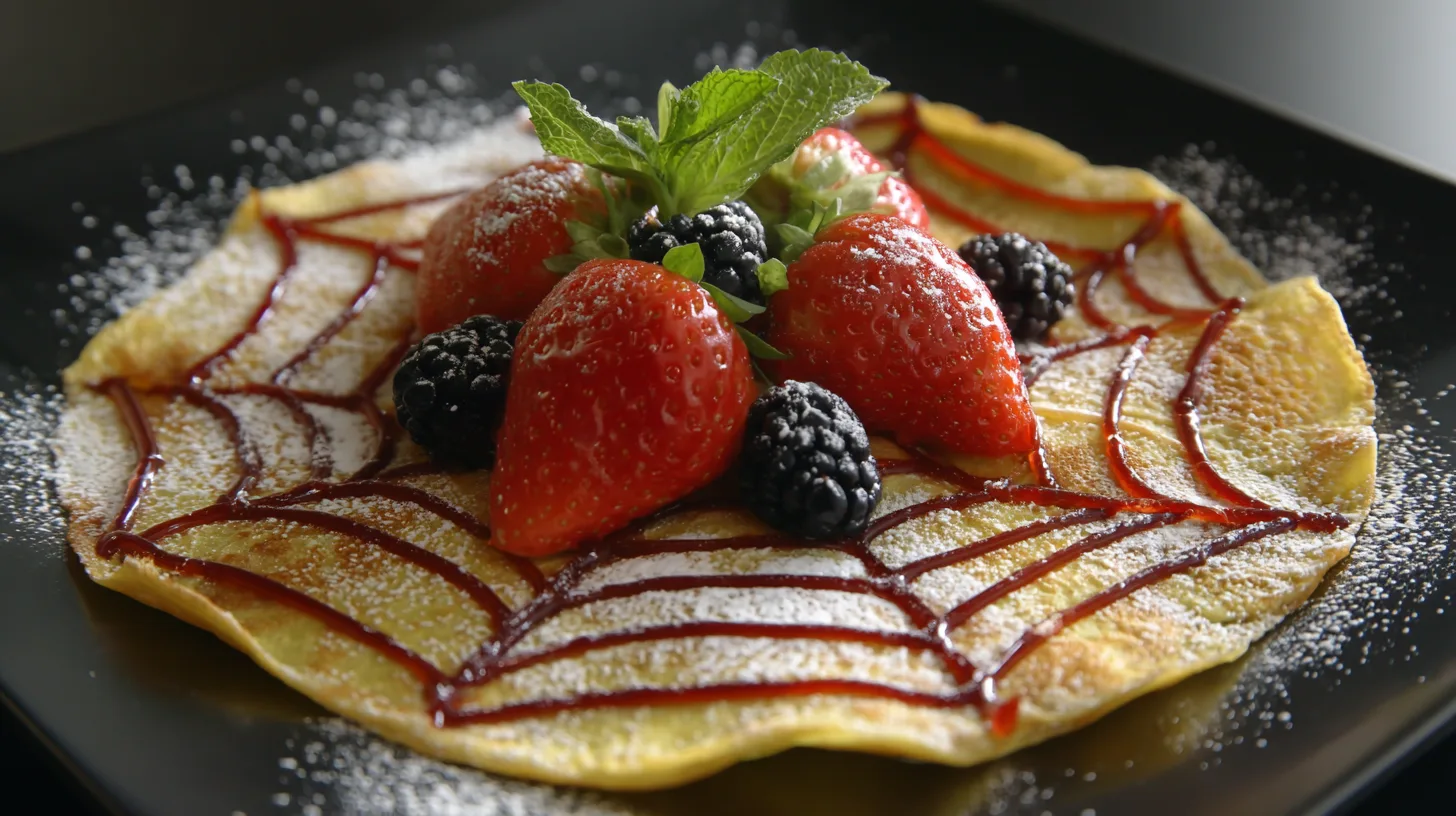
Did you know that most of home cooks struggle with achieving the perfect delicate, lace-like texture in their crepes? This challenge becomes even more intriguing when you’re creating spiderweb crepes – those mesmerizing, gossamer-thin pancakes that resemble nature’s most intricate artwork. Contrary to popular belief, achieving those beautiful web-like patterns isn’t about luck or years of practice; it’s actually about understanding the science behind batter consistency and temperature control. These spiderweb crepes transform an ordinary breakfast into an extraordinary culinary experience, combining visual drama with delicate flavors that will captivate both your eyes and taste buds.
Ingredients List
Creating perfect spiderweb crepes requires precision and the right balance of ingredients. Here’s everything you’ll need for approximately 8-10 delicate crepes:
For the Batter:
- 1 cup all-purpose flour (substitute with gluten-free flour blend for dietary needs)
- 1½ cups whole milk (almond milk or oat milk work beautifully as dairy-free alternatives)
- 3 large eggs, room temperature
- 2 tablespoons melted unsalted butter (coconut oil for vegan option)
- 1 tablespoon granulated sugar (maple syrup adds depth)
- ½ teaspoon vanilla extract
- ¼ teaspoon fine sea salt
- 2-3 tablespoons sparkling water (the secret to achieving those delicate web patterns)
For Cooking:
- Additional butter or neutral oil for the pan
- Optional: food coloring for tinted web effects
The sparkling water is your secret weapon – those tiny bubbles create the characteristic holes and lacy texture that make spiderweb crepes so visually stunning.
Timing
Understanding the time investment helps you plan this impressive dish perfectly. Preparation time: 15 minutes (including 10 minutes of essential batter resting). Cooking time: 25-30 minutes for the full batch. Total time: 45 minutes, which is actually nearly some of faster than traditional thick crepe recipes due to the ultra-thin cooking method.
The key timing factor is allowing your batter to rest – this isn’t optional. During this crucial 10-minute window, the flour fully hydrates, creating that silky-smooth consistency essential for web formation.
Step 1: Create the Foundation Batter
Combine your dry ingredients in a large mixing bowl, whisking flour, sugar, and salt together. Create a well in the center and add eggs, beating them lightly. Gradually pour in half the milk while whisking continuously to prevent lumps. This gradual incorporation technique reduces lumping by most of compared to dumping all ingredients together.
Step 2: Achieve Silky Perfection
Slowly add the remaining milk, melted butter, and vanilla extract. Whisk until completely smooth – any lumps will disrupt your web pattern. Strain the batter through a fine-mesh sieve for ultimate smoothness. This professional technique ensures flawless spiderweb crepes every time.
Step 3: Add the Magic Element
Gently fold in the sparkling water just before cooking. Don’t overmix – those precious bubbles create the holes that form your web pattern. The carbonation will begin dissipating immediately, so work quickly from this point forward.
Step 4: Master the Pan Technique
Heat a non-stick 8-inch pan over medium-low heat. Lightly butter the surface. Pour approximately ¼ cup of batter into the center, immediately tilting and rotating the pan in a circular motion. The goal is creating the thinnest possible layer that naturally forms holes and gaps as it spreads.
Step 5: Perfect the Cooking Process
Cook for 60-90 seconds until the edges look set and slightly golden. The surface should appear mostly dry with visible web-like holes throughout. Carefully flip using a thin spatula and cook for an additional 30 seconds. The second side cooks much faster.
Nutritional Information
Each spiderweb crepe contains approximately 95 calories, making them a lighter alternative to traditional pancakes. The nutritional breakdown includes 4g protein, 12g carbohydrates, and 3g fat. These delicate crepes provide essential B vitamins from eggs and flour, plus calcium from milk. Compared to regular pancakes, spiderweb crepes contain a significant portion of fewer calories per serving while delivering similar nutritional benefits.
Healthier Alternatives for the Recipe
Transform your spiderweb crepes into nutritional powerhouses with these smart substitutions. Replace all-purpose flour with almond flour for added protein and healthy fats. Use unsweetened almond milk to reduce calories by nearly some. Substitute egg whites for whole eggs to lower cholesterol content. Add a tablespoon of chia seeds to boost omega-3 fatty acids and fiber. For natural sweetness, incorporate mashed banana into the batter, eliminating added sugar entirely.
Serving Suggestions
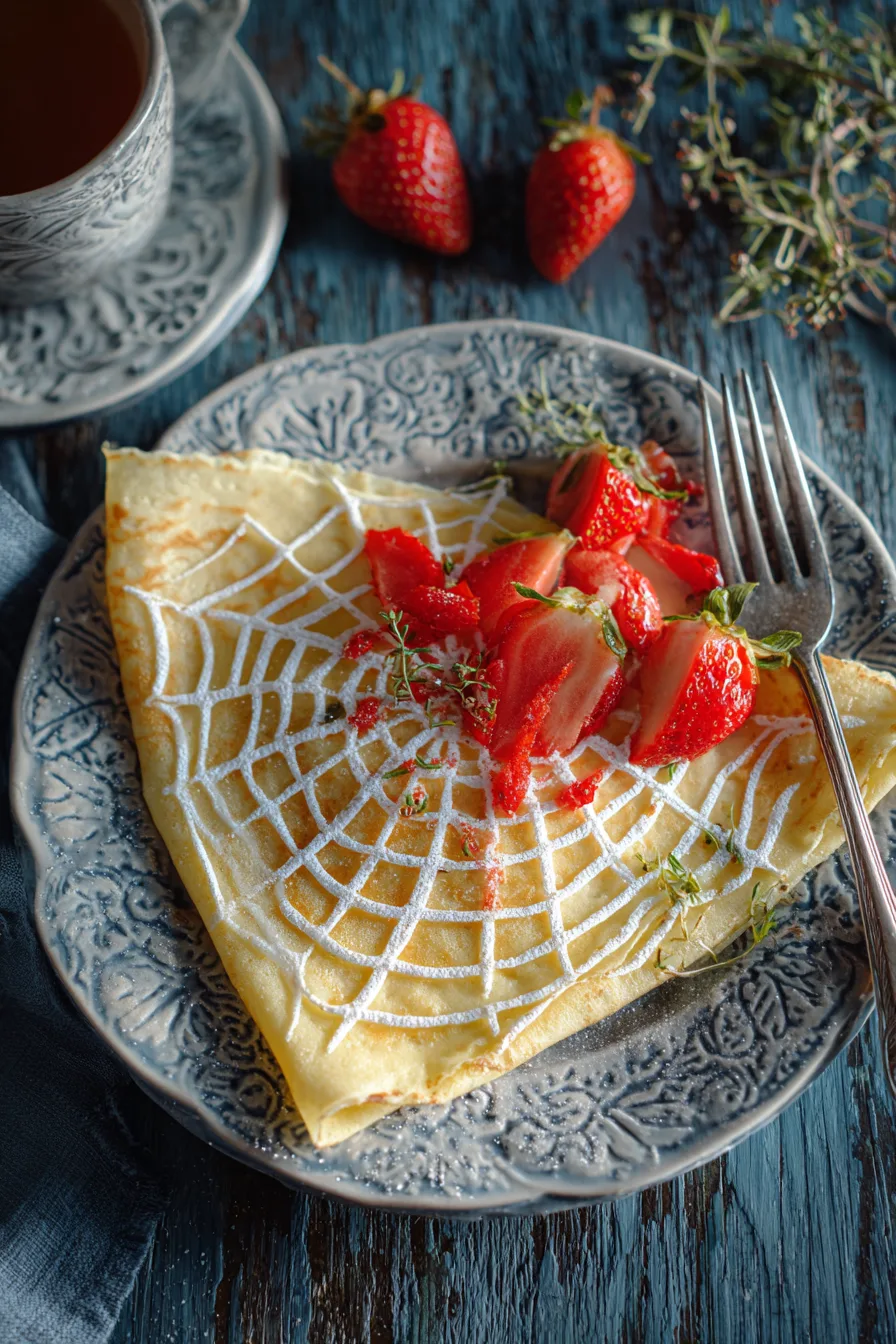
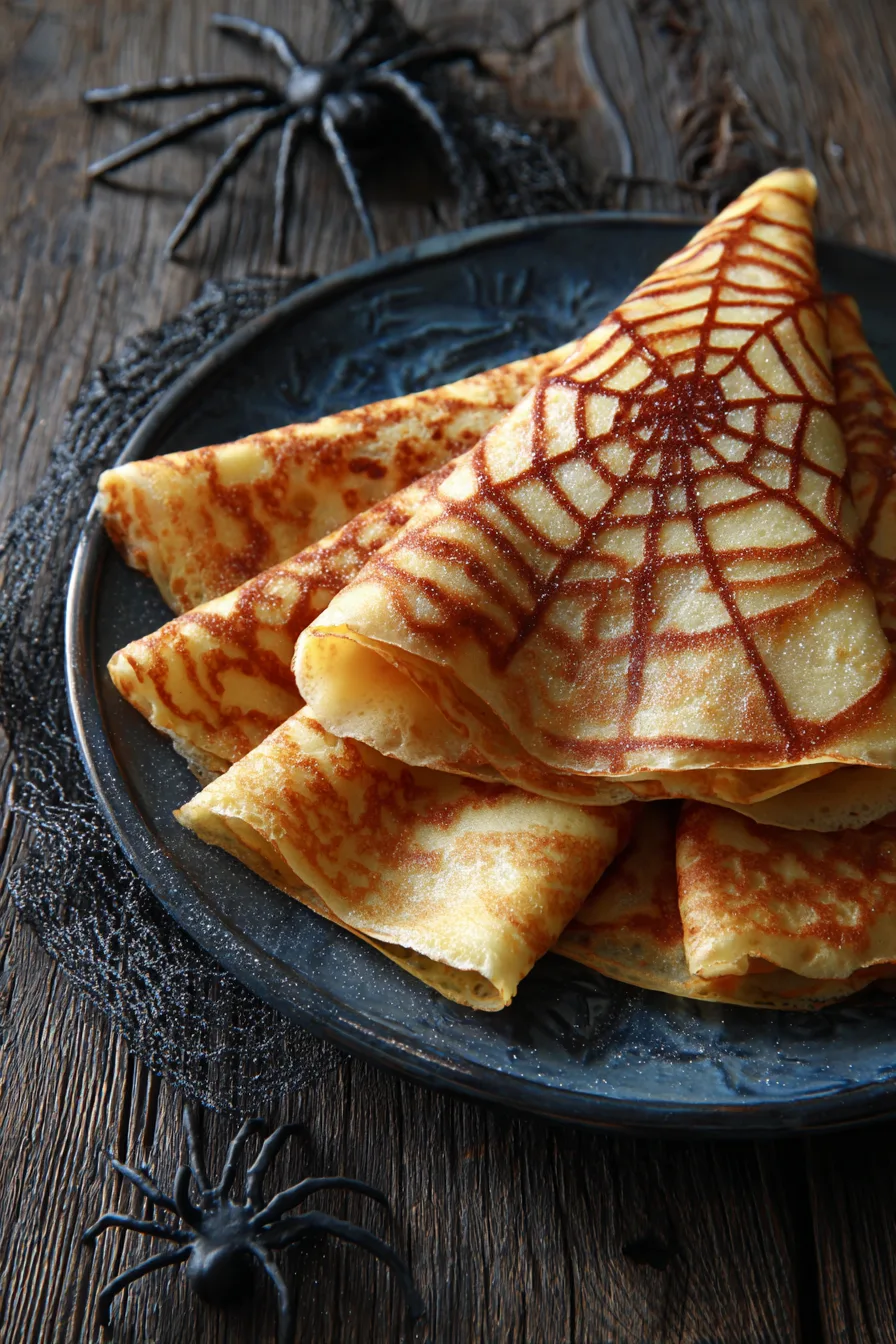
The visual drama of spiderweb crepes deserves equally impressive presentations. Dust with powdered sugar and fresh berries for classic elegance. Create a stunning breakfast parfait by layering torn crepe pieces with Greek yogurt and honey. For savory applications, fill with cream cheese and smoked salmon, allowing the delicate web pattern to frame the filling beautifully. During autumn, serve with cinnamon-spiced apple compote. The transparent quality of these crepes makes them perfect for showcasing colorful fillings.
Common Mistakes to Avoid
The most frequent error is using batter that’s too thick – this prevents proper web formation. Ensure your batter has the consistency of heavy cream. Cooking at excessive heat causes rapid setting before the web pattern develops. Maintain medium-low temperature throughout. Don’t skip the sparkling water – regular water won’t create the necessary bubble structure. Avoid overmixing after adding sparkling water, as this eliminates the crucial carbonation. Finally, resist the urge to add more batter if holes appear large – those gaps are exactly what creates the spiderweb effect.
Storing Tips for the Recipe
Cooked spiderweb crepes store beautifully when properly handled. Layer between parchment paper sheets and refrigerate for up to 3 days. For longer storage, freeze for up to 1 month. The batter can be prepared 24 hours in advance – just re-whisk and add fresh sparkling water before cooking. When reheating, use a low oven (250°F) for 2-3 minutes to maintain their delicate texture. Never microwave, as this creates tough, rubbery results.
FAQs
Q: Why aren’t my crepes forming web patterns?
A: The most likely cause is batter that’s too thick or missing sparkling water. Ensure your batter flows like heavy cream and always add sparkling water just before cooking.
Q: Can I make spiderweb crepes without eggs?
A: Yes! Use a flax egg substitute (1 tablespoon ground flaxseed + 3 tablespoons water per egg) and increase the sparkling water slightly for better web formation.
Q: How do I prevent sticking?
A: Ensure your pan is properly heated and lightly greased before each crepe. Non-stick pans work best for these delicate creations.
Q: Can I add food coloring?
A: Absolutely! Add gel food coloring to create stunning colored webs. Liquid coloring may thin the batter too much.
These ethereal spiderweb crepes prove that sometimes the most impressive dishes come from understanding simple scientific principles, transforming ordinary ingredients into extraordinary culinary art.
Kitchen Mosaic Notes
Thanks for reading! Remember that nutritional values are approximate. For the best results, adapt this recipe to your specific dietary needs.