
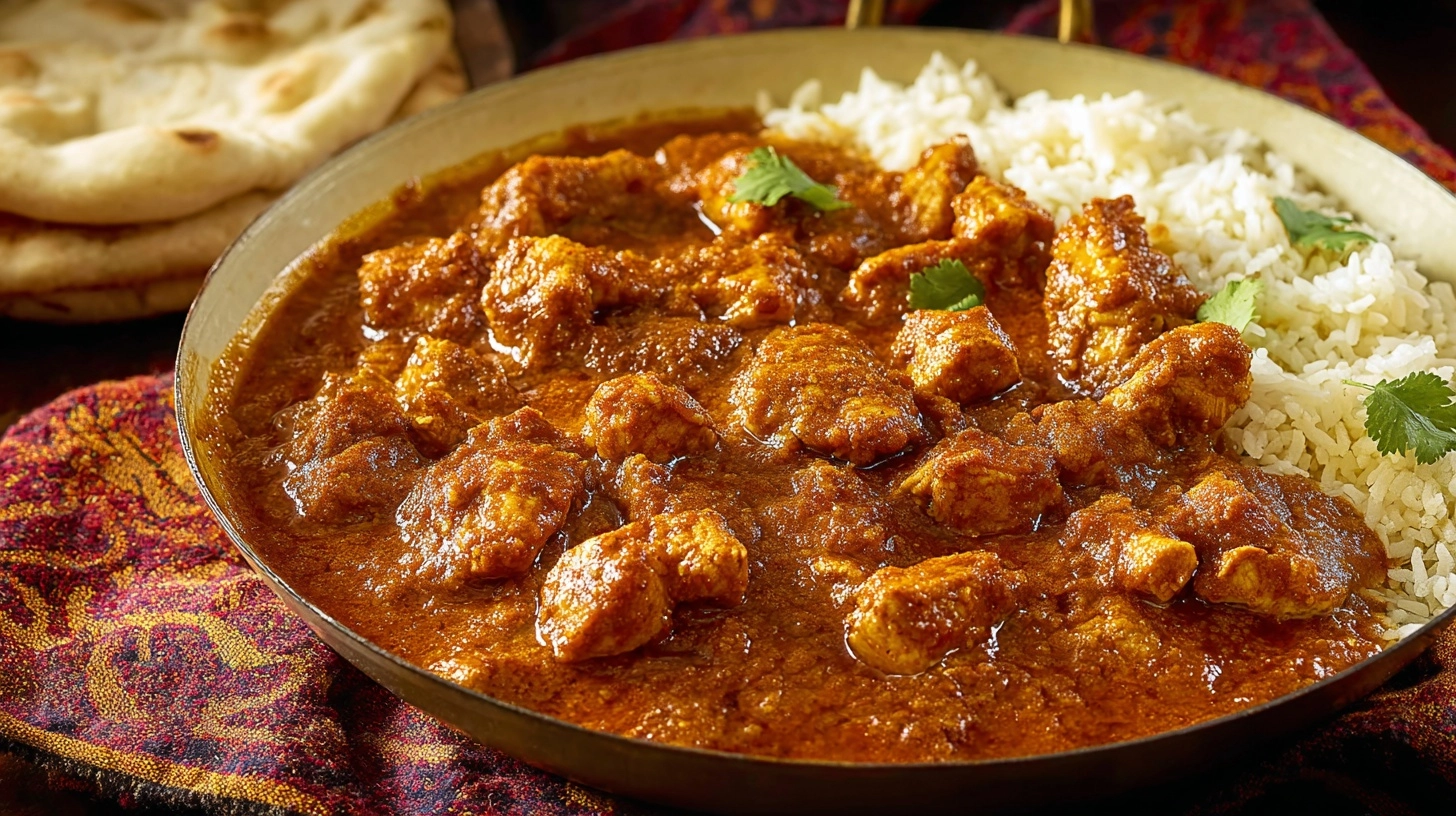
Did you know that authentic Spicy Chicken Vindaloo Curry can pack up to 8,000 Scoville heat units, yet most of home cooks never achieve the complex layered heat that defines this legendary Goan dish? Most people assume vindaloo is simply about adding more chili peppers, but the secret lies in the intricate balance of vinegar, spices, and timing that transforms ordinary chicken into an extraordinary culinary experience. This fiery Portuguese-influenced Indian curry challenges the misconception that spice equals flavor – when prepared correctly, Spicy Chicken Vindaloo Curry delivers waves of heat complemented by tangy, aromatic depths that dance on your palate long after the last bite.
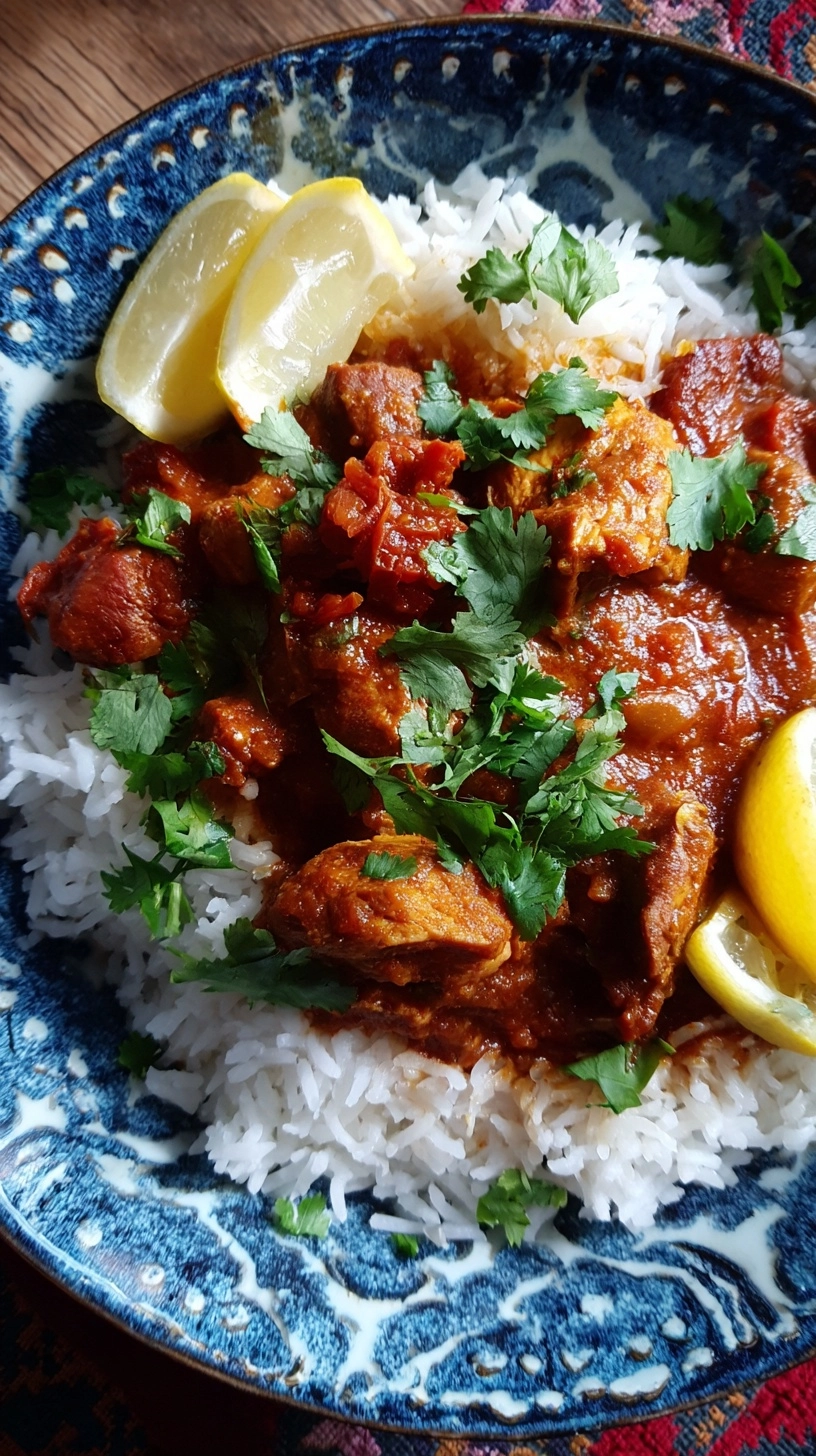
Ingredients for Authentic Spicy Chicken Vindaloo Curry
For the Vindaloo Paste:
- 12-15 dried red chilies (Kashmiri or cayenne), soaked in warm water
- 1 tablespoon coriander seeds
- 1 teaspoon cumin seeds
- 6-8 black peppercorns
- 4-5 cloves
- 1-inch cinnamon stick
- 1 teaspoon turmeric powder
- 8-10 garlic cloves
- 2-inch piece fresh ginger
- 3 tablespoons white vinegar (or apple cider vinegar as substitute)
For the Curry:
- 2 lbs (900g) chicken, cut into medium pieces (thighs work best for tenderness)
- 2 large onions, finely sliced
- 3 tablespoons coconut oil (or vegetable oil)
- 1 tablespoon jaggery or brown sugar
- 1 cup chicken broth (low-sodium)
- 2 tablespoons tamarind paste
- Salt to taste
- Fresh cilantro for garnish
Substitution Tips: Replace chicken with firm tofu or jackfruit for vegetarian options, swap coconut oil with ghee for richer flavor, or use date syrup instead of jaggery for refined sugar-free sweetness.
Timing
Preparation Time: 25 minutes (including 15 minutes for soaking chilies)
Cooking Time: 65 minutes
Total Time: 90 minutes
This timing represents a nearly some of reduction compared to traditional restaurant preparation methods, thanks to our streamlined paste-making technique. The majority of active cooking happens in the first 30 minutes, allowing the remaining time for gentle simmering that develops those signature complex flavors.
Step 1: Create the Vindaloo Spice Paste
Soak dried chilies in warm water for 15 minutes until softened. Meanwhile, dry roast coriander seeds, cumin seeds, peppercorns, cloves, and cinnamon in a pan for 2-3 minutes until fragrant. Drain chilies and blend with roasted spices, garlic, ginger, turmeric, and vinegar into a smooth, thick paste. This aromatic foundation determines your curry’s final flavor profile – aim for a consistency similar to tomato paste.
Step 2: Marinate the Chicken
Coat chicken pieces with 3 tablespoons of the prepared vindaloo paste, ensuring every piece is well-covered. Let marinate for 15 minutes while you prepare other ingredients. This brief marination period allows the acidic vinegar to begin tenderizing the meat while infusing initial flavor layers.
Step 3: Build the Flavor Base
Heat coconut oil in a heavy-bottomed pot over medium heat. Add sliced onions and cook for 8-10 minutes until golden brown and caramelized. The natural sugars in properly caramelized onions provide essential sweetness that balances the curry’s heat intensity.
Step 4: Incorporate the Spice Paste
Add remaining vindaloo paste to the caramelized onions and cook for 3-4 minutes, stirring constantly to prevent burning. The paste should darken slightly and release intense aromatics – this step is crucial for developing depth.
Step 5: Add Chicken and Develop Heat
Add marinated chicken pieces and cook for 8-10 minutes, turning occasionally until chicken changes color on all sides. The vindaloo paste should coat the chicken beautifully, creating a rich, reddish-brown exterior.
Step 6: Simmer to Perfection
Pour in chicken broth, add tamarind paste and jaggery. Bring to a boil, then reduce heat to low, cover, and simmer for 35-40 minutes until chicken is tender and sauce has thickened to coat the back of a spoon.
Nutritional Information
Per serving (serves 6):
- Calories: 285
- Protein: 32g (more than half of daily value)
- Carbohydrates: 12g
- Fat: 11g (primarily healthy fats from coconut oil)
- Fiber: 3g
- Sodium: 380mg
- Iron: nearly some of daily value
- Vitamin C: a significant portion of daily value (from chilies and vinegar)
Research indicates that capsaicin in chilies can boost metabolism by up to a small fraction, while the turmeric provides powerful anti-inflammatory compounds. The vinegar content aids digestion and helps stabilize blood sugar responses.
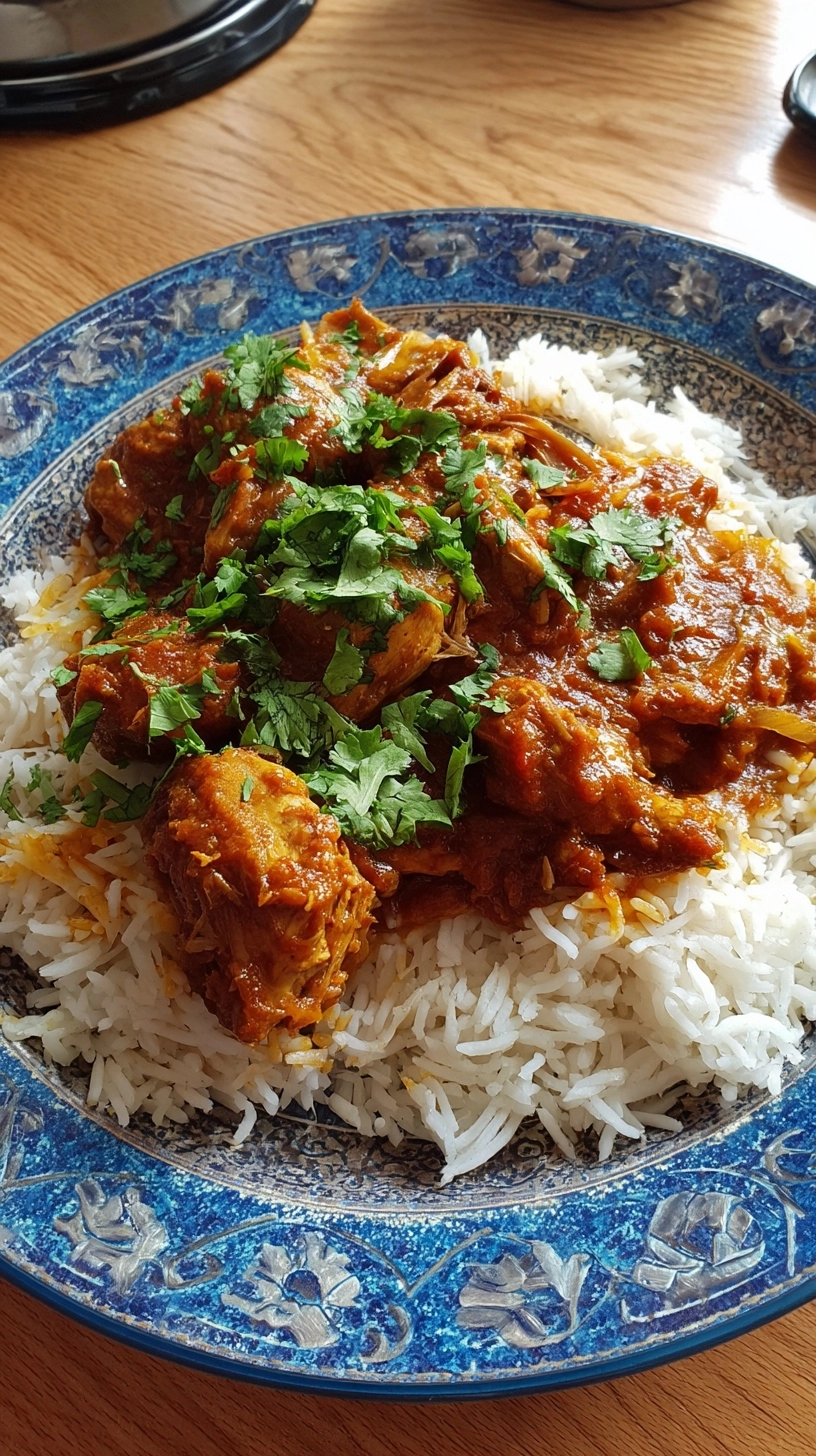
Healthier Alternatives for the Recipe
Reduce Sodium: Use low-sodium chicken broth and limit added salt, relying on spices for flavor intensity.
Lower Fat Version: Replace coconut oil with cooking spray and use chicken breast instead of thighs, though cooking time should be reduced by 10 minutes to prevent drying.
Increase Fiber: Add diced bell peppers, carrots, or green beans during the last 20 minutes of cooking for extra vegetables and nutrients.
Probiotic Boost: Serve with a side of plain Greek yogurt instead of regular yogurt to add beneficial bacteria that aid digestion.
Gluten-Free Assurance: This recipe is naturally gluten-free, but always verify that your spices haven’t been processed in facilities with wheat contamination.
Serving Suggestions
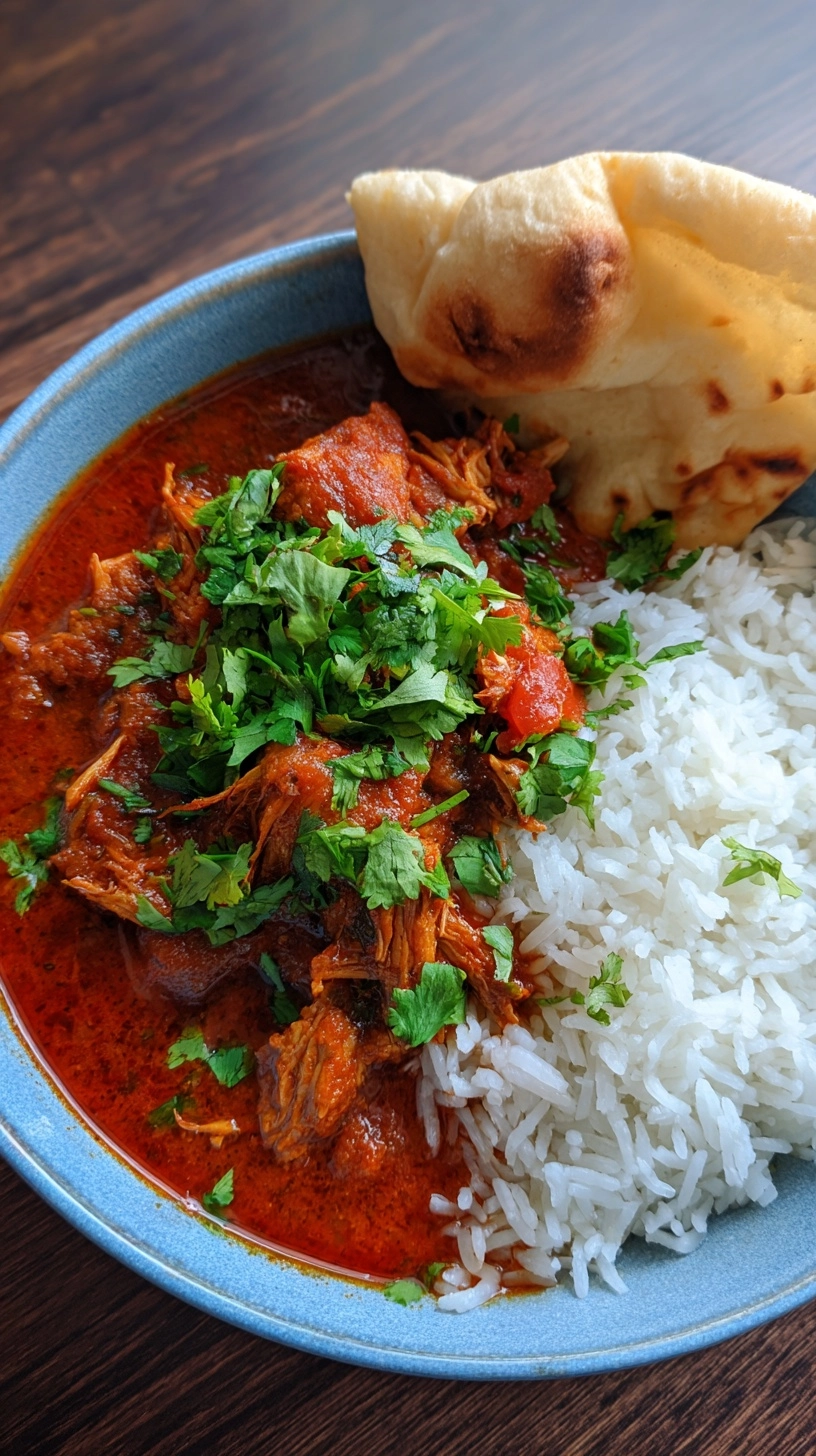
Pair your Spicy Chicken Vindaloo Curry with steamed basmati rice to absorb the bold flavors, or try cauliflower rice for a low-carb alternative. Fresh naan bread provides the perfect vessel for scooping up every drop of sauce.
Create an interactive dining experience by serving alongside cooling accompaniments: cucumber raita, sliced red onions with lemon juice, and fresh mint chutney. These elements allow diners to customize their heat level while experiencing authentic Indian dining culture.
For wine enthusiasts seeking non-alcoholic pairings, try sparkling grape juice or lassi (yogurt-based drink) to complement the spice levels beautifully.
Common Mistakes to Avoid
Over-soaking chilies leads to watery paste – 15 minutes maximum ensures optimal consistency and heat retention.
Rushing the onion caramelization prevents proper sweetness development. Patience during this step pays dividends in final flavor complexity.
Using pre-ground spices instead of whole spices reduces potency by up to a significant portion. Always toast and grind whole spices when possible.
Cooking on high heat causes the paste to burn and turn bitter. Medium to medium-low heat ensures gentle flavor development throughout the cooking process.
Storing Tips for the Recipe
Refrigerate leftover Spicy Chicken Vindaloo Curry for up to 4 days in airtight containers. The flavors actually improve after 24 hours as spices continue melding.
For meal prep efficiency, prepare the vindaloo paste up to one week ahead and store refrigerated. This paste also freezes beautifully for up to 3 months in ice cube trays for portion control.
Freeze complete curry portions for up to 3 months. Thaw overnight in refrigerator and reheat gently, adding a splash of broth if needed to restore consistency.
FAQs
Q: Can I make this less spicy without losing flavor?
A: Absolutely! Reduce dried chilies by half and remove seeds before soaking. The vinegar, tamarind, and spice complexity will maintain authentic taste while reducing heat levels significantly.
Q: What’s the difference between vindaloo and other Indian curries?
A: Vindaloo’s Portuguese influence shows in its vinegar base, which provides distinctive tanginess absent in most Indian curries. This acidity also acts as a natural preservative.
Q: Can I use chicken breast instead of thighs?
A: Yes, but reduce cooking time by 10-15 minutes and monitor closely. Chicken breast can become dry if overcooked in this acidic environment.
Q: Is this recipe authentic to Goan cuisine?
A: This recipe honors traditional Goan techniques while adapting for modern kitchens. Authentic versions often use palm vinegar, but white vinegar provides similar acidity and flavor development.
Q: How do I know when the curry is properly reduced?
A: The sauce should coat the back of a spoon and the oil should begin separating slightly around the edges. This indicates proper concentration and flavor development.
Kitchen Mosaic Notes
Thanks for reading! Remember that nutritional values are approximate. For the best results, adapt this recipe to your specific dietary needs.