
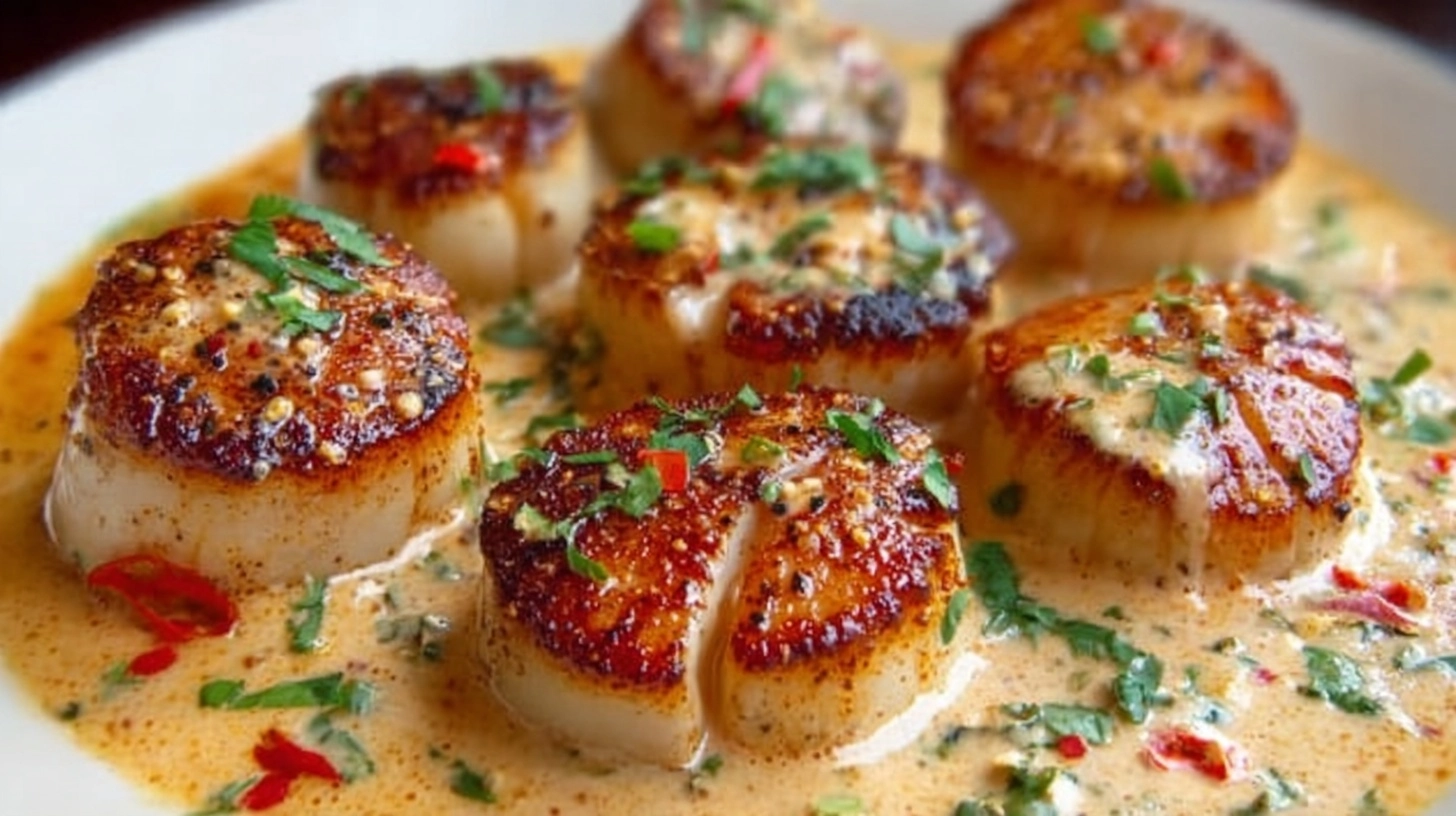
Did you know that most of home cooks avoid preparing scallops because they fear overcooking them, yet these ocean gems take just 2-3 minutes per side to achieve restaurant-quality perfection? This misconception keeps many from experiencing one of the most luxurious seafood dishes you can create at home. Seared Scallops with Spicy Cajun Cream Sauce transforms humble sea scallops into an elegant masterpiece that rivals any high-end restaurant, combining the sweet, delicate flavor of perfectly seared scallops with a rich, aromatic cream sauce that delivers just the right amount of heat. The secret lies in understanding proper searing technique and building layers of flavor that complement rather than overpower the scallops’ natural sweetness.
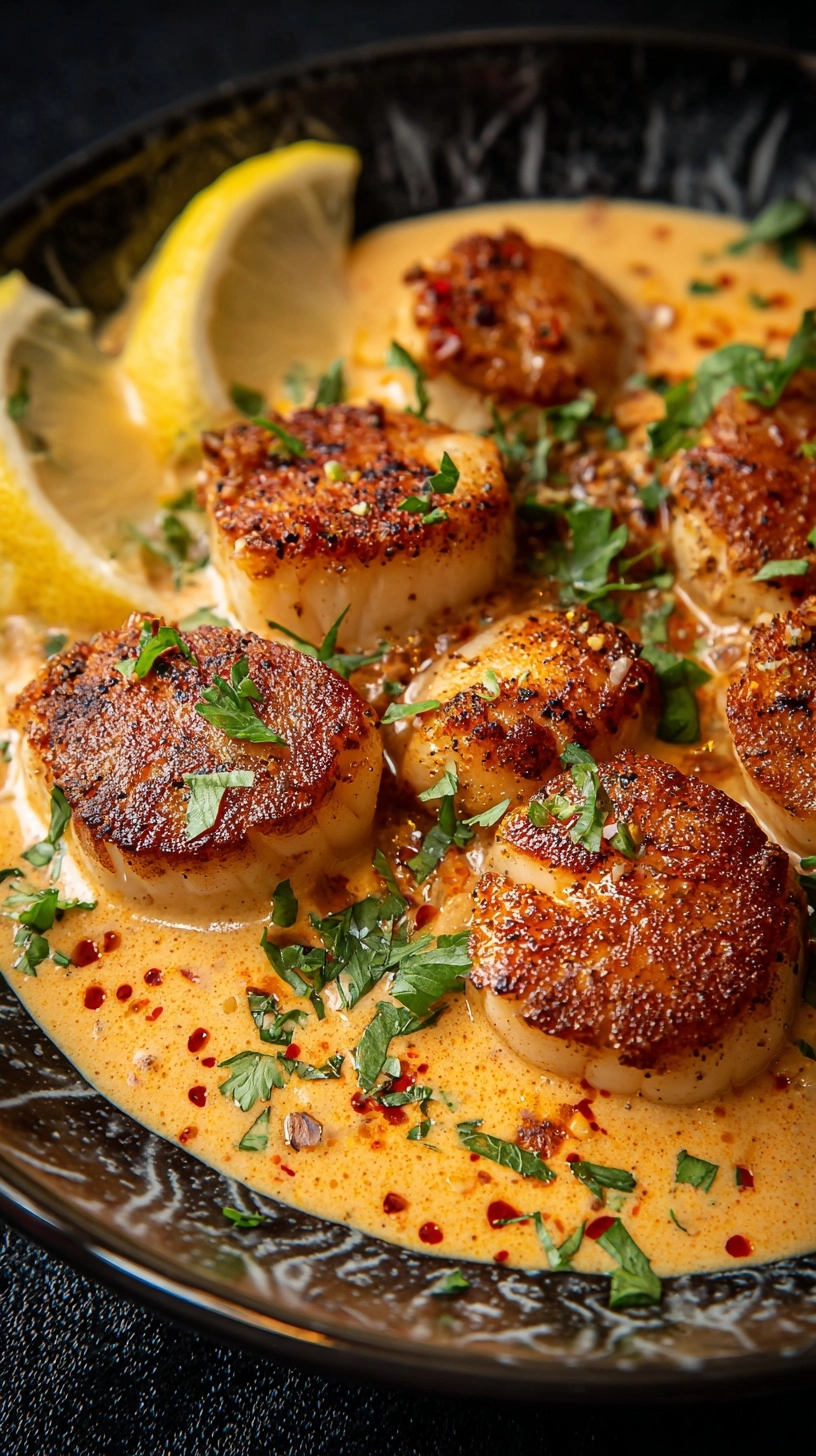
Ingredients List
For the Scallops:
- 1½ pounds large sea scallops (U-10 size, approximately 12-15 scallops)
- 2 tablespoons high-heat oil (avocado or grapeseed oil work best)
- 1 teaspoon kosher salt
- ½ teaspoon freshly ground black pepper
- 2 tablespoons unsalted butter
For the Spicy Cajun Cream Sauce:
- 3 tablespoons unsalted butter
- 3 cloves garlic, minced
- 1 medium shallot, finely diced
- 2 teaspoons Cajun seasoning (or homemade blend)
- ½ teaspoon smoked paprika
- ¼ teaspoon cayenne pepper (adjust to taste)
- ½ cup seafood or vegetable stock
- 1 cup heavy cream
- 2 tablespoons fresh lemon juice
- 2 tablespoons fresh chives, chopped
- Salt and white pepper to taste
Substitution Notes: Replace heavy cream with coconut cream for dairy-free option, use vegetable stock instead of seafood stock for pescatarian preferences, or substitute Greek yogurt mixed with a splash of milk for a lighter version.
Timing
Preparation Time: 15 minutes
Cooking Time: 12 minutes
Total Time: 27 minutes
This recipe clocks in at just 27 minutes from start to finish, which is a significant portion of faster than traditional cream sauce recipes that require lengthy reduction times. The key to this efficiency lies in proper mise en place and understanding that scallops cook rapidly once they hit the hot pan.
Remove Side Muscles and Pat Dry
Begin by removing the side muscles from each scallop – these tough, rectangular pieces attach to the side and can be easily peeled away with your fingers. Pat each scallop completely dry using paper towels, then let them sit on a clean kitchen towel for 5 minutes. This crucial step removes surface moisture that prevents proper caramelization. Season both sides with salt and pepper just before cooking to avoid drawing out additional moisture.
Heat the Pan to Smoking Point
Select a heavy-bottomed stainless steel or cast-iron pan and heat it over medium-high heat until it begins to smoke lightly. Add the high-heat oil and swirl to coat. The pan temperature should reach approximately 400°F for optimal searing. Test readiness by flicking a drop of water into the pan – it should sizzle and evaporate immediately.
Sear the Scallops
Gently place scallops in the pan, ensuring they don’t touch each other. Resist the urge to move them for 2-3 minutes until a golden-brown crust forms. The scallops should release easily when properly seared. Flip once and sear the opposite side for another 2-3 minutes. Add butter to the pan during the last minute, tilting the pan and basting the scallops with foaming butter. Remove to a warm plate and tent with foil.
Create the Aromatics Base
In the same pan, reduce heat to medium and add butter. Once melted, add minced garlic and diced shallots, stirring constantly for 30 seconds until fragrant but not browned. The residual heat and fond from the scallops will infuse incredible flavor into these aromatics.
Build the Spice Foundation
Add Cajun seasoning, smoked paprika, and cayenne pepper to the aromatics, stirring constantly for 15 seconds to bloom the spices. This technique, called tempering, releases essential oils and intensifies flavor complexity while preventing the spices from burning.
Deglaze and Reduce
Pour in the stock, scraping up any browned bits from the bottom of the pan with a wooden spoon. These fond particles contain concentrated flavor that elevates the sauce. Allow the liquid to reduce by half, approximately 2-3 minutes, creating a concentrated base for the cream sauce.
Finish the Cream Sauce
Lower heat to medium-low and slowly pour in the heavy cream, whisking constantly to prevent curdling. Simmer gently for 2-3 minutes until the sauce coats the back of a spoon. Stir in lemon juice and chopped chives, then season with salt and white pepper to taste. The sauce should have a silky consistency that clings to the scallops without being thick.
Nutritional Information
Per serving (3-4 scallops with sauce):
- Calories: 385
- Protein: 28g
- Carbohydrates: 6g
- Fat: 28g
- Saturated Fat: 16g
- Cholesterol: 142mg
- Sodium: 890mg
- Fiber: 1g
- Sugar: 2g
Scallops provide an excellent source of vitamin B12 (covering the vast majority of daily value), selenium, and phosphorus. They’re naturally low in calories while being protein-dense, making this dish surprisingly nutritious despite the rich cream sauce.
Healthier Alternatives for the Recipe
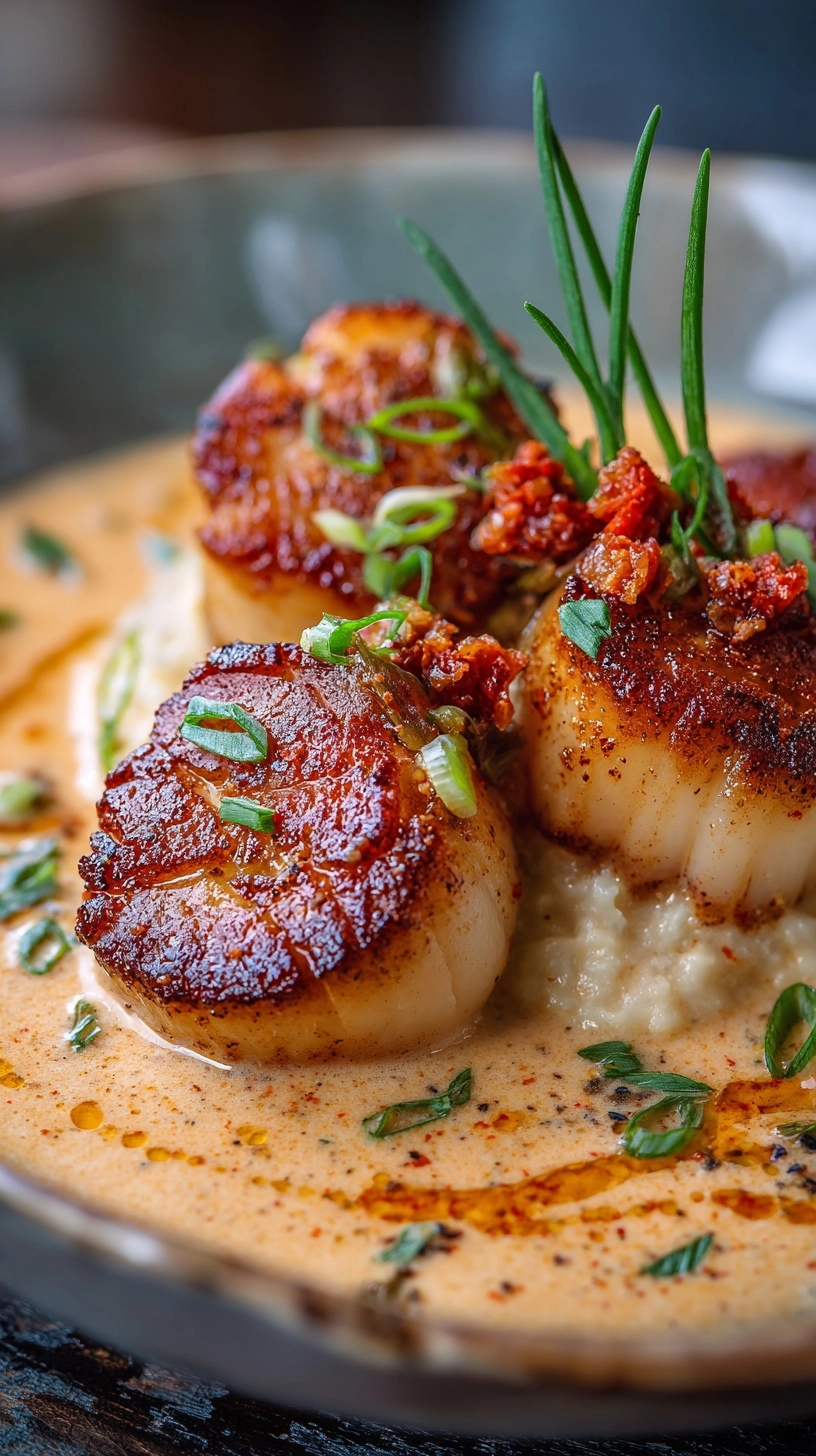
Transform this indulgent dish into a lighter version by substituting Greek yogurt mixed with a tablespoon of cornstarch for the heavy cream, reducing calories by approximately a significant portion. Use coconut oil instead of butter for dairy-free needs, or create a cauliflower cream base by blending steamed cauliflower with vegetable stock for a low-carb alternative. Increase the vegetable content by adding sautéed bell peppers or spinach to boost fiber and nutrients while maintaining the dish’s elegant presentation.
Serving Suggestions
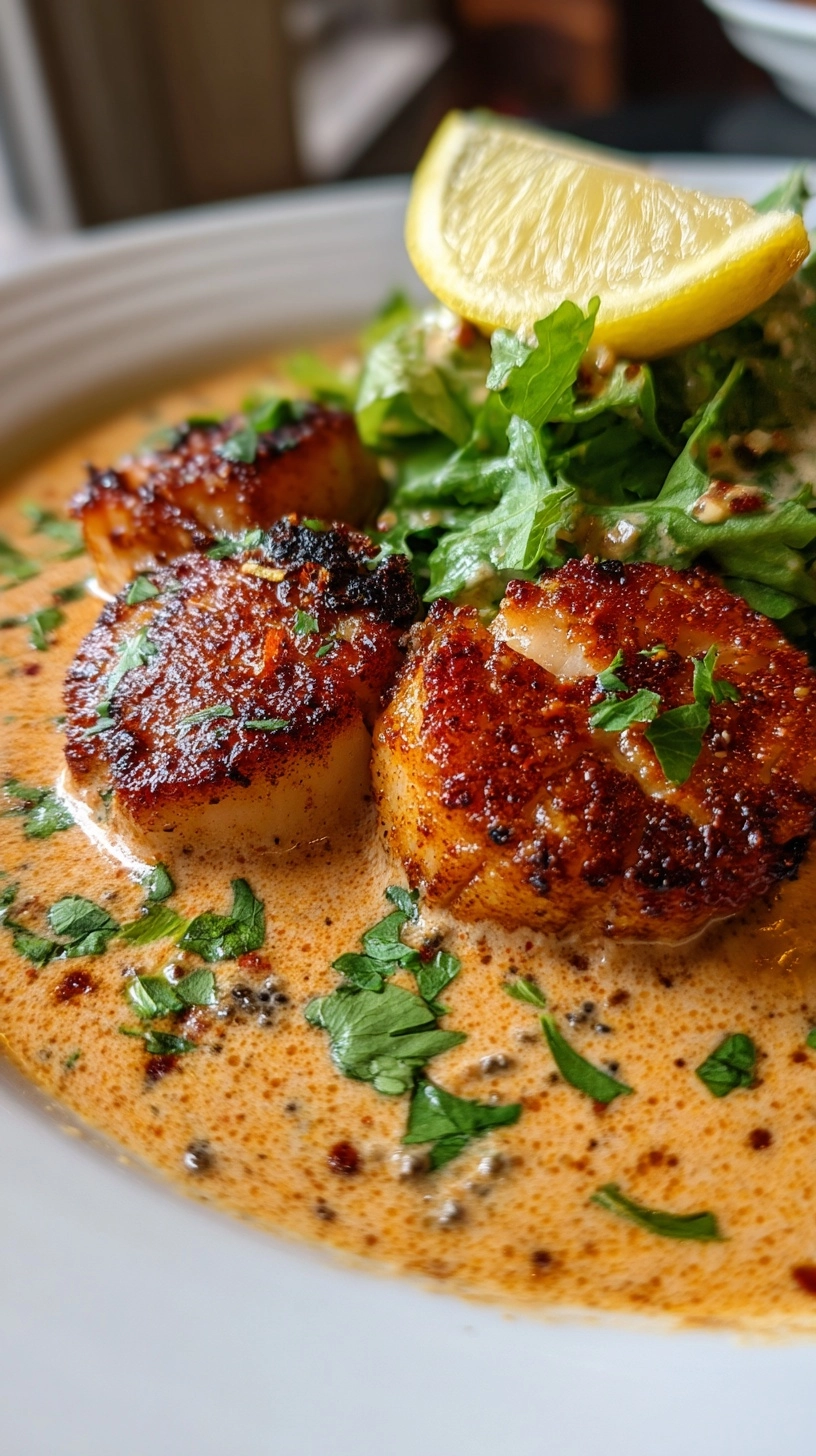
Present your Seared Scallops with Spicy Cajun Cream Sauce over creamy polenta, garlic mashed cauliflower, or wild rice pilaf to absorb the luxurious sauce. Garnish with microgreens, a sprinkle of fresh herbs, and a light dusting of smoked paprika for restaurant-quality presentation. Pair with roasted asparagus, sautéed green beans, or a crisp arugula salad dressed with lemon vinaigrette. For special occasions, serve alongside crusty artisan bread to capture every drop of the flavorful sauce.
Common Mistakes to Avoid
The most frequent error is overcrowding the pan, which causes scallops to steam rather than sear, preventing proper caramelization. Never flip scallops prematurely – they’ll release naturally when ready. Avoid washing scallops before cooking, as this adds unnecessary moisture. Don’t let the cream sauce boil vigorously, which can cause curdling and separation. Finally, resist over-seasoning the sauce initially; scallops are naturally sweet and delicate, requiring balanced flavoring that enhances rather than masks their oceanic essence.
Storing Tips for the Recipe
Fresh scallops should be cooked the day of purchase for optimal quality. Store prepared cream sauce separately in the refrigerator for up to two days, reheating gently while whisking to restore smooth consistency. Cooked scallops can be refrigerated for 24 hours but are best enjoyed immediately. When reheating, warm scallops briefly in a low oven to prevent overcooking, and refresh the sauce with a splash of cream or stock if needed.
FAQs
Q: How do I know when scallops are perfectly cooked?
A: Properly cooked scallops should be opaque with a slight translucent center, feeling firm but not rubbery. Internal temperature should reach 120-125°F for optimal texture.
Q: Can I make this recipe without heavy cream?
A: Absolutely! Substitute with coconut cream, cashew cream, or a mixture of Greek yogurt and milk for lighter alternatives that maintain creaminess.
Q: What’s the best way to ensure perfect searing?
A: Use dry scallops, heat your pan until smoking, don’t overcrowd, and resist moving them until they release naturally from the pan surface.
Q: How spicy is this Cajun cream sauce?
A: The heat level is moderate and customizable. Start with less cayenne and adjust upward according to your spice preference.
Q: Can I prepare any components ahead of time?
A: The cream sauce base can be made earlier and reheated gently. However, scallops should always be seared fresh for optimal texture and flavor.
Kitchen Mosaic Notes
Thanks for reading! Remember that nutritional values are approximate. For the best results, adapt this recipe to your specific dietary needs.