
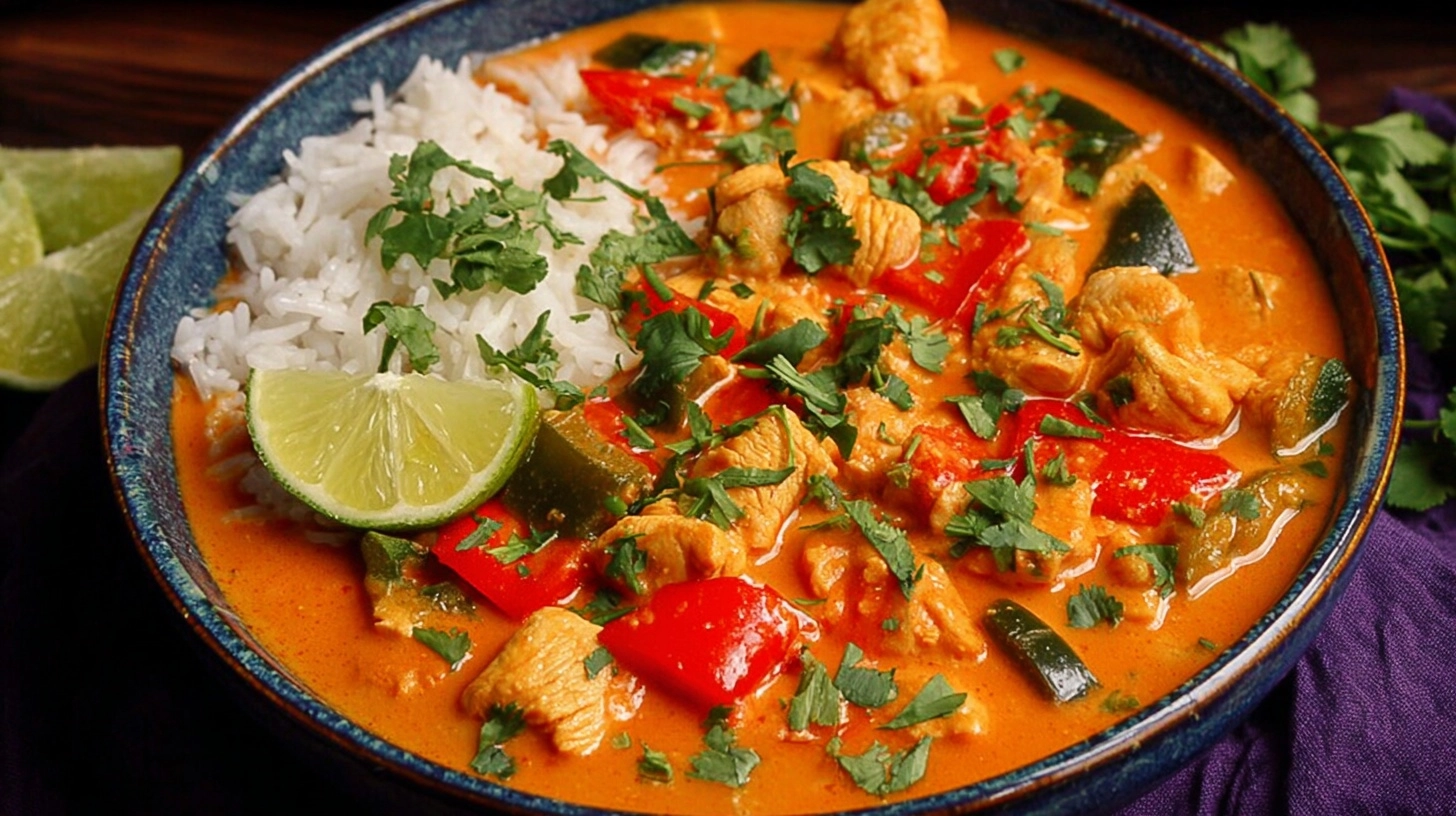
Did you know that most of home cooks avoid making Thai curry because they believe it requires hours of preparation and exotic ingredients? This couldn’t be further from the truth. Thai Red Curry Chicken (30 Minute Meal) breaks this misconception entirely, delivering restaurant-quality flavors in just half an hour using ingredients you likely already have in your pantry. This aromatic, creamy dish combines tender chicken with vibrant vegetables in a rich coconut-based sauce that’s both comforting and exotic. What makes this recipe particularly special is its perfect balance of sweet, spicy, and savory elements that create a symphony of flavors without the intimidating complexity most people associate with authentic Thai cuisine.
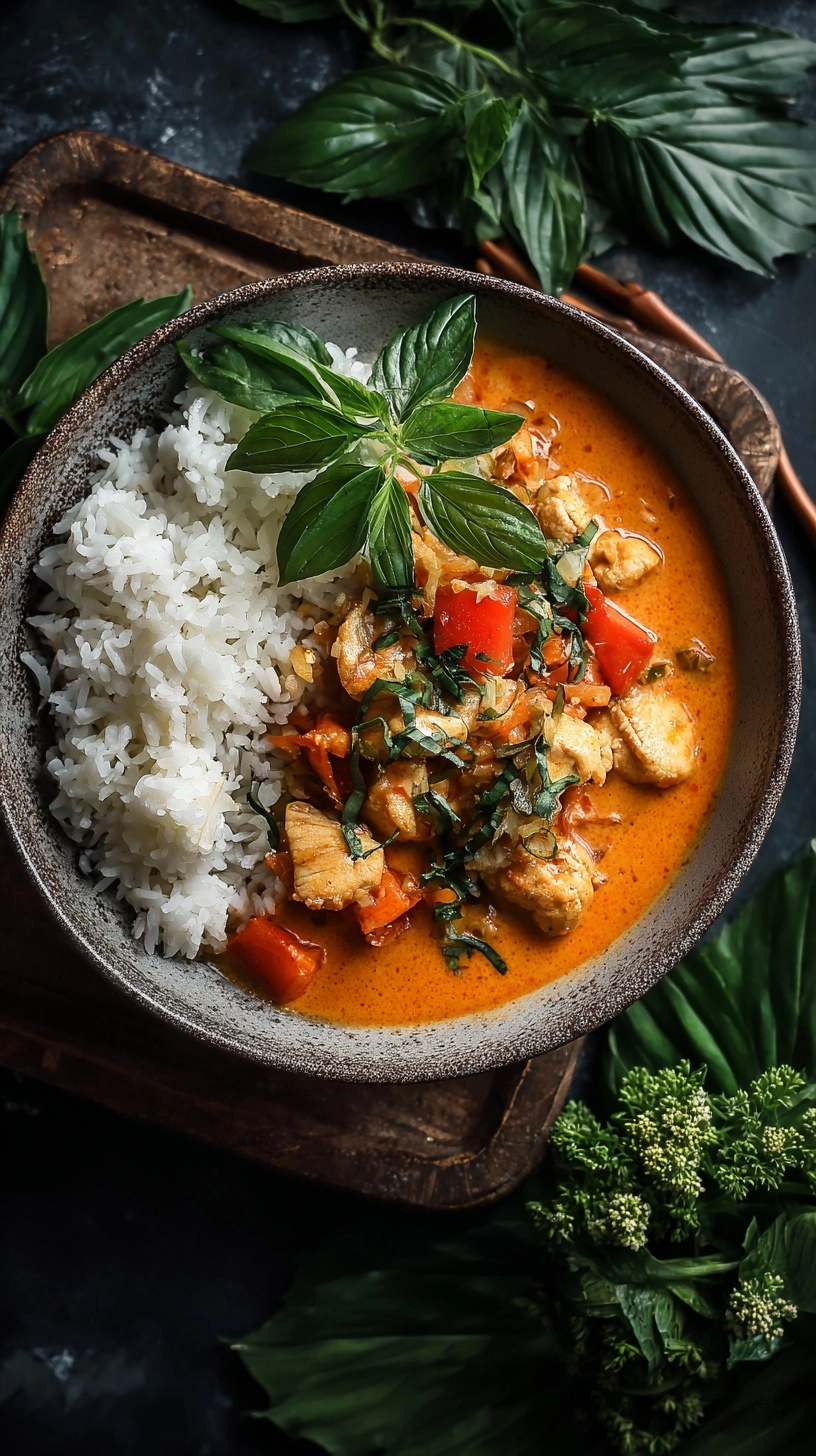
Ingredients List
For the Curry Base:
- 1 can (14 oz) full-fat coconut milk, divided
- 3-4 tablespoons red curry paste (adjust to heat preference)
- 2 tablespoons fish sauce (or soy sauce for vegetarian option)
- 1 tablespoon brown sugar or palm sugar
- 1 tablespoon fresh lime juice
For the Protein and Vegetables:
- 1.5 pounds boneless, skinless chicken thighs, cut into bite-sized pieces (substitute: chicken breast or firm tofu)
- 1 red bell pepper, sliced into strips
- 1 small Asian eggplant, cubed (substitute: regular eggplant or zucchini)
- 1 cup fresh green beans, trimmed and halved
- 1 small onion, thinly sliced
Aromatics and Garnish:
- 3 cloves garlic, minced
- 1-inch piece fresh ginger, grated
- 2 kaffir lime leaves, torn (substitute: zest of 1 lime)
- 1/4 cup fresh Thai basil leaves (substitute: regular basil)
- 2 tablespoons fresh cilantro, chopped
- 1-2 Thai chilies, sliced (optional, for extra heat)
Timing
Preparation Time: 10 minutes
Cooking Time: 20 minutes
Total Time: 30 minutes
This streamlined approach reduces cooking time by approximately a significant portion of compared to traditional Thai curry methods, making it perfect for busy weeknight dinners. The key to this efficiency lies in strategic ingredient preparation and understanding the optimal order of operations that maximizes flavor development in minimal time.
Step 1: Prepare Your Mise en Place
Gather and prep all ingredients before heating your pan. This French culinary technique is crucial for this Thai Red Curry Chicken 30 Minute Meal success. Dice your chicken into uniform 1-inch pieces to ensure even cooking, slice vegetables to similar thickness, and have your aromatics ready. Pro tip: Freeze your coconut milk can for 10 minutes beforehand – this separates the cream from the liquid, giving you better control over texture.
Step 2: Create the Curry Base
Heat a large, heavy-bottomed pan or wok over medium-high heat. Add 3-4 tablespoons of the thick coconut cream from the top of your can. Cook for 2-3 minutes until it begins to separate and become fragrant. Add the red curry paste and cook, stirring constantly, for 60-90 seconds until aromatic and darkened slightly. This blooming process intensifies the paste’s flavor compounds significantly.
Step 3: Build the Flavor Foundation
Add minced garlic and grated ginger to the fragrant curry paste, cooking for another 30 seconds until aromatic. Slowly pour in the remaining coconut milk while stirring continuously to prevent curdling. Add fish sauce, brown sugar, and torn kaffir lime leaves. Bring the mixture to a gentle simmer – this creates the perfect base for your protein and vegetables.
Step 4: Cook the Chicken
Add the chicken pieces to the simmering curry base, stirring to coat completely. Cook for 8-10 minutes, stirring occasionally, until the chicken is nearly cooked through and has absorbed the curry flavors. The internal temperature should reach 165°F. Avoid overcrowding the pan, which can lead to steaming rather than proper cooking.
Step 5: Add Vegetables Strategically
Incorporate vegetables based on their cooking times: add onions and bell peppers first, cooking for 3 minutes, then add green beans and eggplant. This staged approach ensures each vegetable maintains its ideal texture – tender but still with a slight bite. Cook for an additional 5-7 minutes until vegetables are tender-crisp.
Step 6: Final Seasoning and Garnish
Taste and adjust seasoning with additional fish sauce for saltiness, brown sugar for sweetness, or lime juice for acidity. Remove from heat and stir in fresh Thai basil leaves, allowing them to wilt from residual heat. Garnish with fresh cilantro and sliced Thai chilies just before serving.
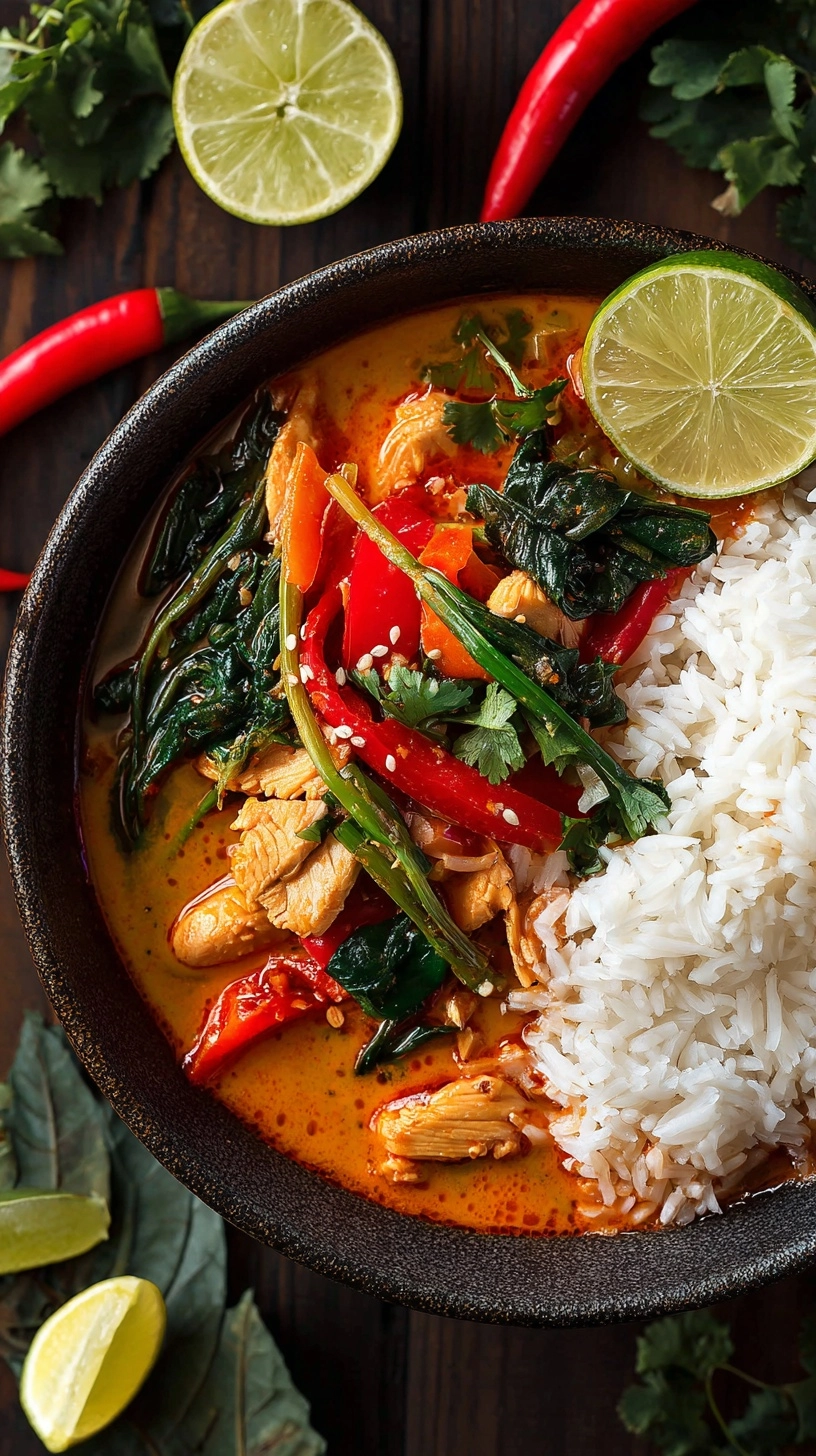
Nutritional Information
Per serving (recipe serves 4):
- Calories: 425
- Protein: 32g (more than half of daily value)
- Carbohydrates: 12g
- Fat: 28g (primarily healthy saturated fats from coconut)
- Fiber: 4g
- Sodium: 890mg
- Vitamin C: a significant portion of daily value
- Iron: nearly some of daily value
This nutrient profile provides an excellent protein-to-calorie ratio while delivering significant amounts of vitamins A and C from the colorful vegetables. The coconut milk contributes medium-chain triglycerides (MCTs), which research suggests may support metabolism and satiety.
Healthier Alternatives for the Recipe
Transform this Thai Red Curry Chicken 30 Minute Meal into a lighter version by substituting light coconut milk for full-fat, reducing calories by approximately nearly some of while maintaining creaminess. Replace chicken thighs with breast meat to lower fat content, or use extra-firm tofu for a plant-based protein option. Increase vegetable content by adding cauliflower florets, snap peas, or baby corn to boost fiber and micronutrients. For those monitoring sodium, use low-sodium soy sauce instead of fish sauce and reduce curry paste quantity while compensating with fresh herbs and ginger.
Serving Suggestions
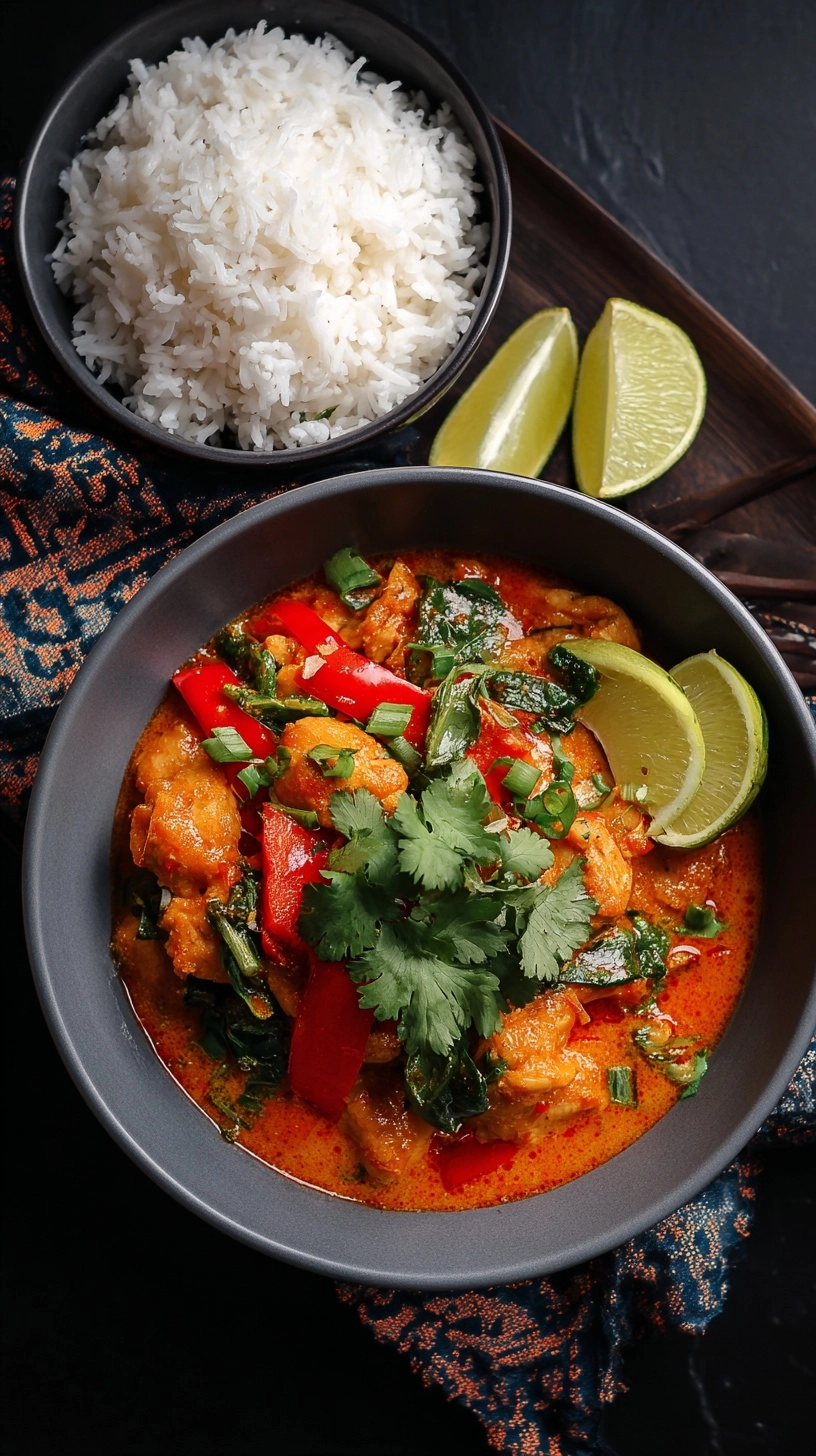
Serve this aromatic curry over fluffy jasmine rice, which absorbs the rich sauce beautifully. For lower-carb alternatives, try cauliflower rice or spiralized zucchini noodles. Consider Thai sticky rice for special occasions, or quinoa for added protein and fiber. Complement the meal with fresh cucumber slices, pickled vegetables, or a simple Thai salad with lime dressing. The curry also pairs excellently with naan bread or rice noodles for a fusion approach.
Common Mistakes to Avoid
The most frequent error is adding coconut milk too quickly, causing separation. Always add it gradually while stirring. Another pitfall is using curry paste straight from cold storage – let it come to room temperature for better incorporation. Overcooking vegetables is common; they should retain slight firmness for optimal texture and nutrition. Avoid using regular basil as a direct substitute for Thai basil, as the flavor profile differs significantly. Finally, don’t skip the lime juice – its acidity is crucial for balancing the rich coconut and sweet elements.
Storing Tips for the Recipe
Store leftover curry in airtight containers in the refrigerator for up to 4 days. The flavors actually improve overnight as they meld together. For longer storage, freeze portions for up to 3 months in freezer-safe containers, leaving room for expansion. When reheating, do so gently over low heat, stirring frequently to prevent coconut milk separation. Add a splash of coconut milk or broth if the curry becomes too thick. Fresh herbs should be added just before serving rather than stored with leftovers.
FAQs
Q: Can I make this curry less spicy?
A: Absolutely! Reduce red curry paste to 2 tablespoons and remove seeds from any fresh chilies. You can also add extra coconut milk to mellow the heat.
Q: What if I can’t find Thai basil?
A: Regular basil works, though the flavor differs slightly. Alternatively, use a mix of fresh mint and regular basil for a closer approximation.
Q: Can I prep ingredients ahead of time?
A: Yes! Cut vegetables and chicken up to 24 hours in advance. Store separately in the refrigerator and bring to room temperature before cooking.
Q: Is this recipe gluten-free?
A: It can be! Ensure your curry paste and fish sauce are gluten-free certified, as some brands contain wheat-based thickeners.
Q: Can I double the recipe?
A: Yes, but use a larger pan to avoid overcrowding. You may need to extend cooking times by 3-5 minutes to ensure everything cooks evenly.
Kitchen Mosaic Notes
Thanks for reading! Remember that nutritional values are approximate. For the best results, adapt this recipe to your specific dietary needs.