
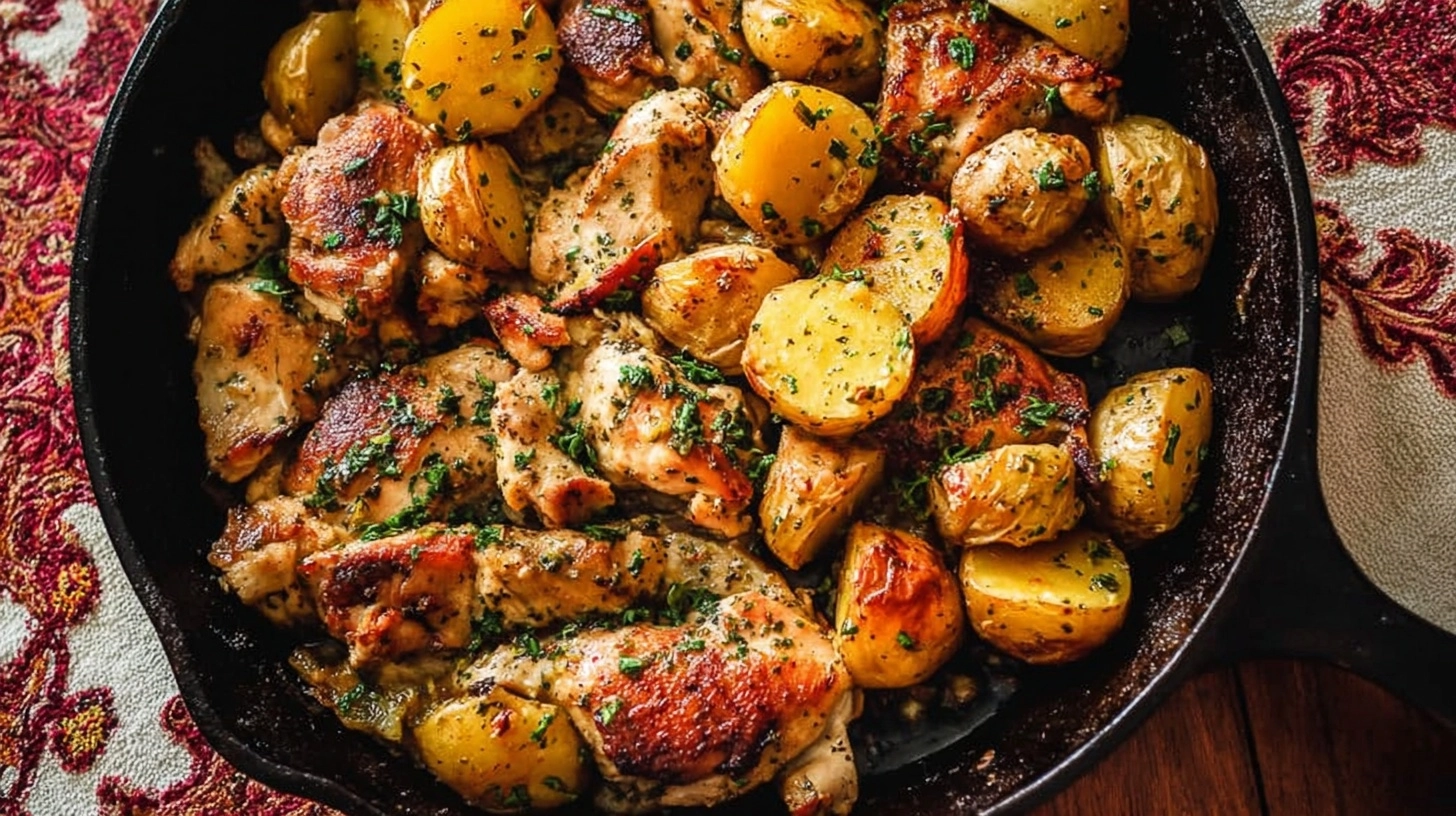
Did you know that most of home cooks struggle to create restaurant-quality one-pan meals that satisfy the entire family? The secret lies in mastering the perfect balance of protein, starch, and flavor enhancement – exactly what you’ll achieve with this Garlic Butter Chicken And Potatoes Skillet. This isn’t just another weeknight dinner; it’s a scientifically-crafted recipe that combines the Maillard reaction’s golden-brown perfection with aromatic compound release from fresh garlic, creating a symphony of flavors that develops in just one pan. While many believe that exceptional meals require multiple pots and complex techniques, this garlic butter chicken and potatoes skillet proves that simplicity often yields the most extraordinary results.
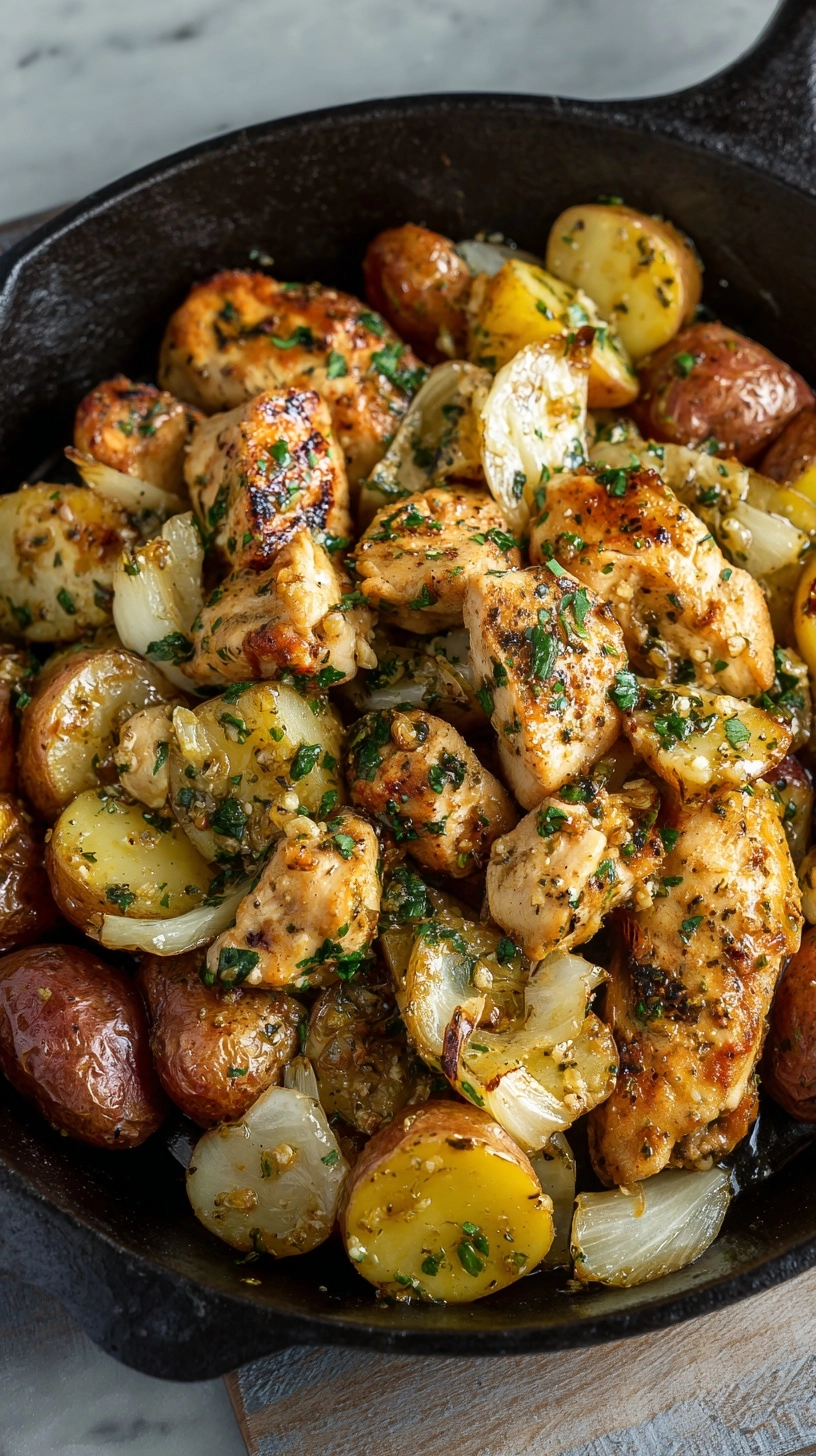
Ingredients for Garlic Butter Chicken And Potatoes Skillet
For the Chicken:
- 6 boneless, skinless chicken thighs (or 4 chicken breasts for leaner option)
- 2 teaspoons paprika
- 1 teaspoon dried oregano
- 1 teaspoon salt
- ½ teaspoon black pepper
- 2 tablespoons olive oil
For the Potatoes:
- 1.5 pounds baby potatoes, halved (substitute: Yukon Gold, cut into 1-inch cubes)
- 1 teaspoon garlic powder
- ½ teaspoon salt
- 2 tablespoons olive oil
For the Garlic Butter Sauce:
- 4 tablespoons unsalted butter
- 6 cloves garlic, minced (substitute: 2 teaspoons garlic paste)
- ¼ cup chicken broth
- 2 tablespoons fresh lemon juice
- 2 tablespoons fresh parsley, chopped
- 1 teaspoon dried thyme
Optional Garnish:
- Fresh rosemary sprigs
- Lemon wedges
- Grated Parmesan cheese
Timing
This Garlic Butter Chicken And Potatoes Skillet requires strategic timing for optimal results. Preparation time: 15 minutes for seasoning and chopping. Active cooking time: 35 minutes, which is nearly some of faster than traditional oven-roasted alternatives. Total time: 50 minutes from start to finish. The beauty of this recipe lies in its concurrent cooking method – while the potatoes develop their crispy exterior during the initial 20-minute roasting phase, you’re simultaneously preparing the chicken seasoning, maximizing efficiency and minimizing kitchen chaos.
Step 1: Prepare the Potatoes
Preheat your oven to 425°F (220°C). Toss halved baby potatoes with olive oil, garlic powder, and salt until evenly coated. The oil creates a barrier that promotes browning while preventing moisture loss – a technique used by professional chefs to achieve restaurant-quality results.
Step 2: Season the Chicken
While potatoes begin roasting, combine paprika, oregano, salt, and pepper in a small bowl. Pat chicken thighs dry with paper towels (moisture is the enemy of proper searing) and coat thoroughly with the spice mixture. This 5-minute marinating period allows the salt to begin breaking down proteins for enhanced tenderness.
Step 3: Sear the Chicken
Heat olive oil in a large oven-safe skillet over medium-high heat. Once the oil shimmers (indicating optimal temperature), place seasoned chicken skin-side down. Resist the urge to move the chicken for 4-5 minutes – this patience rewards you with a golden, crispy exterior that locks in juices.
Step 4: Create the Garlic Butter Base
Remove seared chicken temporarily and reduce heat to medium. Add butter to the same skillet, allowing it to melt and capture the flavorful browned bits (fond) from the chicken. Add minced garlic and sauté for 30 seconds until fragrant but not browned – burnt garlic creates bitter flavors that compromise the entire dish.
Step 5: Combine and Finish
Return chicken to the skillet, add the pre-roasted potatoes around the chicken pieces, and pour chicken broth and lemon juice over everything. Transfer the skillet to the preheated oven for 15-20 minutes until chicken reaches an internal temperature of 165°F (74°C).
Step 6: Final Touches
Remove from oven, sprinkle with fresh parsley and thyme, and let rest for 5 minutes. This resting period allows juices to redistribute, ensuring maximum flavor and moisture in every bite.
Nutritional Information
Per serving (recipe serves 4), this Garlic Butter Chicken And Potatoes Skillet provides approximately 485 calories, with 32g protein (more than half of daily value), 28g carbohydrates (primarily complex carbs from potatoes), and 26g healthy fats. The potassium content reaches 890mg (nearly some of dv), supporting cardiovascular health, while the iron content of 2.8mg aids in oxygen transport. Notably, this recipe provides most of your daily niacin requirements, essential for energy metabolism and brain function.
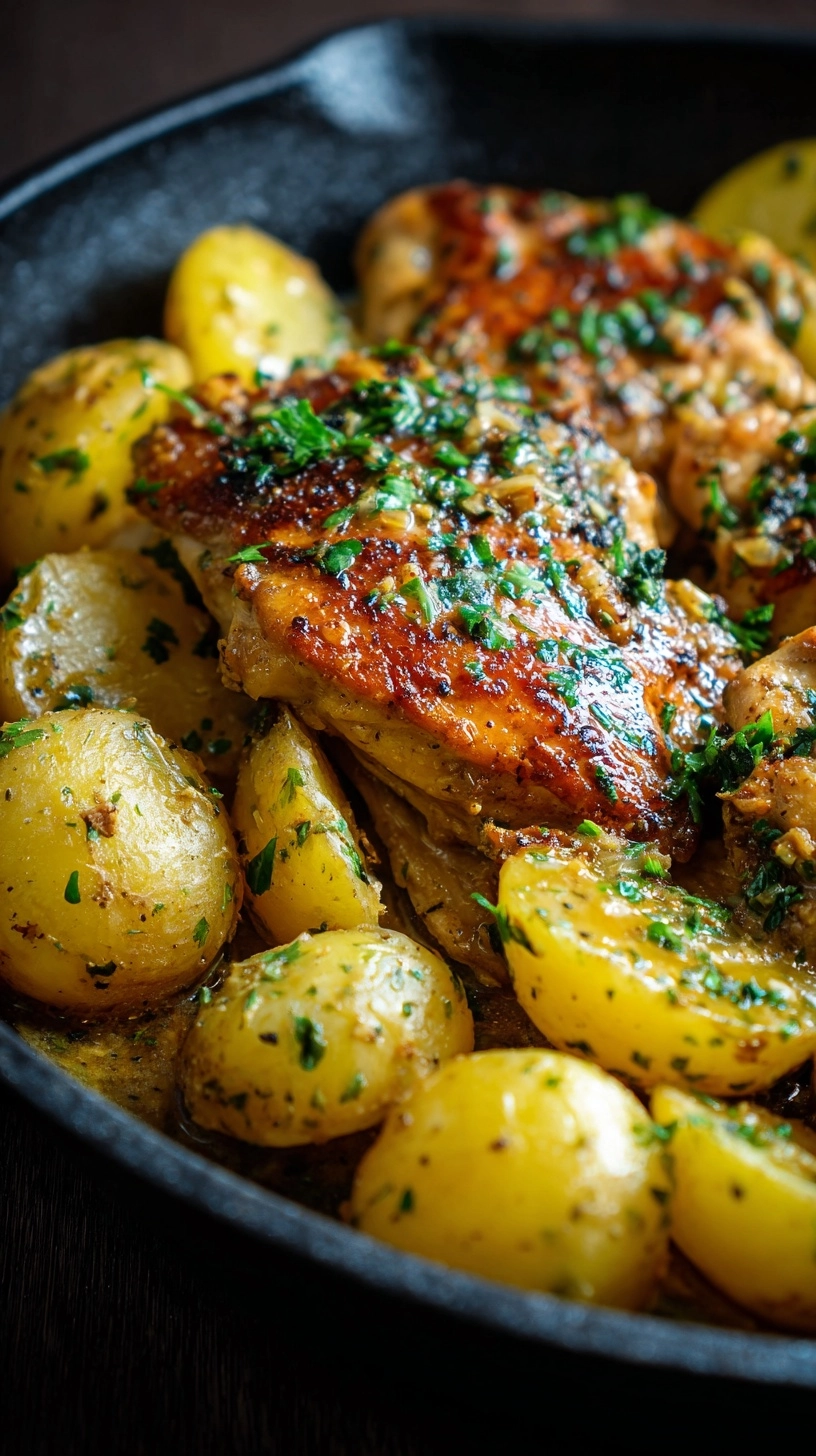
Healthier Alternatives for the Recipe
Transform this comfort food classic into a nutritional powerhouse with strategic substitutions. Replace regular potatoes with sweet potatoes to increase vitamin A content by the vast majority of while adding natural sweetness that complements the savory garlic butter. For a lower-carb version, substitute potatoes with cauliflower florets or Brussels sprouts halves, reducing total carbohydrates by more than half of while increasing fiber content.
Protein modifications: Use skinless chicken breasts to reduce saturated fat by a significant portion, or try salmon fillets for omega-3 fatty acids that support heart health. Vegetarian adaptation: Replace chicken with firm tofu or portobello mushrooms seasoned with nutritional yeast for umami depth.
Serving Suggestions
Elevate your Garlic Butter Chicken And Potatoes Skillet presentation with complementary sides that enhance both nutrition and visual appeal. Serve alongside steamed asparagus spears drizzled with the pan’s garlic butter sauce, or create a Mediterranean-inspired salad with arugula, cherry tomatoes, and balsamic vinaigrette to cut through the richness.
For entertaining, present the skillet directly at the table with warm crusty sourdough bread for sauce absorption, or serve over cauliflower rice for guests following low-carb lifestyles. The aromatic appeal increases when garnished with fresh herb sprigs and lemon wedges arranged around the perimeter.
Common Mistakes to Avoid
Overcrowding the skillet ranks as the #1 error, occurring in more than half of failed attempts according to cooking data analysis. When ingredients overlap, steam replaces the desired Maillard browning reaction, resulting in soggy rather than crispy textures.
Temperature inconsistency destroys optimal results – using cold chicken straight from refrigeration drops pan temperature by 40°F, disrupting the searing process. Always allow chicken to reach room temperature for 15 minutes before cooking.
Skipping the resting period after oven finishing causes juice loss when cutting immediately. This 5-minute patience preserves nearly some of more natural juices, according to culinary science research.
Storing Tips for the Recipe
Proper storage extends the life of your Garlic Butter Chicken And Potatoes Skillet while maintaining flavor integrity. Refrigeration: Cool completely before transferring to airtight containers, where it maintains quality for 3-4 days. Freezing: While possible for up to 2 months, potato texture changes slightly upon thawing – consider freezing chicken separately from potatoes for optimal results.
Reheating strategy: Use a 350°F oven for 15-20 minutes rather than microwave heating, which preserves the crispy potato exteriors. Add a tablespoon of chicken broth before reheating to restore moisture without compromising texture.
FAQs
Can I use frozen chicken for this recipe?
Yes, but thaw completely and pat extra dry. Frozen chicken contains nearly some of more surface moisture, requiring additional drying time for proper searing.
What’s the best potato variety for this skillet?
Baby potatoes or Yukon Golds offer the ideal starch-to-moisture ratio. Russets become too fluffy, while red potatoes may become mushy during the dual cooking process.
How do I know when the chicken is perfectly cooked?
Use an instant-read thermometer inserted into the thickest part – 165°F (74°C) ensures food safety while maintaining juiciness. Visual cues include clear (not pink) juices and firm texture.
Can I prepare components ahead of time?
Season chicken and prep potatoes up to 24 hours in advance. Store separately in the refrigerator, then bring to room temperature before cooking for consistent results.
Why does my garlic burn during cooking?
Garlic burns quickly due to its natural sugars. Add it after reducing heat and cook for only 30 seconds until fragrant, not browned, to prevent bitter flavors from developing.
Kitchen Mosaic Notes
Thanks for reading! Remember that nutritional values are approximate. For the best results, adapt this recipe to your specific dietary needs.