
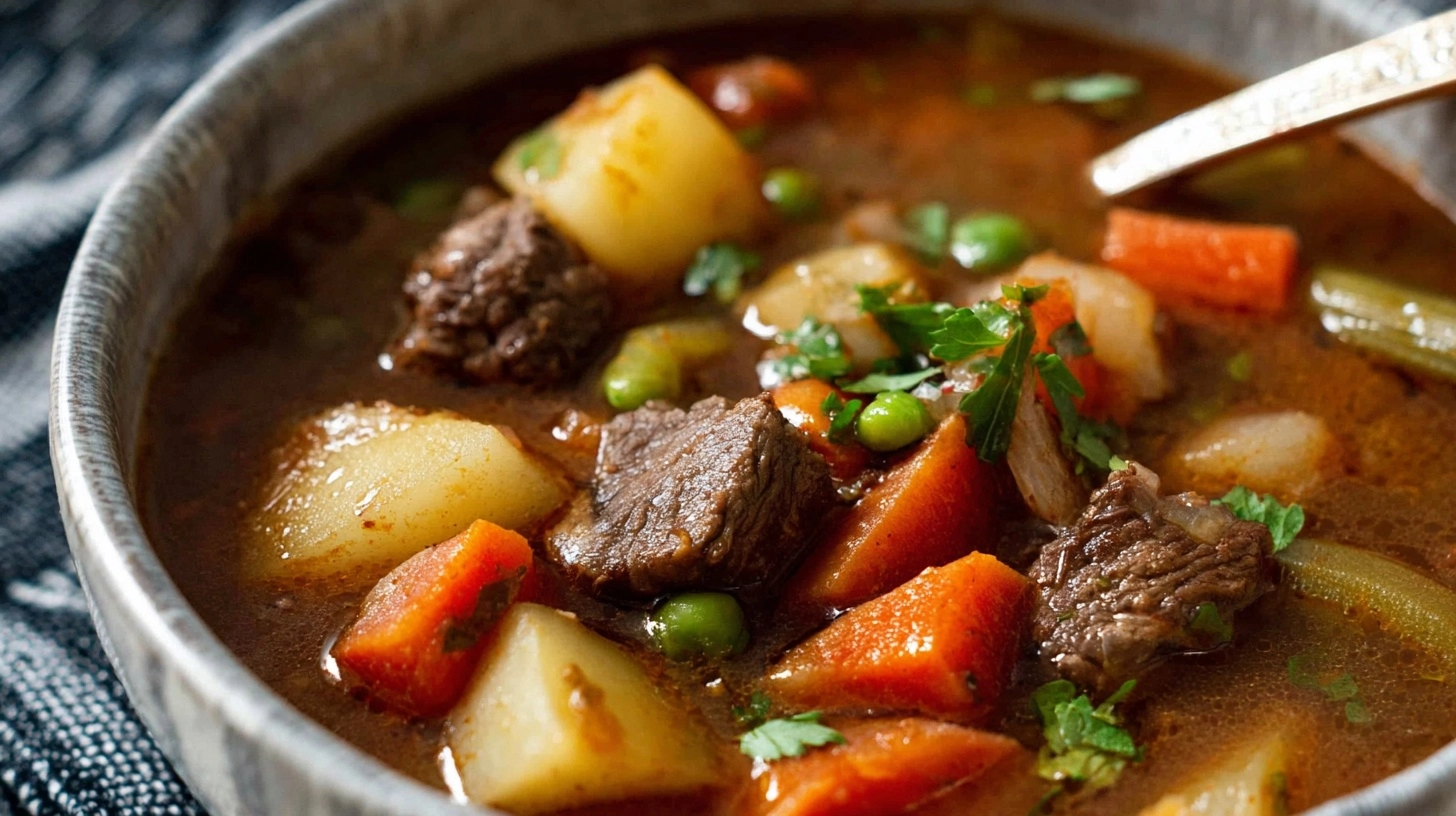
Did you know that the average American consumes only 2.3 servings of vegetables daily, falling short of the recommended 5-9 servings? This startling nutritional gap makes vegetable beef soup not just a comfort food favorite, but a strategic solution for boosting your daily vegetable intake by up to a significant portion of in a single bowl. Unlike many heavy winter dishes that leave you sluggish, this hearty vegetable beef soup combines lean protein with nutrient-dense vegetables, creating a meal that satisfies hunger while delivering essential vitamins and minerals your body craves during colder months.
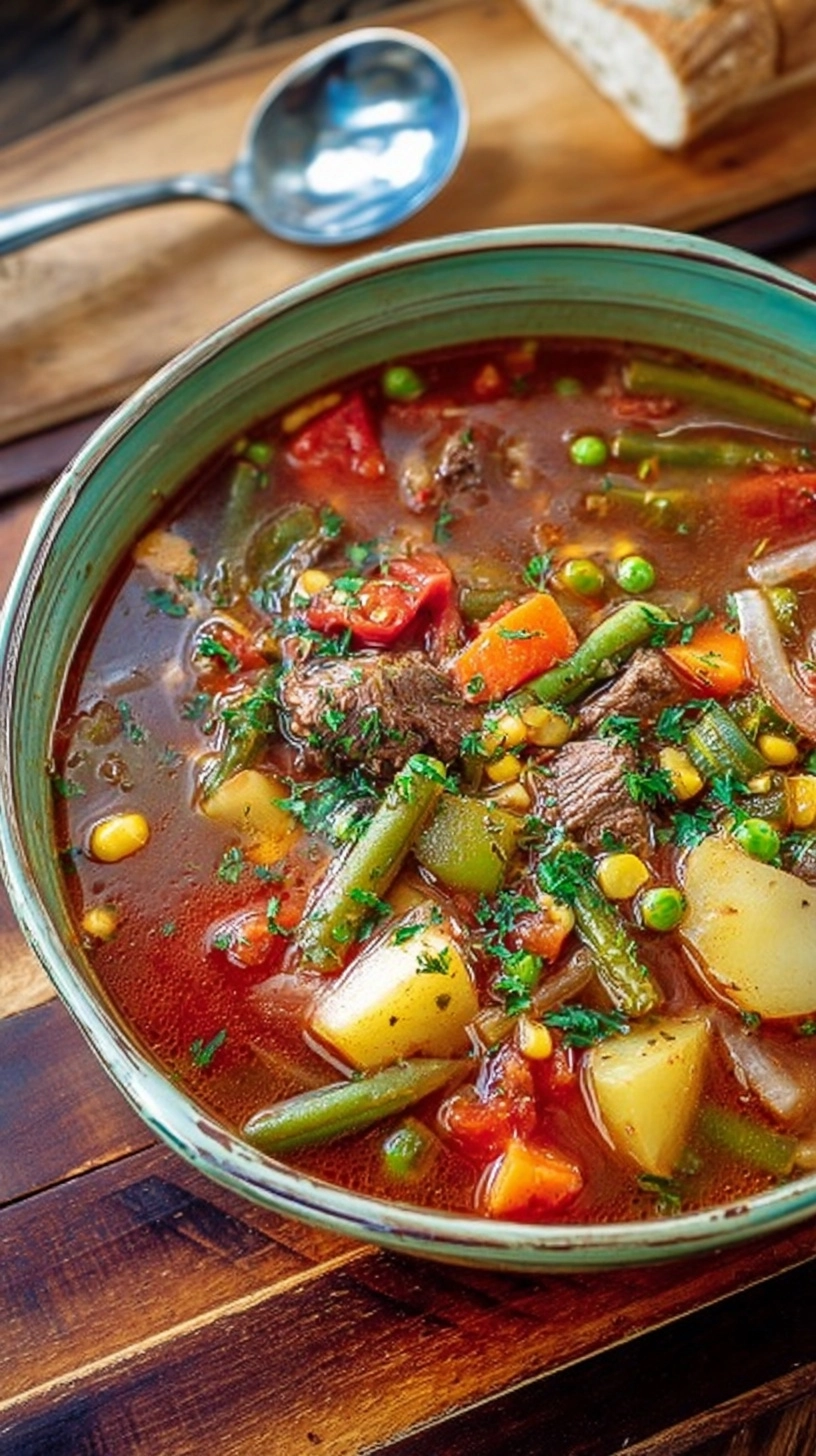
Ingredients
Creating the perfect vegetable beef soup starts with selecting quality ingredients that work harmoniously together. Here’s your comprehensive shopping list:
Protein Base:
- 1.5 pounds lean beef chuck roast, cut into 1-inch cubes (substitute: beef stew meat or lean ground beef for quicker cooking)
- 2 tablespoons olive oil or avocado oil
Aromatic Foundation:
- 1 large yellow onion, diced (substitute: white onion or 2 shallots)
- 3 cloves garlic, minced (substitute: 1 teaspoon garlic powder)
- 2 stalks celery, chopped (substitute: 1 cup chopped fennel for unique flavor)
Vegetable Medley:
- 3 large carrots, sliced into coins (substitute: parsnips for earthier taste)
- 3 medium potatoes, cubed (substitute: sweet potatoes for added nutrition)
- 1 cup green beans, trimmed and cut into 1-inch pieces
- 1 cup corn kernels (fresh, frozen, or canned)
- 1 cup peas (fresh or frozen)
Liquid Base:
- 8 cups low-sodium beef broth (substitute: vegetable broth for lighter flavor)
- 2 cups water
- One 14.5-ounce can diced tomatoes
Seasonings:
- 2 bay leaves
- 1 teaspoon dried thyme
- 1 teaspoon dried oregano
- 1 teaspoon salt (adjust to taste)
- ½ teaspoon black pepper
- 2 tablespoons tomato paste
Timing
Preparation Time: 25 minutes
Cooking Time: 1 hour 45 minutes
Total Time: 2 hours 10 minutes
This timing represents approximately nearly some of less cooking time than traditional slow-cooked versions while maintaining the same depth of flavor through strategic layering techniques. The active cooking time is only 30 minutes, making this an ideal “set and simmer” meal for busy weekdays.
Step 1: Prepare Your Mise en Place
Begin by cutting all vegetables into uniform pieces—this ensures even cooking and professional presentation. Pat the beef cubes dry with paper towels and season generously with salt and pepper. This crucial step removes excess moisture, allowing for better browning and enhanced flavor development.
Step 2: Brown the Beef
Heat olive oil in a large Dutch oven or heavy-bottomed pot over medium-high heat. Working in batches to avoid overcrowding, brown the beef cubes on all sides, approximately 2-3 minutes per side. This Maillard reaction creates complex flavors that form the soup’s foundation. Transfer browned beef to a plate and set aside.
Step 3: Build the Aromatic Base
In the same pot, reduce heat to medium and add diced onions to the remaining oil and beef drippings. Sauté for 4-5 minutes until translucent and fragrant. Add minced garlic and cook for an additional 30 seconds, stirring constantly to prevent burning.
Step 4: Create the Flavor Foundation
Add tomato paste to the aromatic vegetables and cook for 1-2 minutes, stirring constantly. This technique concentrates the tomato flavor and adds richness. Add diced tomatoes, scraping up any browned bits from the bottom of the pot—these caramelized pieces are flavor gold.
Step 5: Combine and Simmer
Return the browned beef to the pot along with beef broth, water, bay leaves, thyme, and oregano. Bring the mixture to a boil, then reduce heat to low and maintain a gentle simmer. Cover partially and cook for 1 hour, allowing the beef to begin tenderizing.
Step 6: Add Hardy Vegetables
After the initial hour of simmering, add carrots, potatoes, and celery to the pot. These vegetables require longer cooking times to achieve optimal tenderness. Continue simmering for an additional 30 minutes.
Step 7: Finish with Tender Vegetables
Add green beans, corn, and peas during the final 15 minutes of cooking. These vegetables maintain better texture and color when added toward the end. Taste and adjust seasoning with salt and pepper as needed.
Nutritional Information
One generous 1.5-cup serving of this vegetable beef soup provides approximately:
- Calories: 285
- Protein: 24 grams (a significant portion of daily value)
- Carbohydrates: 22 grams
- Fiber: 4.5 grams (nearly some of daily value)
- Fat: 8 grams
- Sodium: 680 milligrams
- Iron: 3.2 milligrams (nearly some of daily value)
- Vitamin A: the vast majority of daily value (from carrots)
- Vitamin C: a significant portion of daily value (from tomatoes and vegetables)
This nutritional profile makes the soup an excellent source of complete protein while delivering significant amounts of immune-supporting vitamins and minerals.
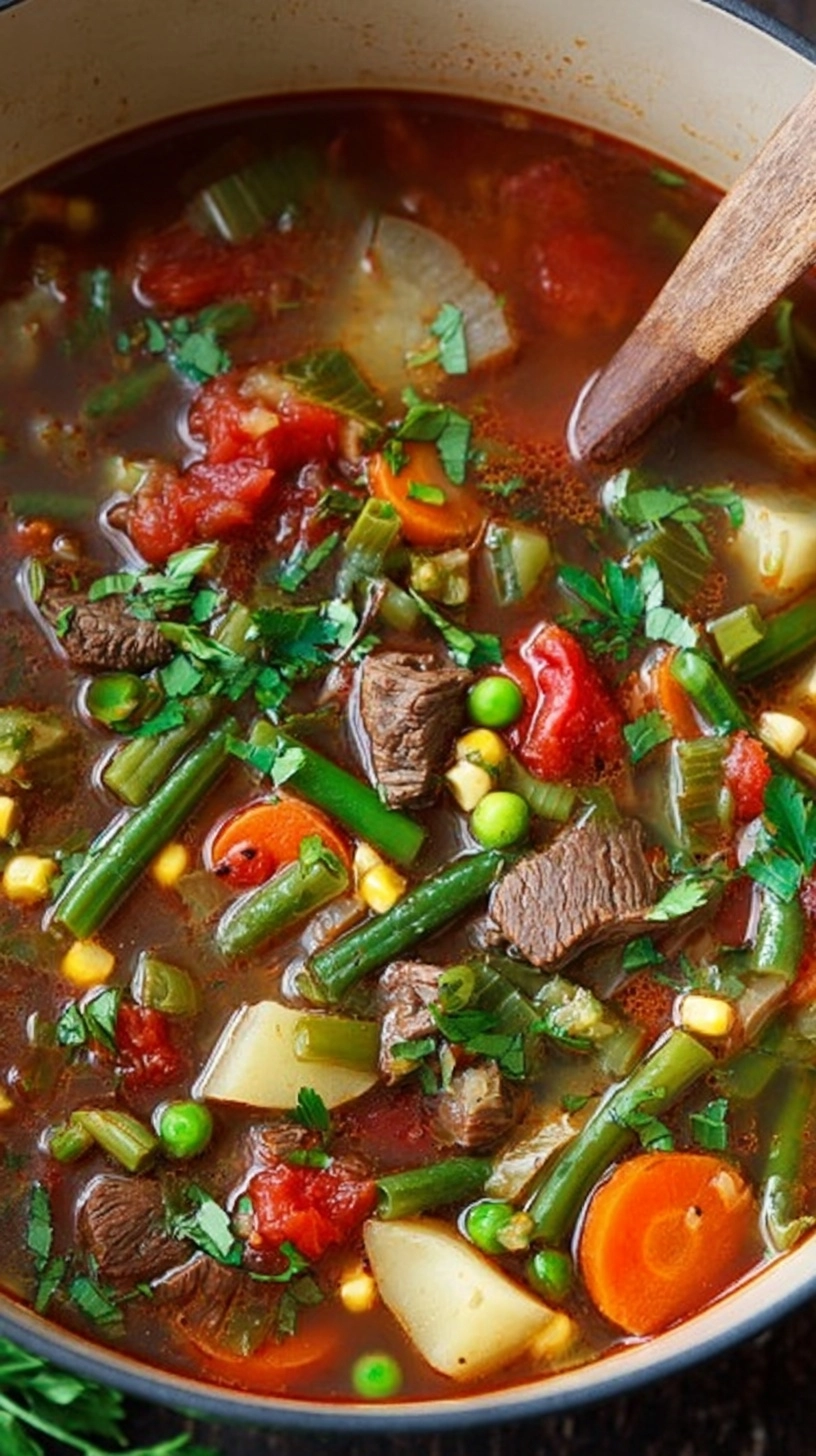
Healthier Alternatives for the Recipe
Transform your vegetable beef soup into an even more nutritious powerhouse with these strategic modifications:
Boost Fiber Content: Replace regular potatoes with sweet potatoes and add ½ cup of pearl barley or quinoa during the initial simmering stage. This increases fiber content by a significant portion of while adding complex carbohydrates.
Reduce Sodium: Use low-sodium broth and increase herbs like fresh parsley, rosemary, or basil for flavor enhancement. Add a splash of apple cider vinegar to brighten flavors without salt.
Increase Vegetable Density: Incorporate nutrient-dense vegetables like chopped kale, spinach, or Swiss chard during the final 5 minutes of cooking. These leafy greens add folate and antioxidants without compromising taste.
Lean Protein Option: Substitute ground turkey or lean ground bison for beef to reduce saturated fat content by up to a significant portion of while maintaining protein levels.
Serving Suggestions
Elevate your vegetable beef soup experience with these creative serving ideas:
Serve in warmed bowls topped with a dollop of Greek yogurt and fresh herbs for added protein and probiotics. Pair with whole grain crusty bread or homemade cornbread for a complete meal that provides sustained energy.
For elegant presentation, garnish with microgreens or a drizzle of high-quality olive oil. Consider serving alongside a simple green salad with vinaigrette to add fresh, crisp textures that complement the soup’s hearty nature.
Transform leftovers into a completely new meal by serving over cooked rice or pasta, creating a hearty stew-like consistency that appeals to different taste preferences.
Common Mistakes to Avoid
Overcrowding the Pot: Browning beef in overcrowded batches prevents proper caramelization and results in steamed, gray meat instead of flavorful, browned pieces.
Adding All Vegetables Simultaneously: Different vegetables require varying cooking times. Adding tender vegetables too early results in mushy textures and diminished nutritional value.
Insufficient Seasoning Layers: Season at multiple stages—when browning meat, building aromatics, and finishing the soup—rather than only at the end for more complex flavor development.
Boiling Instead of Simmering: Aggressive boiling toughens beef and breaks down vegetables excessively. Maintain a gentle simmer for optimal texture and flavor retention.
Storing Tips for the Recipe
Refrigerator Storage: Cool soup completely before transferring to airtight containers. Properly stored vegetable beef soup maintains quality for 4-5 days in the refrigerator.
Freezer Storage: This soup freezes exceptionally well for up to 3 months. Consider freezing in portion-sized containers for convenient single-serving meals. Note that potatoes may become slightly grainy after freezing—this doesn’t affect safety or overall taste.
Reheating Guidelines: Thaw frozen soup overnight in the refrigerator, then reheat gently on the stovetop over medium-low heat, stirring occasionally. Add a splash of broth if needed to restore desired consistency.
Make-Ahead Strategy: Prepare the soup through Step 6, then refrigerate overnight. This resting period actually enhances flavors. Add the final vegetables and complete cooking the next day.
FAQs
Can I make this vegetable beef soup in a slow cooker?
Absolutely! Brown the beef and sauté aromatics as directed, then transfer everything to a slow cooker. Cook on low for 6-7 hours or high for 3-4 hours, adding tender vegetables during the final hour.
What’s the best cut of beef for soup?
Chuck roast offers the ideal balance of flavor and tenderness when slow-cooked. Avoid lean cuts like sirloin, which become tough during long cooking periods.
Can I substitute frozen vegetables?
Yes, but add them during the final 10-15 minutes of cooking to prevent overcooking. Frozen vegetables often release more liquid, so you may need less broth.
How can I thicken my soup if it’s too thin?
Create a slurry with 2 tablespoons cornstarch and ¼ cup cold water. Stir into simmering soup and cook for 5 minutes until thickened. Alternatively, mash a few potato pieces against the pot’s side and stir in.
Is this soup suitable for meal prep?
Absolutely! This recipe yields 8-10 servings, making it perfect for meal prep. The flavors actually improve after a day, making it an ideal make-ahead option for busy weeks.
Kitchen Mosaic Notes
Thanks for reading! Remember that nutritional values are approximate. For the best results, adapt this recipe to your specific dietary needs.