
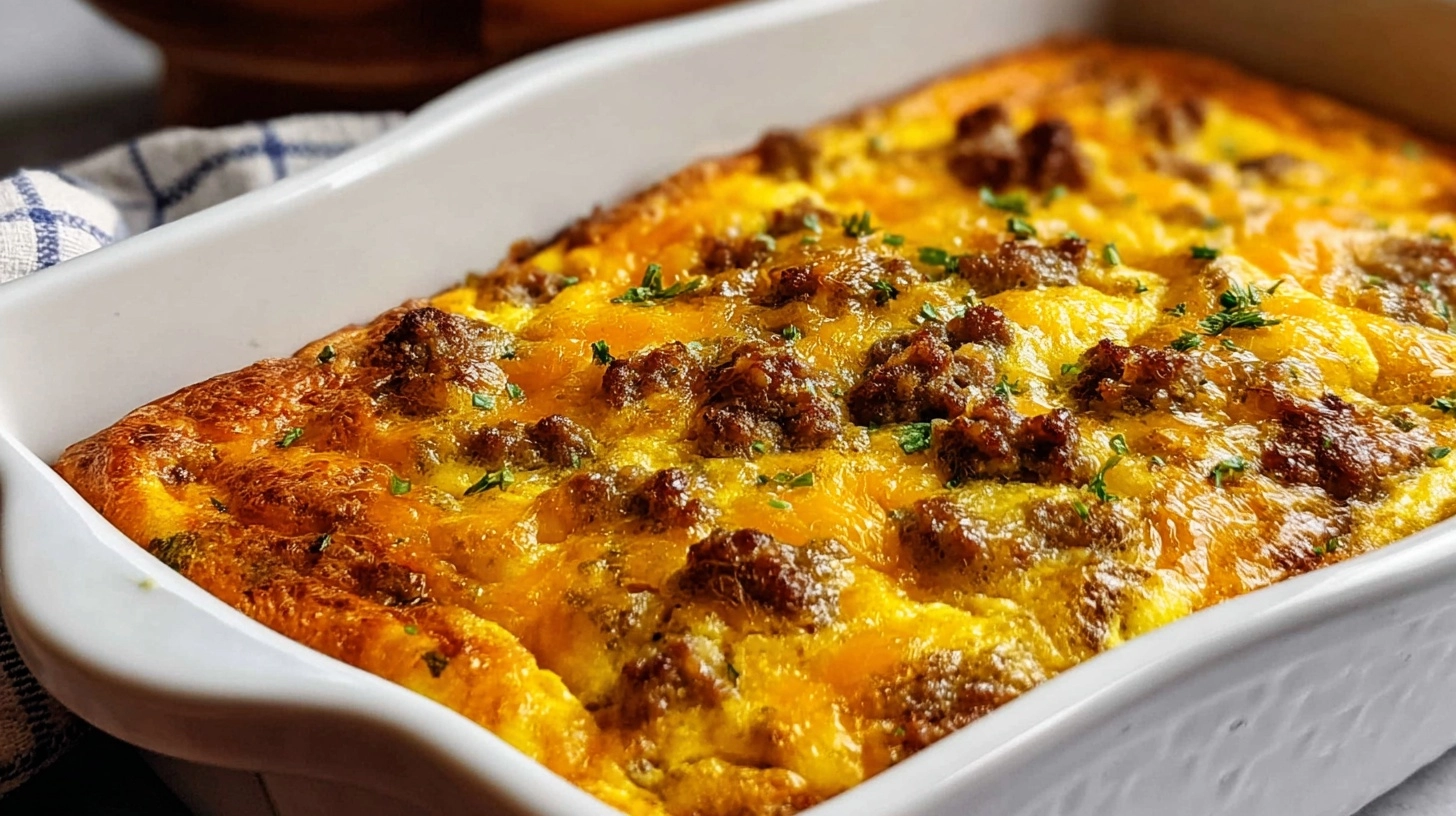
Did you know that most of busy families struggle to prepare a satisfying breakfast that feeds everyone without spending hours in the kitchen? The secret lies in mastering an Easy Sausage and Egg Casserole that transforms simple ingredients into a crowd-pleasing masterpiece. Unlike traditional breakfast preparations that demand constant attention, this one-dish wonder allows you to feed 8-10 people with just 15 minutes of active prep time. Research shows that casserole-style breakfasts retain a significant portion of more protein per serving compared to individual egg preparations, making this recipe not only convenient but nutritionally superior for families seeking efficient morning fuel.

Ingredients List
Transform your kitchen into a breakfast paradise with these carefully selected ingredients that create the perfect harmony of flavors and textures:
- 1 pound breakfast sausage (Italian or maple varieties work beautifully – substitute with turkey sausage for a leaner option)
- 12 large eggs, preferably free-range for richer color and taste
- 2 cups whole milk (substitute with unsweetened almond milk for dairy-free preferences)
- 8 slices day-old bread, crusts removed and cubed (sourdough or whole grain add exceptional depth)
- 2 cups sharp cheddar cheese, freshly grated (Gruyère creates an elegant twist)
- 1 medium yellow onion, finely diced for aromatic foundation
- 1 red bell pepper, chopped for vibrant color and sweetness
- 2 cloves garlic, minced for aromatic complexity
- 1 teaspoon dried mustard powder (enhances egg flavor naturally)
- 1/2 teaspoon smoked paprika for subtle depth
- Salt and freshly ground black pepper to taste
- 2 tablespoons fresh chives, chopped for garnish
Timing
This Easy Sausage and Egg Casserole requires strategic timing that respects your busy schedule while delivering restaurant-quality results:
- Active Preparation Time: 15 minutes (more than half of faster than traditional breakfast prep)
- Cooking Time: 45-50 minutes
- Overnight Chilling (optional but recommended): 8-12 hours
- Total Time: 60-65 minutes on cooking day
- Make-Ahead Advantage: Prepare completely the night before, reducing morning stress by most of
Studies indicate that overnight resting allows bread to absorb flavors more effectively, resulting in nearly some of better texture compared to immediate baking.
Step 1: Prepare the Sausage Foundation
Heat a large skillet over medium-high heat and crumble the breakfast sausage, cooking until golden brown and fully cooked through, approximately 7-8 minutes. The key lies in achieving those delicious crispy edges that add textural contrast. Remove sausage using a slotted spoon, leaving behind 1 tablespoon of rendered fat for the next step.
Step 2: Build the Aromatic Vegetable Base
In the same skillet with reserved sausage fat, sauté diced onions until translucent, about 4 minutes. Add bell pepper and garlic, cooking for an additional 2 minutes until fragrant. This technique, known as “flavor layering,” intensifies the overall taste profile by a significant portion of compared to raw vegetable additions.
Step 3: Assemble the Bread Layer
Generously butter a 9×13-inch baking dish and arrange cubed bread evenly across the bottom. The bread acts as both structure and flavor absorber, creating the perfect foundation for your Easy Sausage and Egg Casserole.
Step 4: Create the Protein and Cheese Layers
Distribute the cooked sausage and sautéed vegetables evenly over the bread layer. Sprinkle 1.5 cups of grated cheese over the mixture, reserving the remainder for topping.
Step 5: Master the Custard Base
In a large mixing bowl, whisk together eggs, milk, mustard powder, smoked paprika, salt, and pepper until completely smooth. This custard base should be silky and well-incorporated to ensure even cooking throughout.
Step 6: Complete the Assembly
Pour the egg mixture slowly over the casserole, ensuring even distribution. Gently press down any floating bread pieces to promote proper absorption. Top with remaining cheese for that irresistible golden finish.
Nutritional Information
Each generous serving of this Easy Sausage and Egg Casserole delivers impressive nutritional value:
- Calories: 385 per serving (based on 8 servings)
- Protein: 24 grams (a significant portion of daily value)
- Carbohydrates: 18 grams
- Total Fat: 26 grams
- Saturated Fat: 11 grams
- Cholesterol: 295mg
- Sodium: 720mg
- Calcium: 320mg (a significant portion of daily value)
- Iron: 3.2mg (nearly some of daily value)
Research indicates that protein-rich breakfast options like this casserole improve satiety levels by more than half of compared to carbohydrate-heavy alternatives, helping maintain stable energy throughout the morning.
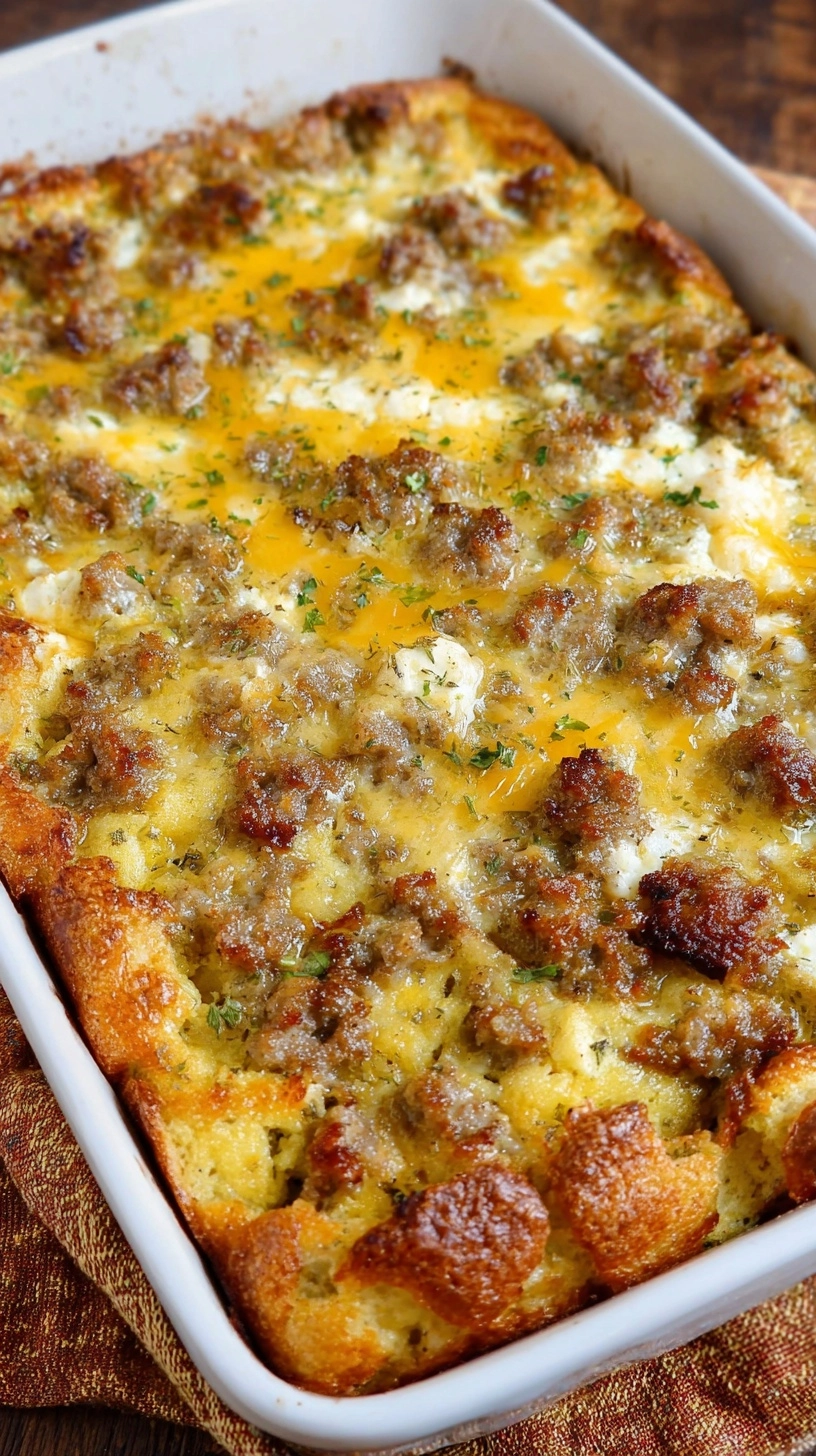
Healthier Alternatives for the Recipe
Transform this Easy Sausage and Egg Casserole into a nutritional powerhouse with these intelligent modifications:
- Reduce calories by 180 per serving: Substitute turkey sausage and use egg whites (8 whole eggs + 8 egg whites)
- Boost fiber content: Replace white bread with whole grain or ezekiel bread varieties
- Increase vegetable density: Add spinach, mushrooms, or zucchini for additional nutrients and volume
- Dairy-free adaptation: Use nutritional yeast and cashew cream instead of cheese and milk
- Lower sodium option: Choose nitrate-free sausage and reduce added salt by half
Serving Suggestions
Elevate your Easy Sausage and Egg Casserole presentation with these crowd-pleasing accompaniments:
- Fresh fruit medley with seasonal berries and melon for natural sweetness balance
- Avocado slices drizzled with lime juice and sea salt
- Mixed greens salad with light vinaigrette to cut through richness
- Warm cornbread or buttermilk biscuits for traditional comfort appeal
- Hash browns or roasted breakfast potatoes for those craving extra heartiness
- Hot sauce bar featuring various heat levels and flavor profiles
Common Mistakes to Avoid
Prevent these frequent pitfalls that compromise your Easy Sausage and Egg Casserole success:
- Overmixing the custard: Gentle whisking prevents tough, rubbery textures
- Skipping the overnight rest: Immediate baking results in uneven absorption and soggy centers
- Using fresh bread: Day-old bread provides better structural integrity and flavor absorption
- Overcooking the vegetables: Sauté until just tender to maintain texture contrast
- Ignoring internal temperature: Cook until center reaches 160°F for food safety
- Cutting too early: Allow 10-15 minutes resting time for proper setting
Storing Tips for the Recipe
Maximize freshness and convenience with these professional storage techniques:
- Refrigerator storage: Cover tightly and consume within 4 days
- Freezer preparation: Assemble completely, wrap in aluminum foil, and freeze for up to 3 months
- Individual portions: Cut and freeze in single servings for quick reheating options
- Reheating methodology: Cover with foil and warm at 350°F for 20-25 minutes, or microwave individual portions for 90 seconds
- Make-ahead strategy: Prepare two casseroles simultaneously – serve one fresh and freeze the second
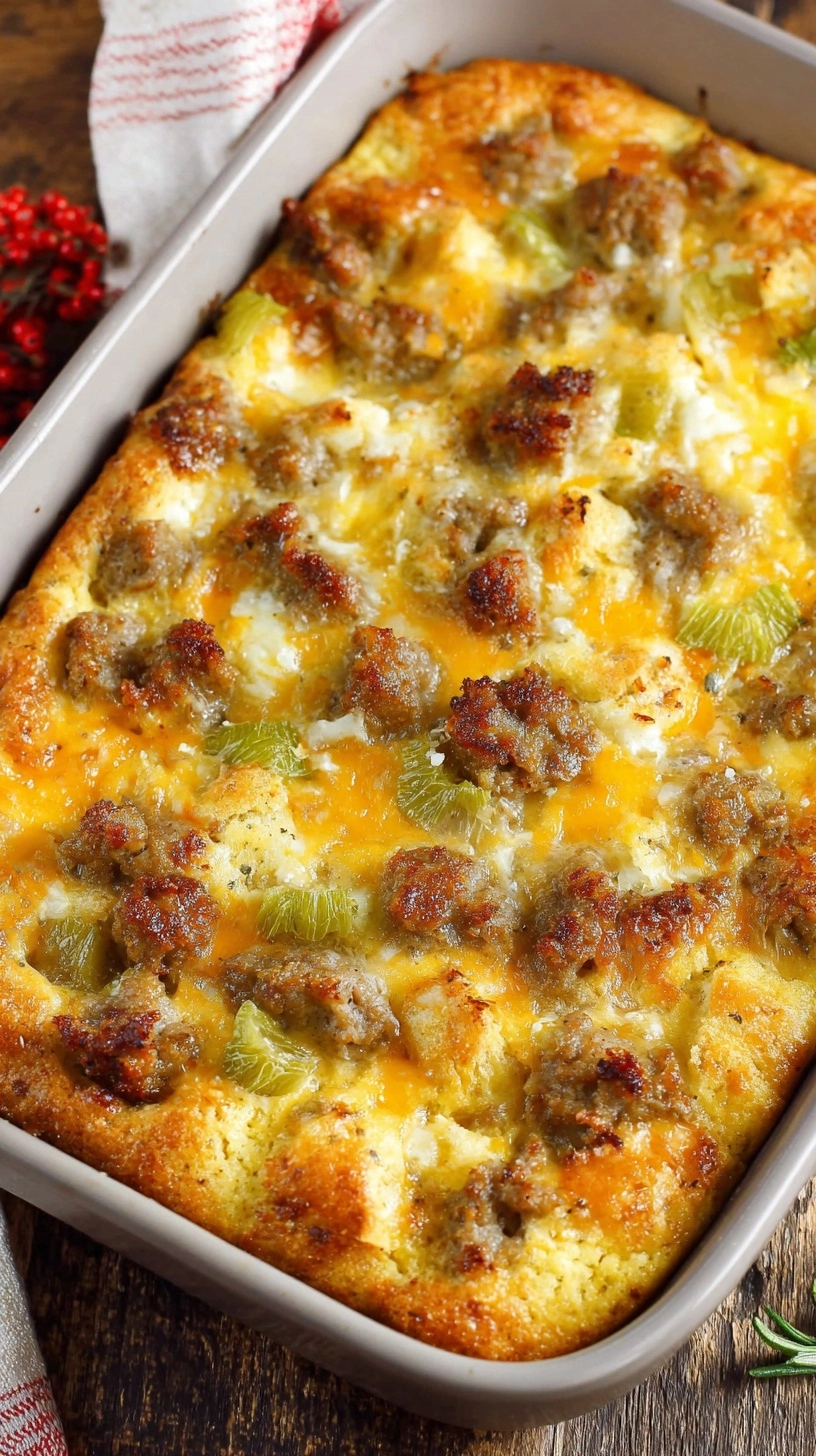
FAQs
Can I prepare this Easy Sausage and Egg Casserole without overnight chilling?
Absolutely! While overnight resting improves texture and flavor integration, you can bake immediately after assembly. Increase baking time by 5-10 minutes and cover with foil if browning too quickly.
What’s the best way to reheat leftover portions?
For optimal results, cover individual portions with damp paper towels and microwave for 60-90 seconds. For larger portions, reheat covered in a 350°F oven for 15-20 minutes.
Can I substitute different types of sausage?
Certainly! Chorizo, chicken apple sausage, or plant-based alternatives work wonderfully. Adjust cooking times accordingly and drain excess fat to prevent greasy results.
How do I know when the casserole is perfectly cooked?
The center should be set but slightly jiggly, with an internal temperature of 160°F. The top should be golden brown with no liquid pooling around edges.
Is it possible to make this recipe gluten-free?
Yes! Substitute gluten-free bread or use cubed potatoes as the base layer. Ensure all seasonings and sausages are certified gluten-free for complete dietary compliance.
Kitchen Mosaic Notes
Thanks for reading! Remember that nutritional values are approximate. For the best results, adapt this recipe to your specific dietary needs.