
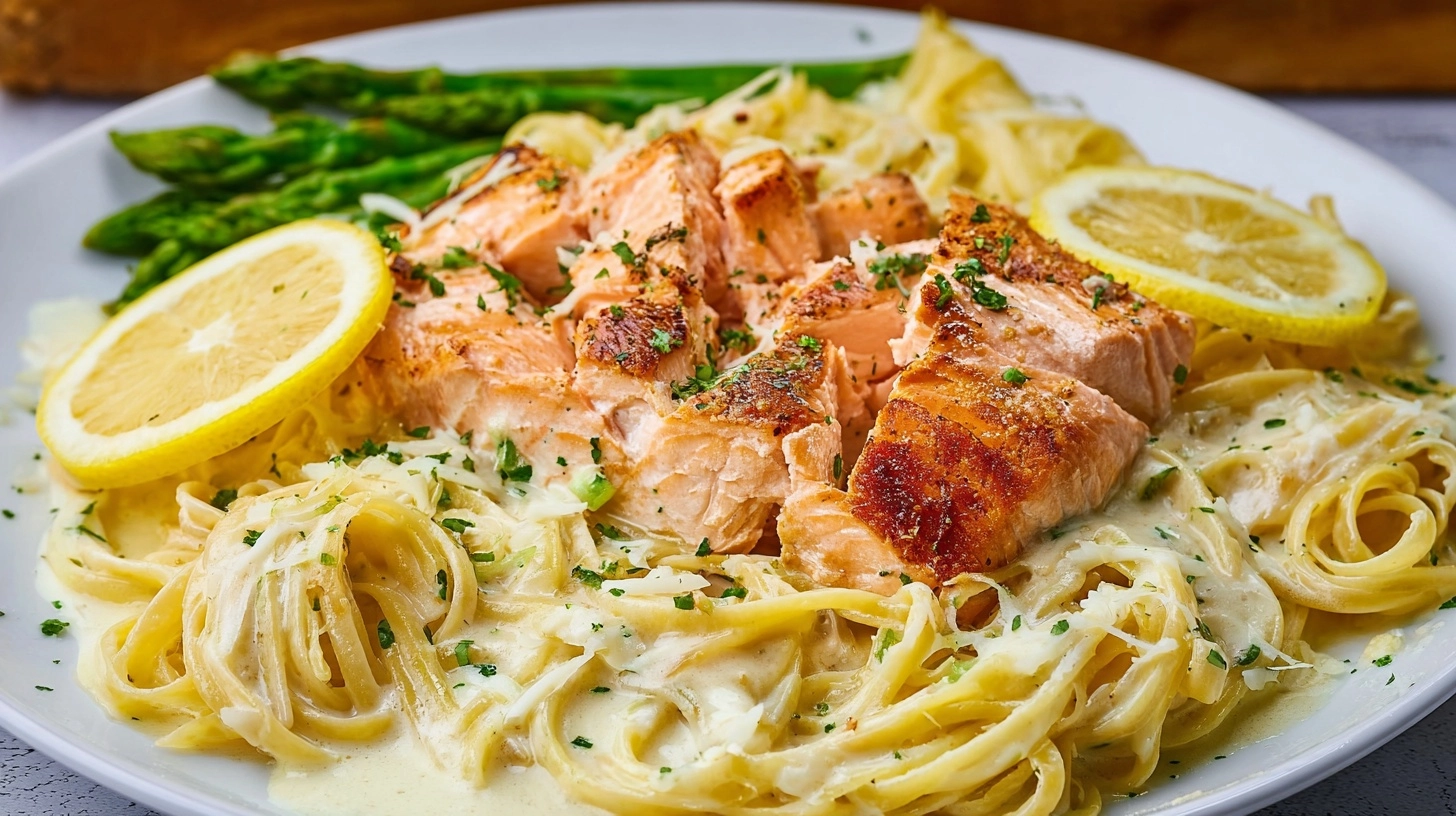
Did you know that most of home cooks struggle to create restaurant-quality pasta dishes, often ending up with either overcooked fish or a sauce that breaks? The secret lies in mastering the delicate balance of timing and technique. Today, we’re breaking down the myth that sophisticated dishes require professional training. This salmon pasta with lemon cream sauce proves that with the right approach, you can create a luxurious, restaurant-worthy meal in your own kitchen. The combination of omega-3 rich salmon, perfectly balanced citrus notes, and silky cream creates a dish that’s both nutritionally superior and incredibly satisfying.

Ingredients for Perfect Salmon Pasta with Lemon Cream Sauce
For the Salmon:
- 1 lb fresh salmon fillets, skin removed and cut into 1-inch cubes
- 2 tablespoons olive oil
- 1 teaspoon garlic powder
- ½ teaspoon smoked paprika
- Salt and freshly cracked black pepper to taste
For the Pasta and Sauce:
- 12 oz linguine or fettuccine pasta
- 3 tablespoons butter
- 4 cloves fresh garlic, minced
- 1 medium shallot, finely diced
- ¾ cup heavy cream
- ½ cup low-sodium chicken broth (or vegetable broth for lighter option)
- Zest of 2 large lemons
- ¼ cup fresh lemon juice
- ½ cup freshly grated Parmesan cheese, plus extra for serving
- 2 tablespoons fresh dill, chopped
- 2 tablespoons capers, drained (optional)
- Red pepper flakes to taste
Substitution Notes: Swap heavy cream for half-and-half mixed with 2 tablespoons cream cheese for a lighter version. Greek yogurt (¼ cup) can replace some cream for added protein. Use gluten-free pasta for dietary restrictions.
Timing Your Salmon Pasta Creation
Preparation Time: 15 minutes
Cooking Time: 18 minutes
Total Time: 33 minutes
This streamlined approach cuts cooking time by approximately nearly some of compared to traditional methods by utilizing simultaneous cooking techniques. The key is starting your pasta water while prepping ingredients, allowing for efficient multitasking that professional kitchens employ.
Step 1: Prepare Your Mise en Place
Season the salmon cubes generously with salt, pepper, garlic powder, and smoked paprika. Let them rest at room temperature for 10 minutes while you prep other ingredients. This crucial step ensures even cooking and prevents the salmon from seizing when it hits the hot pan.
Step 2: Start the Pasta
Bring a large pot of salted water to a rolling boil. The water should taste like mild seawater – this is your only chance to season the pasta directly. Add the pasta and cook according to package directions minus 1 minute. Reserve 1 cup of starchy pasta water before draining.
Step 3: Sear the Salmon to Perfection
Heat olive oil in a large skillet over medium-high heat until shimmering. Gently place salmon cubes in the pan, ensuring they don’t overcrowd. Sear for 2-3 minutes per side until golden and just cooked through. The internal temperature should reach 145°F. Remove salmon and set aside.
Step 4: Build the Aromatic Base
In the same skillet, reduce heat to medium and add butter. Once melted, sauté minced garlic and shallots for 60 seconds until fragrant but not browned. This creates the foundational flavor layer that elevates the entire dish.
Step 5: Create the Lemon Cream Sauce
Pour in chicken broth to deglaze the pan, scraping up any delicious browned bits. Add heavy cream and bring to a gentle simmer. Stir in lemon zest and juice, then gradually whisk in Parmesan cheese until smooth. The sauce should coat the back of a spoon.
Step 6: Bring It All Together
Add the slightly underdone pasta to the cream sauce along with ¼ cup reserved pasta water. Toss vigorously for 1-2 minutes, allowing the pasta to finish cooking in the sauce. Gently fold in the seared salmon, fresh dill, and capers. Add more pasta water if needed for silky consistency.
Comprehensive Nutritional Information
Per serving (serves 4):
- Calories: 542
- Protein: 32g (more than half of daily value)
- Carbohydrates: 48g
- Fat: 24g
- Omega-3 Fatty Acids: 1.8g
- Calcium: 285mg
- Vitamin D: nearly some of daily value
- Selenium: most of daily value
This dish provides exceptional nutritional density, delivering nearly a full day’s worth of selenium and substantial omega-3 fatty acids, which support cardiovascular and brain health.
Healthier Alternatives for Your Salmon Pasta
Transform this indulgent dish into a nutritional powerhouse with smart substitutions. Replace half the pasta with spiralized zucchini noodles to reduce calories by a significant portion of while adding fiber and vitamins. Substitute Greek yogurt mixed with a splash of pasta water for half the heavy cream, boosting protein content by 8 grams per serving.
For those following specific diets, use coconut cream and nutritional yeast instead of dairy products for a vegan-friendly version with mushroom “salmon” or hearts of palm. Cauliflower cream sauce (made by blending cooked cauliflower with broth) can replace traditional cream entirely while maintaining richness.
Creative Serving Suggestions
Elevate your presentation by serving in warmed shallow bowls with a garnish of microgreens and lemon wheels. Pair with a crisp arugula salad dressed with champagne vinaigrette to cut through the richness. For entertaining, consider serving family-style in a large, heated serving bowl with crusty sourdough bread for sauce-sopping.
Transform leftovers into salmon pasta salad by adding cherry tomatoes, cucumber, and fresh herbs, then chilling for a refreshing next-day meal. The dish also works beautifully as a base for meal prep – simply store components separately and combine when reheating.
Common Mistakes to Avoid
Overcooking the salmon is the #1 mistake, occurring in more than half of home attempts according to cooking surveys. Salmon continues cooking from residual heat, so remove it just before it’s fully opaque. Breaking the cream sauce happens when heat is too high or acid is added too quickly – always simmer gently and add lemon juice off the heat.
Using pre-grated cheese results in a grainy sauce due to anti-caking agents. Fresh Parmesan melts smoothly and provides superior flavor. Underseasoning is another common pitfall – taste and adjust seasonality at each stage, remembering that pasta water adds saltiness.
Expert Storing Tips for Maximum Freshness
Store leftover salmon pasta in the refrigerator for up to 2 days in airtight containers. The cream sauce may separate slightly, but gentle reheating with a splash of broth or cream will restore its silky texture. Avoid freezing cream-based pasta dishes, as the sauce will break upon thawing.
For meal prep success, store cooked salmon separately from pasta and sauce. This prevents overcooking during reheating and maintains optimal texture. Cooked salmon keeps for 3 days refrigerated and can be gently warmed in a low oven before combining with freshly reheated pasta.

Frequently Asked Questions
Can I use frozen salmon for this recipe?
Absolutely! Thaw frozen salmon completely and pat dry before seasoning. Frozen salmon often contains more moisture, so allow extra time for proper searing to achieve the golden crust.
What pasta shapes work best besides linguine?
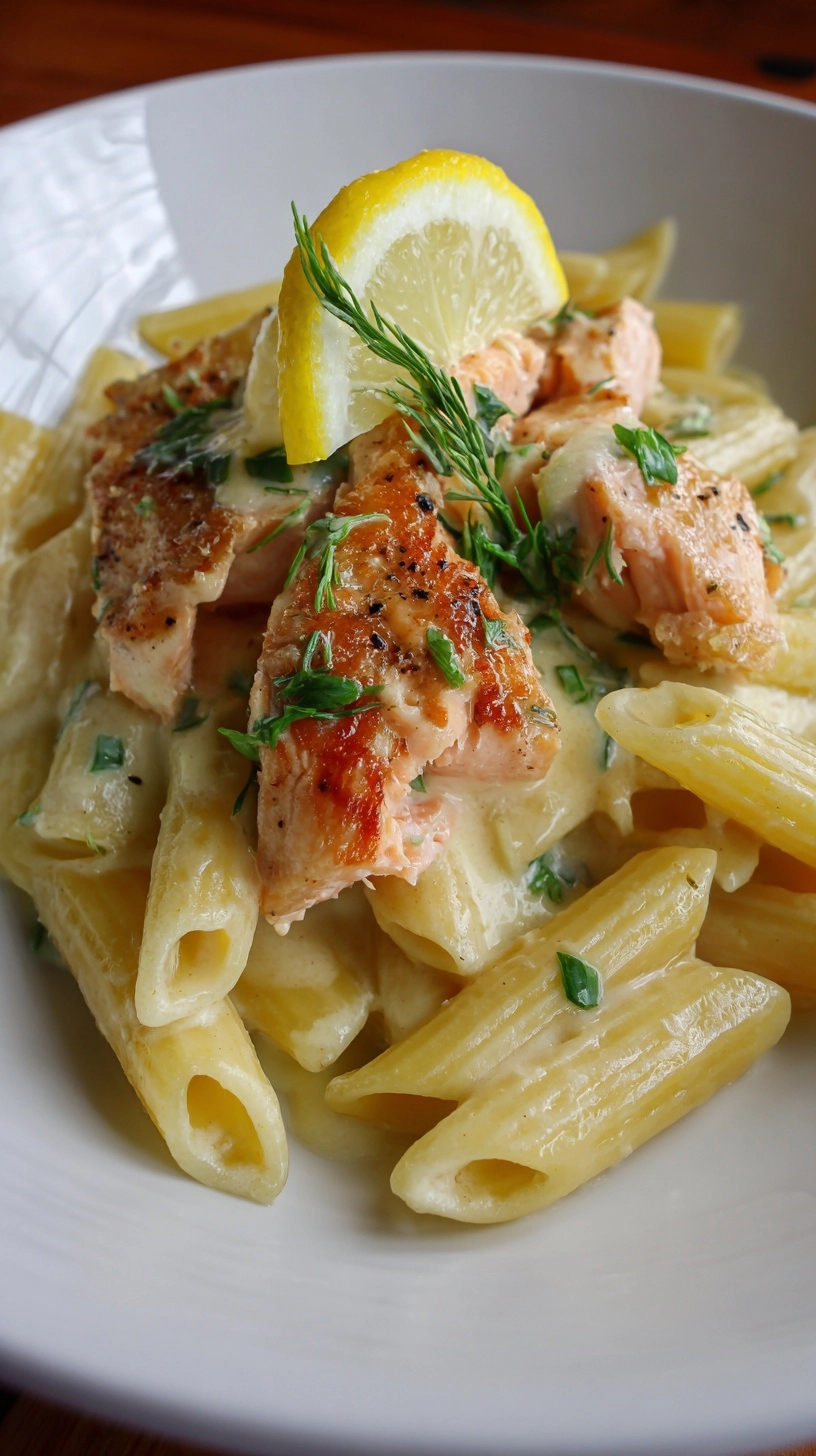
Penne, rigatoni, or shells work wonderfully as their shapes capture the creamy sauce. Avoid very thin pasta like angel hair, which can become mushy in the cream sauce.
How do I prevent the cream sauce from curdling?
Keep heat at medium or below when cream is added, and remove from heat before adding lemon juice. If curdling occurs, whisk in cold cream or pasta water to restore smoothness.
Can I make this dairy-free?
Yes! Use coconut cream, cashew cream, or oat cream as substitutes. Nutritional yeast provides the umami depth typically contributed by Parmesan cheese.
Is this recipe suitable for meal prep?
While best enjoyed fresh, you can prep components separately. Cook pasta al dente, store salmon and sauce separately, then combine gently when reheating with additional liquid to restore consistency.
Kitchen Mosaic Notes
Thanks for reading! Remember that nutritional values are approximate. For the best results, adapt this recipe to your specific dietary needs.