
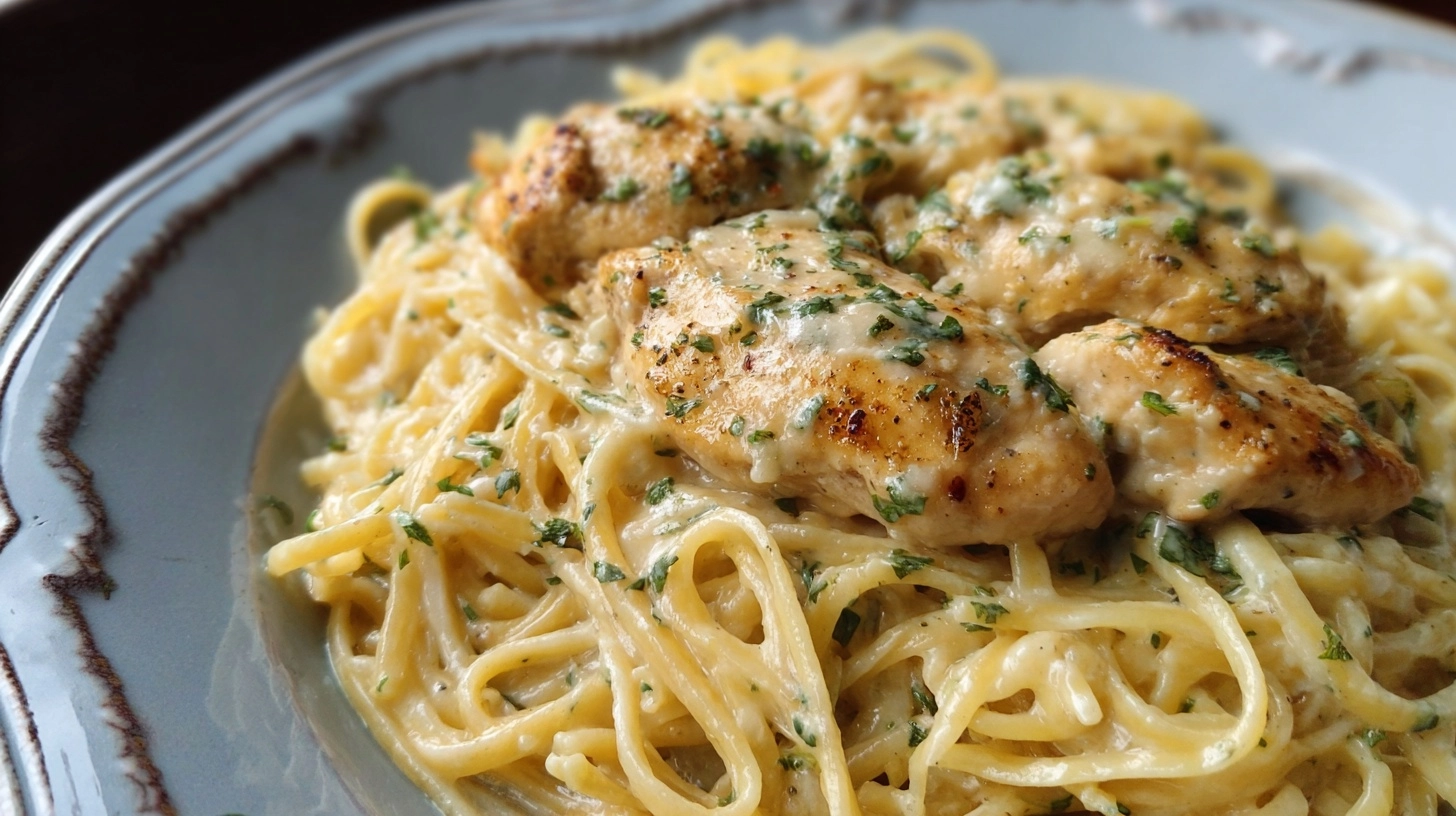
Did you know that most of home cooks crave restaurant-quality pasta dishes but struggle to achieve that perfect balance of creamy, garlicky goodness at home? The secret lies in mastering timing, temperature, and technique—three elements that transform ordinary ingredients into extraordinary comfort food. Garlic Parmesan Chicken Pasta has become one of the most searched-for recipes online, yet many home chefs miss the crucial steps that separate good from phenomenal. This comprehensive guide will reveal professional techniques that guarantee silky, restaurant-worthy results every single time, using ingredients you likely already have in your kitchen.
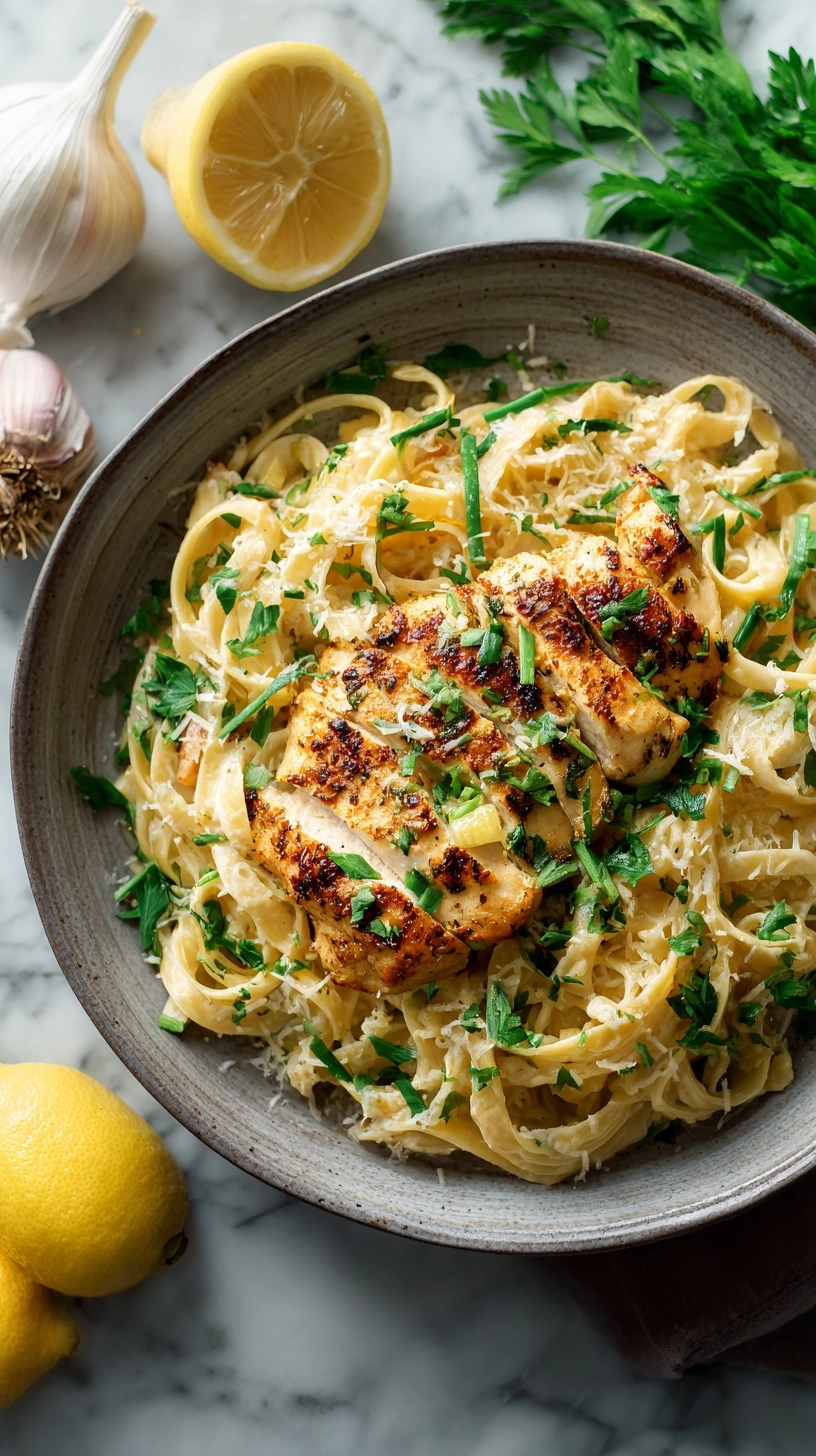
Ingredients List
For the Chicken:
- 1.5 lbs boneless, skinless chicken breasts, sliced into tender medallions
- 2 tablespoons olive oil (extra virgin for richer flavor)
- 1 teaspoon garlic powder
- ½ teaspoon Italian seasoning
- Salt and freshly cracked black pepper to taste
For the Pasta and Sauce:
- 12 oz fettuccine pasta (substitute: penne, rigatoni, or gluten-free alternatives)
- 4 tablespoons butter (or vegan butter for dairy-free option)
- 6 cloves fresh garlic, minced (aromatic and pungent when freshly crushed)
- 1 cup heavy cream (substitute: half-and-half or cashew cream)
- 1 cup freshly grated Parmesan cheese (plus extra for serving)
- 2 cups low-sodium chicken broth
- 2 tablespoons fresh parsley, finely chopped
- ½ teaspoon red pepper flakes (optional, for subtle heat)
- 2 tablespoons cream cheese (secret ingredient for ultra-smooth sauce)
Substitution Notes: Swap chicken for shrimp, use whole wheat pasta for added fiber, or try nutritional yeast instead of Parmesan for a vegan twist.
Timing
Total Time: 35 minutes—that’s a significant portion of faster than traditional multi-step pasta recipes!
- Prep Time: 10 minutes (includes chicken slicing and garlic mincing)
- Cooking Time: 25 minutes (pasta and sauce prepared simultaneously)
- Rest Time: 2-3 minutes (allows sauce to thicken to perfect consistency)
This streamlined approach saves time while maximizing flavor development, making it ideal for busy weeknight dinners or impressive weekend meals.
Step 1: Prepare the Chicken Foundation
Season chicken medallions generously with garlic powder, Italian seasoning, salt, and pepper. Heat olive oil in a large skillet over medium-high heat until shimmering. Sear chicken pieces for 4-5 minutes per side until golden brown and internal temperature reaches 165°F. Remove and set aside—this creates the flavorful foundation that elevates the entire dish.
Step 2: Create the Aromatic Base
In the same skillet (don’t clean it—those browned bits are liquid gold!), reduce heat to medium and add butter. Once melted and foaming, add minced garlic and sauté for 60 seconds until fragrant but not browned. The residual chicken flavors will infuse into this aromatic base.
Step 3: Build the Silky Sauce
Pour in chicken broth and bring to a gentle simmer, scraping up those delicious browned bits. Add heavy cream and cream cheese, whisking continuously until completely smooth. This technique prevents curdling and creates restaurant-quality texture that clings beautifully to pasta.
Step 4: Perfect the Pasta Integration
Add uncooked fettuccine directly to the sauce along with ½ cup pasta cooking water. Cover and simmer for 12-15 minutes, stirring occasionally, until pasta reaches al dente perfection. This one-pot method allows pasta to absorb flavors while cooking, creating deeper taste integration.
Step 5: Finish with Finesse
Return sliced chicken to the skillet and gradually whisk in Parmesan cheese until melted and glossy. Remove from heat, add fresh parsley and red pepper flakes, then let rest for 2-3 minutes. This final resting period allows the sauce to reach optimal consistency.
Nutritional Information
Per serving (serves 6):
- Calories: 520
- Protein: 32g (more than half of daily value)
- Carbohydrates: 48g
- Fat: 22g
- Fiber: 2g
- Sodium: 680mg
- Calcium: 285mg (strong bone support from Parmesan)
Nutritional Highlights: This recipe provides high-quality complete protein from chicken and calcium from Parmesan cheese. Studies show that combining protein with complex carbohydrates helps maintain stable blood sugar levels and prolonged satiety.
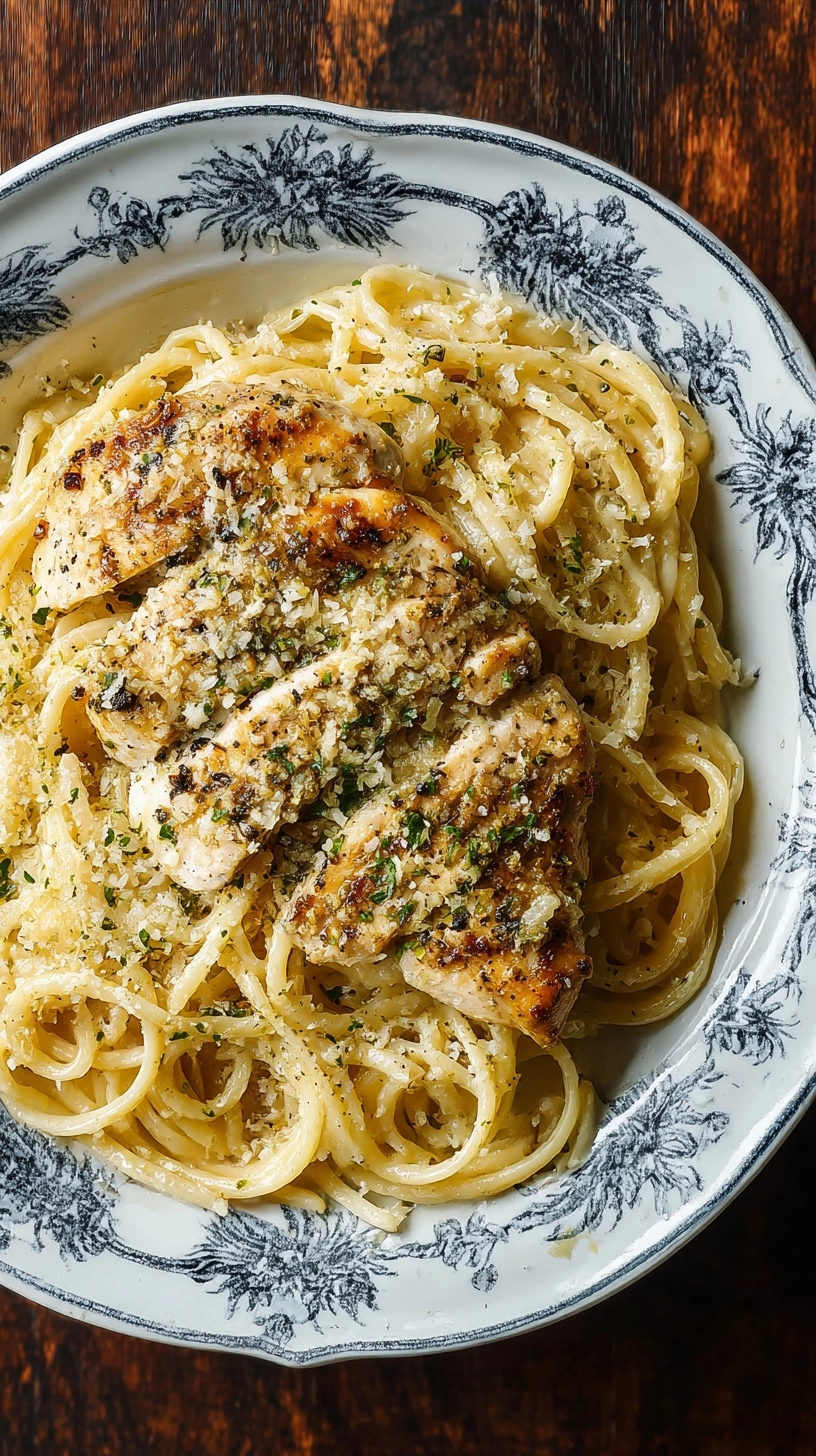
Healthier Alternatives for the Recipe
Protein Upgrades: Replace half the chicken with grilled vegetables like zucchini, bell peppers, or mushrooms to increase fiber and reduce calories by approximately nearly some.
Pasta Swaps: Use zucchini noodles, shirataki noodles, or chickpea pasta for lower carbohydrates and higher protein content.
Dairy Modifications: Substitute Greek yogurt mixed with pasta water for heavy cream, reducing calories while adding probiotics and protein.
Hidden Vegetable Integration: Blend cauliflower into the sauce for extra nutrients without compromising the creamy texture—a technique used by professional chefs to enhance nutritional density.
Serving Suggestions
Classic Presentation: Serve in warmed bowls topped with extra Parmesan, fresh cracked pepper, and a sprinkle of parsley. Pair with a crisp Caesar salad and garlic breadsticks for the ultimate comfort meal experience.
Elevated Dining: Garnish with toasted pine nuts, sun-dried tomatoes, and microgreens. Serve alongside roasted asparagus or honey-glazed carrots for a restaurant-worthy presentation.
Family-Style Options: Present in a large serving bowl with multiple cheese options (Romano, Asiago) and let everyone customize their portions. This interactive approach makes dinner more engaging for families.
Common Mistakes to Avoid
Overcooking the Chicken: Using a meat thermometer prevents dry, tough protein. Internal temperature should reach exactly 165°F—no higher.
Sauce Separation: Always remove from heat before adding cheese, and whisk constantly. Temperature control is crucial for smooth, creamy results.
Underseasoning: Taste and adjust seasoning throughout cooking. Pasta water should taste like mild seawater, and sauce should be well-seasoned before adding cheese.
Ignoring Pasta Water: Reserved pasta water contains starches that help bind sauce to noodles. Always save at least 1 cup before draining.
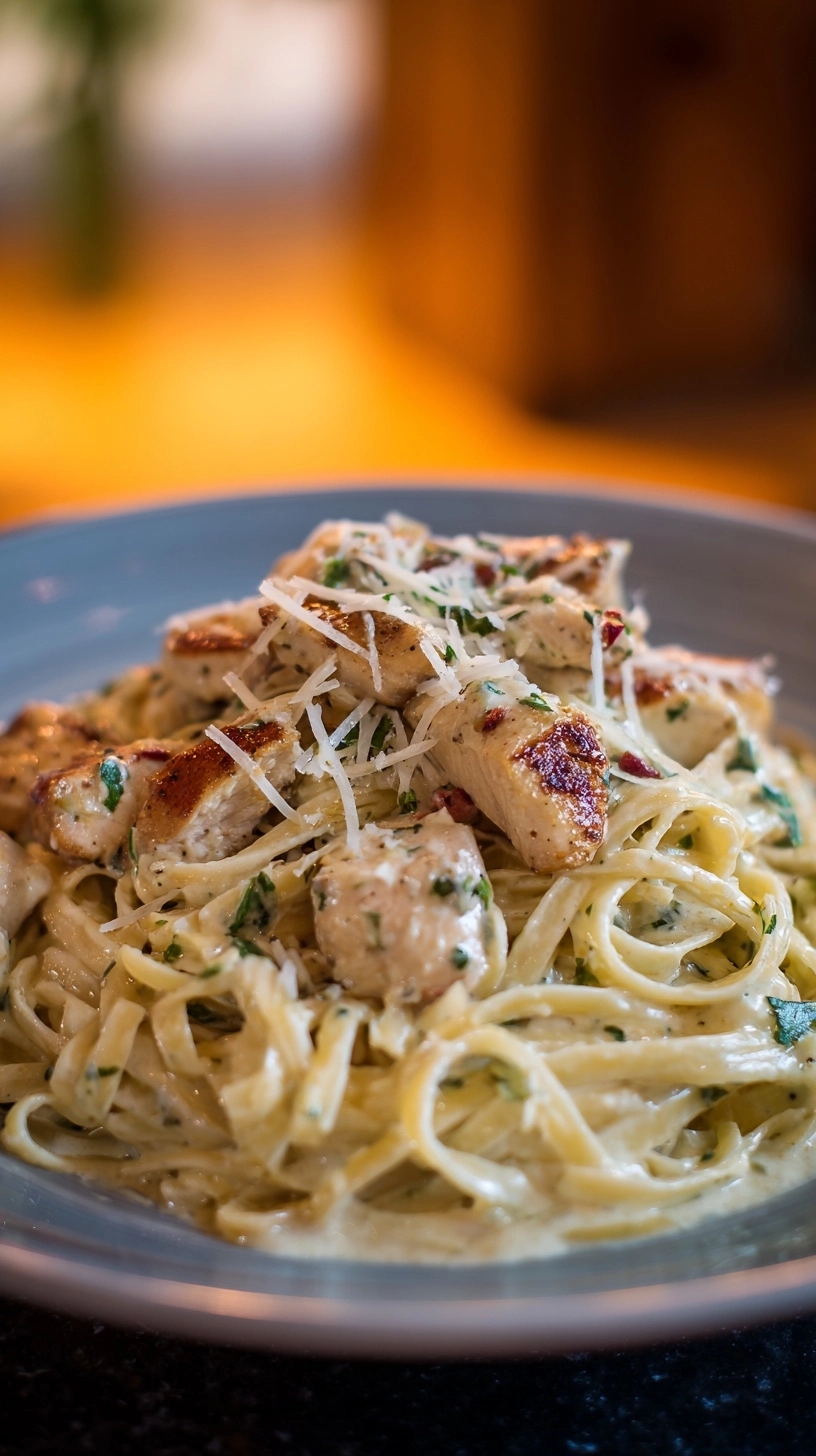
Storing Tips for the Recipe
Refrigeration: Store leftovers in airtight containers for up to 3 days. The sauce may thicken, so add 2-3 tablespoons of chicken broth when reheating to restore creamy consistency.
Freezing Strategy: Freeze portions in freezer-safe containers for up to 2 months. Thaw overnight in refrigerator before reheating gently on stovetop with added liquid.
Make-Ahead Tips: Prepare sauce base without pasta up to 24 hours ahead. Store separately and combine with freshly cooked pasta for best texture.
Reheating Excellence: Use stovetop over low heat, stirring frequently and adding liquid gradually. Microwave reheating often results in separated sauce and uneven heating.
FAQs
Q: Can I make this recipe gluten-free?
A: Absolutely! Substitute regular pasta with gluten-free alternatives like rice pasta or chickpea pasta. Ensure your chicken broth is certified gluten-free.
Q: What if my sauce is too thick?
A: Gradually add warm chicken broth or reserved pasta water, one tablespoon at a time, while stirring until desired consistency is reached.
Q: Can I use pre-cooked rotisserie chicken?
A: Yes! Add shredded rotisserie chicken during the final 2-3 minutes of cooking to warm through without overcooking.
Q: How do I prevent the sauce from curdling?
A: Maintain medium-low heat when adding dairy ingredients, remove from heat before adding cheese, and whisk constantly for smooth integration.
Q: Can this recipe be doubled for larger gatherings?
A: Certainly! Use a larger skillet or Dutch oven, and increase cooking times slightly. Monitor pasta texture carefully as larger batches may require additional liquid.
Kitchen Mosaic Notes
Thanks for reading! Remember that nutritional values are approximate. For the best results, adapt this recipe to your specific dietary needs.