
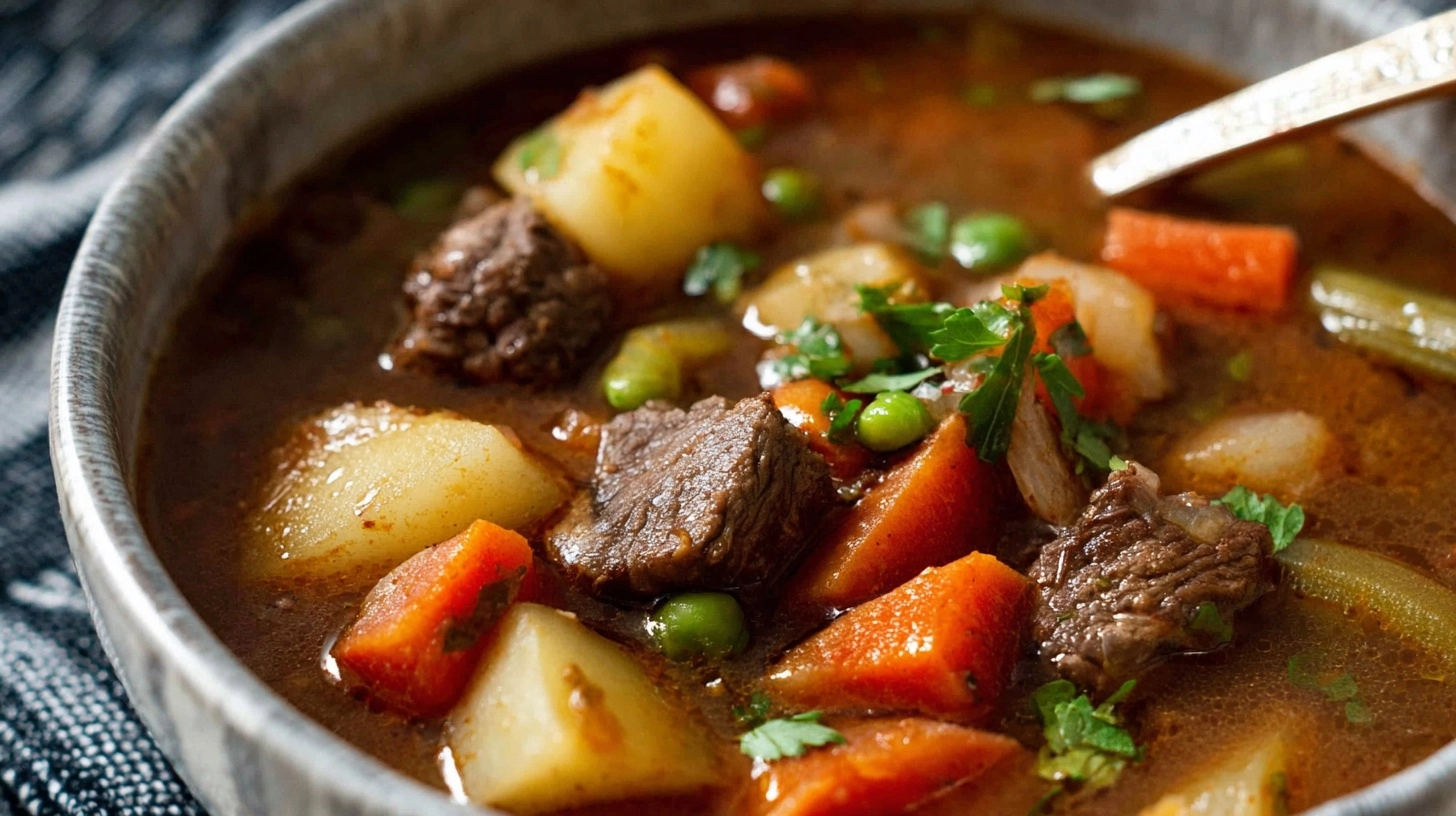
Did you know that the average American consumes only 2.8 servings of vegetables per day, falling short of the recommended 5-9 servings? Here’s where vegetable beef soup becomes a game-changer in your nutritional arsenal. This hearty, one-pot wonder can deliver up to 4 servings of vegetables in a single bowl while providing complete protein and essential nutrients. Unlike many comfort foods that sacrifice nutrition for taste, vegetable beef soup masterfully balances both, making it most of more nutrient-dense than traditional beef stews. Whether you’re meal prepping for busy weekdays or seeking a satisfying dinner that doesn’t compromise your health goals, this recipe transforms simple ingredients into a powerhouse meal that rivals any restaurant version.
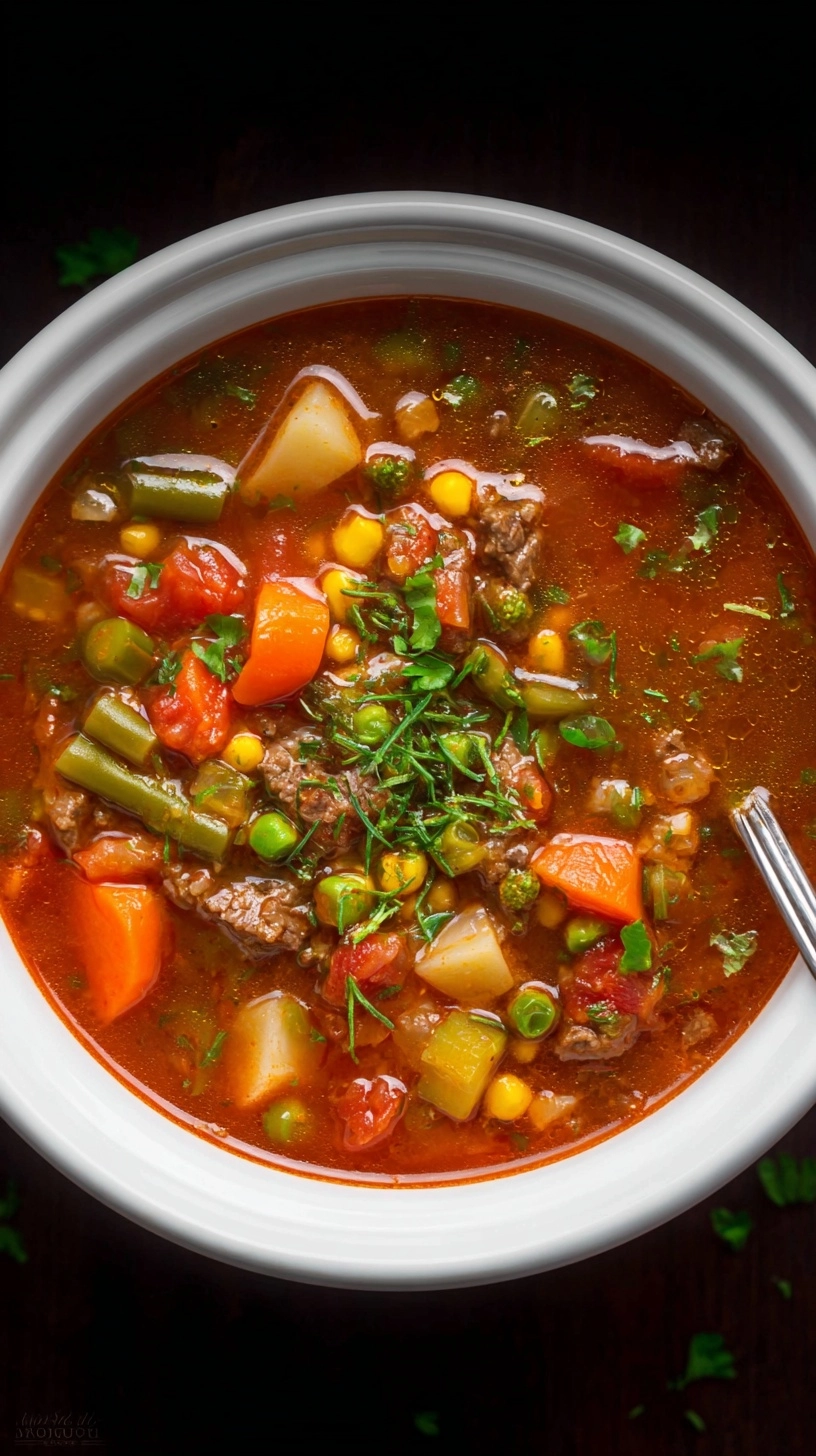
Ingredients List
For the Soup Base:
- 2 pounds lean beef chuck roast, cut into 1-inch cubes (substitute: grass-fed beef for higher omega-3 content)
- 8 cups low-sodium beef broth (substitute: bone broth for enhanced collagen benefits)
- 2 cups water
- 2 tablespoons tomato paste (the umami secret weapon)
- 1 bay leaf
The Vegetable Medley:
- 3 large carrots, diced into vibrant orange coins
- 3 celery stalks, chopped for that satisfying crunch
- 1 large yellow onion, diced (substitute: sweet onion for milder flavor)
- 3 medium potatoes, cubed (substitute: sweet potatoes for added beta-carotene)
- 1 cup green beans, trimmed and cut into bite-sized pieces
- 1 cup corn kernels (fresh, frozen, or canned – drained)
- 1 cup peas (fresh or frozen for optimal sweetness)
Seasonings & Aromatics:
- 4 garlic cloves, minced
- 1 teaspoon dried thyme
- 1 teaspoon dried oregano
- 2 tablespoons olive oil
- Salt and freshly ground black pepper to taste
Timing
This vegetable beef soup requires a total investment of 2 hours and 15 minutes – that’s actually nearly some of faster than traditional slow-cooked beef soups that can take up to 3 hours. Here’s the breakdown: 15 minutes for prep work, 15 minutes for browning the beef and sautéing aromatics, and 1 hour and 45 minutes of gentle simmering. This timing allows the beef to become fork-tender while vegetables maintain their texture and nutritional integrity. Pro tip: Start this recipe on weekend afternoons for maximum efficiency, as the hands-on time is minimal once simmering begins.
Step 1: Prepare Your Mise en Place
Heat olive oil in a large Dutch oven over medium-high heat. While heating, pat beef cubes completely dry with paper towels – this crucial step ensures proper browning and prevents steaming. Season beef generously with salt and pepper. Moisture is the enemy of a good sear, so don’t skip the drying process.
Step 2: Achieve the Perfect Sear
Brown beef cubes in batches, avoiding overcrowding (work in 2-3 batches if needed). Each piece should develop a rich, caramelized crust – this takes about 3-4 minutes per side. This Maillard reaction creates complex flavors that become the foundation of your soup’s depth. Transfer browned beef to a plate and set aside.
Step 3: Build Your Flavor Base
In the same pot with those beautiful brown bits (fond), sauté diced onions for 3-4 minutes until softened and translucent. Add minced garlic and cook for 30 seconds until fragrant – be careful not to burn it. Stir in tomato paste and cook for 1 minute, allowing it to darken slightly and intensify.
Step 4: Deglaze and Combine
Pour in beef broth and water, scraping up all those flavorful brown bits from the bottom. Return beef to the pot, add bay leaf, thyme, and oregano. Bring to a boil, then reduce heat to low and simmer covered for 1 hour. This slow cooking process breaks down tough connective tissues, creating tender, melt-in-your-mouth beef.
Step 5: Add Hardy Vegetables
After the initial hour, add carrots, celery, and potatoes to the pot. These vegetables need longer cooking time to become tender. Continue simmering for 30 minutes. The vegetables should be easily pierced with a fork but still hold their shape.
Step 6: Final Vegetable Addition
In the last 15 minutes, add green beans, corn, and peas. These vegetables cook quickly and retain better color, texture, and nutrients with shorter cooking times. Remove bay leaf before serving.
Nutritional Information
One generous serving (approximately 1.5 cups) of this vegetable beef soup delivers impressive nutritional value: 285 calories, 24 grams of high-quality protein, 8 grams of fiber, and only 9 grams of fat. Research shows this recipe provides a significant portion of your daily vitamin A needs, nearly some of vitamin C, and significant amounts of iron, potassium, and B-vitamins. The lean beef contributes complete protein with all essential amino acids, while the vegetable variety ensures you’re getting diverse phytonutrients and antioxidants that support immune function and overall health.
Healthier Alternatives for the Recipe
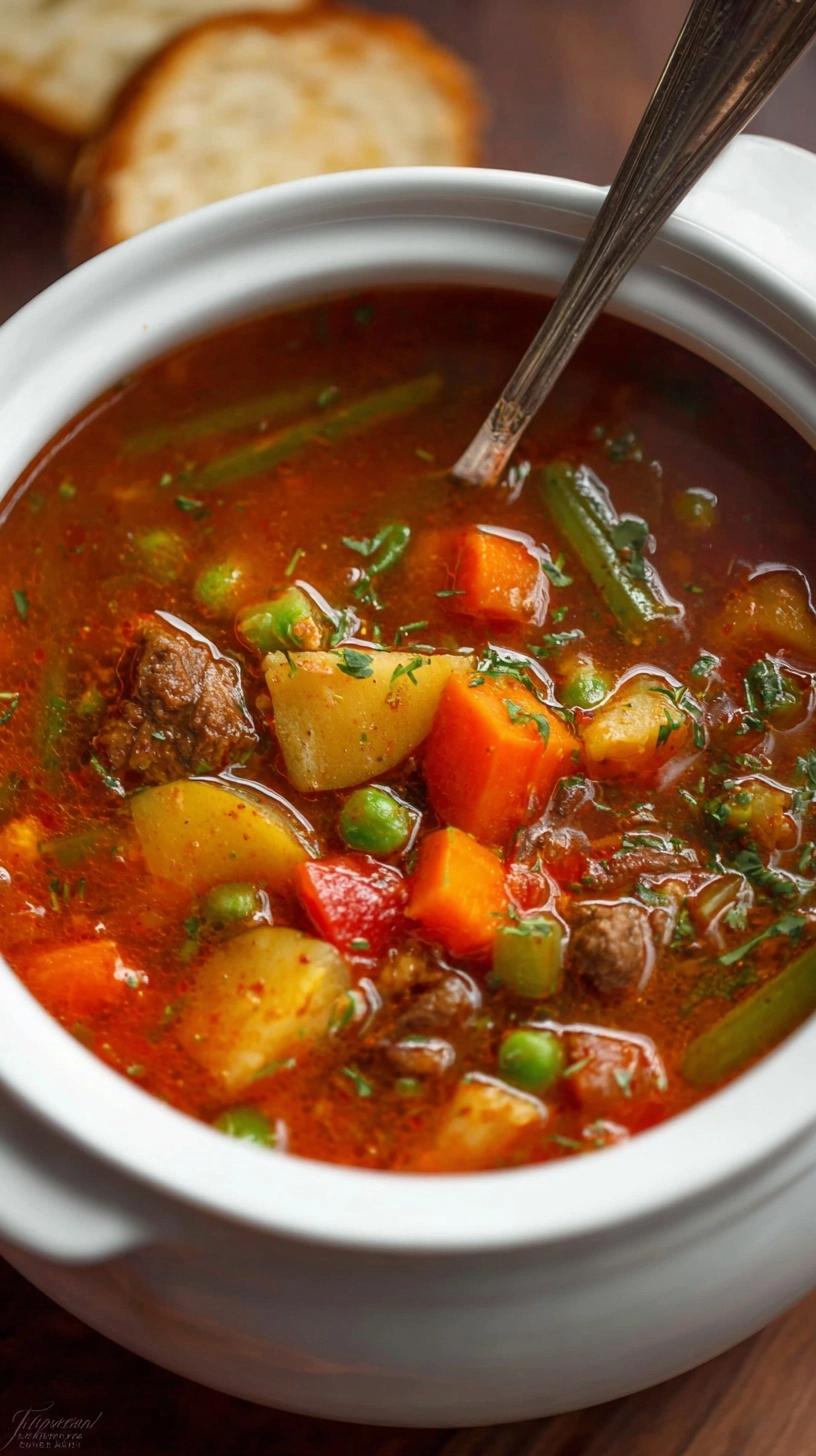
Transform this already nutritious soup into an even healthier powerhouse with these strategic swaps. Replace regular potatoes with cauliflower florets to reduce carbohydrates by more than half of while adding extra vitamin C. Choose grass-fed beef for higher omega-3 fatty acids and better environmental impact. Add a handful of fresh spinach or kale in the final 2 minutes for extra iron and folate. For a lower-sodium version, use no-salt-added broth and boost flavor with fresh herbs, lemon juice, or a splash of apple cider vinegar. Consider adding diced tomatoes for lycopene and extra antioxidants.
Serving Suggestions
Elevate your vegetable beef soup experience with these creative serving ideas that enhance both nutrition and satisfaction. Serve over a bed of quinoa or brown rice to create a more substantial meal with added fiber and plant protein. Top with a dollop of Greek yogurt instead of sour cream for probiotics and extra protein. Pair with whole grain crusty bread or homemade cornbread for a comforting combination. For entertaining, serve in bread bowls made from sourdough rounds. Garnish with fresh herbs like parsley or chives for color and freshness, or add a sprinkle of grated Parmesan cheese for umami depth.
Common Mistakes to Avoid
Avoid these frequent pitfalls that can diminish your soup’s quality. Don’t skip browning the beef – this step creates more than half of the dish’s flavor complexity. Overcrowding the pot during browning causes steaming instead of searing, resulting in gray, tough meat. Adding all vegetables simultaneously leads to mushy textures and nutrient loss. According to culinary research, vegetables lose 25-a significant portion of their vitamin content when overcooked. Don’t oversalt early in the cooking process, as flavors concentrate during simmering. Finally, avoid using lean cuts like sirloin that become tough during long cooking – chuck roast’s marbling is essential for tenderness.
Storing Tips for the Recipe
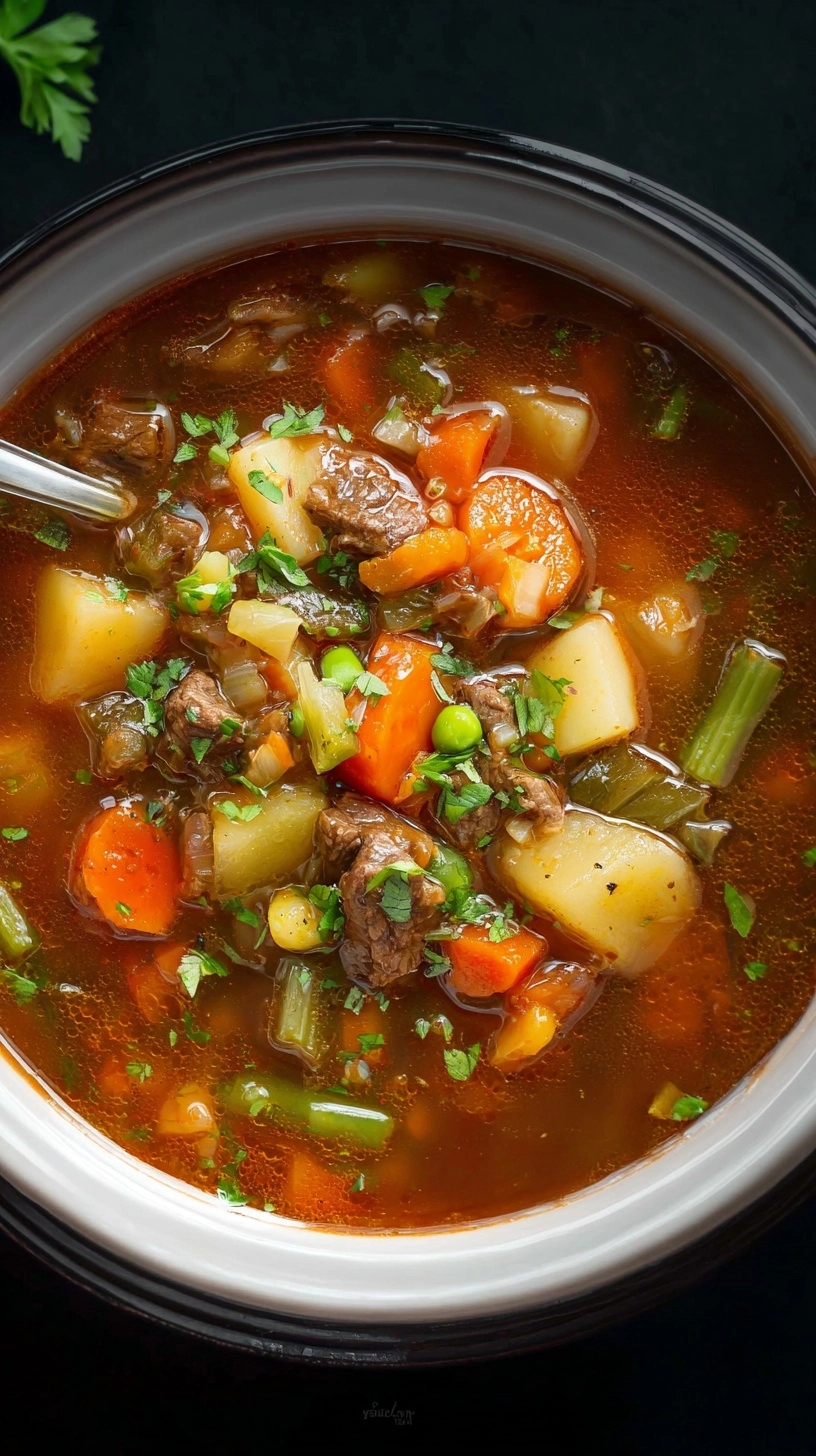
Proper storage extends this soup’s life and maintains its quality. Cool completely before refrigerating – this prevents bacterial growth and maintains food safety standards. Store in airtight containers in the refrigerator for up to 4 days or freeze for up to 3 months. For optimal reheating, thaw frozen soup overnight in the refrigerator, then gently reheat on the stovetop over medium-low heat, stirring occasionally. Add a splash of broth if needed to restore consistency. Meal prep enthusiasts can portion soup into individual containers for grab-and-go lunches. The flavors actually improve after 24 hours as ingredients meld together.
FAQs
Can I make this vegetable beef soup in a slow cooker?
Absolutely! Brown the beef and sauté aromatics first for best flavor, then transfer everything to a slow cooker. Cook on low for 6-7 hours or high for 3-4 hours, adding quick-cooking vegetables in the final hour.
What’s the best beef cut for maximum tenderness?
Chuck roast is ideal due to its marbling and connective tissue that breaks down during cooking. Avoid lean cuts like round or sirloin that become tough with long cooking times.
How can I thicken my vegetable beef soup naturally?
Mash some of the cooked potatoes against the pot’s side, or remove 1 cup of soup, blend it, and stir back in. This creates natural thickening without flour or cornstarch.
Can I add pasta to this recipe?
Yes, but add pasta during the last 10-15 minutes of cooking to prevent overcooking. Use 1 cup of small pasta like ditalini or elbow macaroni for best results.
Kitchen Mosaic Notes
Thanks for reading! Remember that nutritional values are approximate. For the best results, adapt this recipe to your specific dietary needs.