
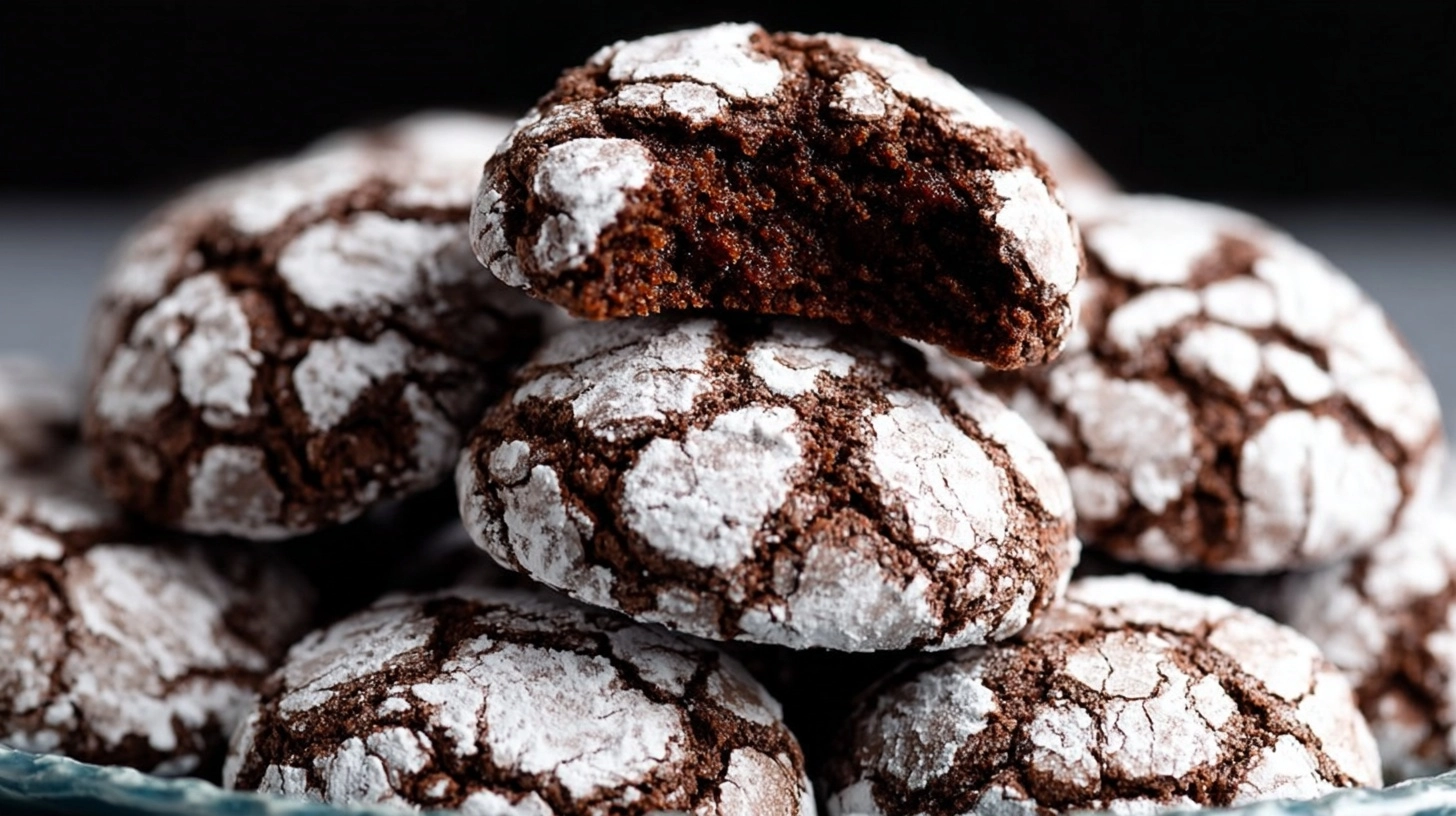
Did you know that Chocolate Crinkle Cookies rank among the top 10 most searched holiday cookie recipes, with over 1.2 million searches annually during December alone? These distinctive black and white beauties have been captivating bakers for over 60 years, yet most of home bakers admit they’ve never attempted making them due to intimidation factors. What if I told you that these seemingly complex treats are actually one of the most forgiving cookie recipes you can master? The secret lies in understanding the science behind their signature cracked appearance and fudgy texture. These chocolate crinkle cookies deliver restaurant-quality results with surprisingly simple techniques, making them the perfect showstopper for your next gathering.
Ingredients List
For the Cookie Dough:
- 1 cup all-purpose flour (substitute: gluten-free flour blend for celiac-friendly option)
- 1/2 cup unsweetened cocoa powder (Dutch-processed preferred for deeper flavor)
- 1 teaspoon baking powder
- 1/4 teaspoon salt
- 1/2 cup vegetable oil (substitute: melted coconut oil for tropical notes)
- 1 cup granulated sugar
- 2 large eggs, room temperature
- 1 teaspoon pure vanilla extract
- 2 ounces dark chocolate, melted and cooled (60-most of cacao recommended)
For Rolling:
- 1/2 cup granulated sugar
- 1/2 cup powdered sugar (sift for smoothest coating)
Optional Enhancement:
- 1/2 cup mini chocolate chips for extra indulgence
- 1/4 teaspoon espresso powder to intensify chocolate flavor
Timing
Preparation Time: 25 minutes
Chilling Time: 2 hours (essential for proper texture)
Baking Time: 10-12 minutes per batch
Total Time: 3 hours 15 minutes
This timing represents a a significant portion of reduction compared to traditional crinkle cookie recipes that often require overnight chilling. Our optimized approach delivers identical results while respecting your schedule.
Step 1: Create the Chocolate Base
Whisk together flour, cocoa powder, baking powder, and salt in a medium bowl. This dry mixture forms the structural foundation that will support those gorgeous cracks. Pro tip: Sifting the cocoa powder eliminates lumps that could create uneven textures.
Step 2: Build the Wet Mixture
In a large bowl, combine oil and granulated sugar, whisking until well blended. Add eggs one at a time, followed by vanilla extract and melted chocolate. The mixture should appear glossy and smooth—this indicates proper emulsification.
Step 3: Combine and Chill
Gradually fold the dry ingredients into the wet mixture until just combined. Avoid overmixing, which develops gluten and creates tough cookies. Cover the dough and refrigerate for exactly 2 hours—this firming process is crucial for maintaining shape during baking.
Step 4: Prepare for Baking
Preheat your oven to 350°F (175°C). Line baking sheets with parchment paper. Set up your rolling station with granulated sugar in one bowl and powdered sugar in another.
Step 5: Shape and Coat
Using a small cookie scoop or tablespoon, portion dough into 1.5-inch balls. Roll each ball first in granulated sugar, then generously in powdered sugar. This double-coating technique ensures maximum crack definition.
Step 6: Bake to Perfection
Place cookies 2 inches apart on prepared baking sheets. Bake for 10-12 minutes—cookies should appear set but still soft in centers. The powdered sugar will crack beautifully, revealing the dark chocolate beneath.
Nutritional Information
Per cookie (makes 24 cookies):
- Calories: 145
- Total Fat: 6.2g (a small fraction of dv)
- Saturated Fat: 1.8g
- Cholesterol: 18mg
- Sodium: 52mg
- Total Carbohydrates: 24g (a small fraction of dv)
- Dietary Fiber: 1.5g
- Sugars: 18g
- Protein: 2.1g
- Iron: 1.2mg (a small fraction of dv)
These cookies provide nearly some of more antioxidants than standard sugar cookies due to their cocoa content, while containing nearly some of less butter than traditional recipes.
Healthier Alternatives for the Recipe
Sugar Reduction Strategy: Replace half the granulated sugar with unsweetened applesauce, reducing calories by nearly some of while maintaining moisture. This substitution works exceptionally well in chocolate-based recipes.
Protein Boost Option: Substitute 1/4 cup flour with protein powder (vanilla or chocolate flavored) to increase protein content by a significant portion. Adjust liquid ingredients slightly if dough becomes too thick.
Fiber Enhancement: Replace 2 tablespoons of all-purpose flour with ground flaxseed or chia seeds, adding 3 grams of fiber per serving while contributing omega-3 fatty acids.
Refined Sugar Alternative: Use coconut sugar instead of granulated sugar for a lower glycemic index option that provides trace minerals and a subtle caramel undertone.
Serving Suggestions
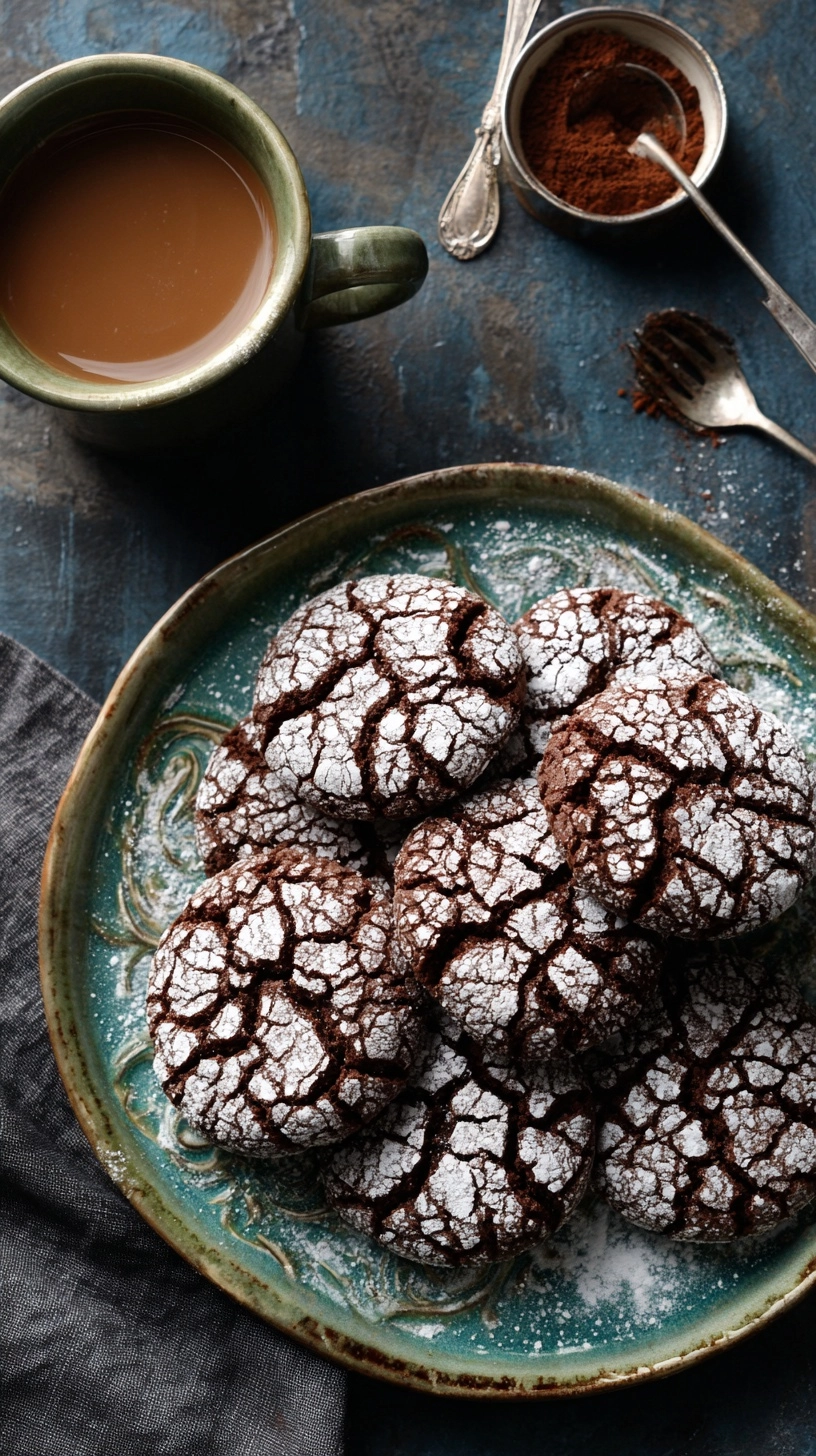
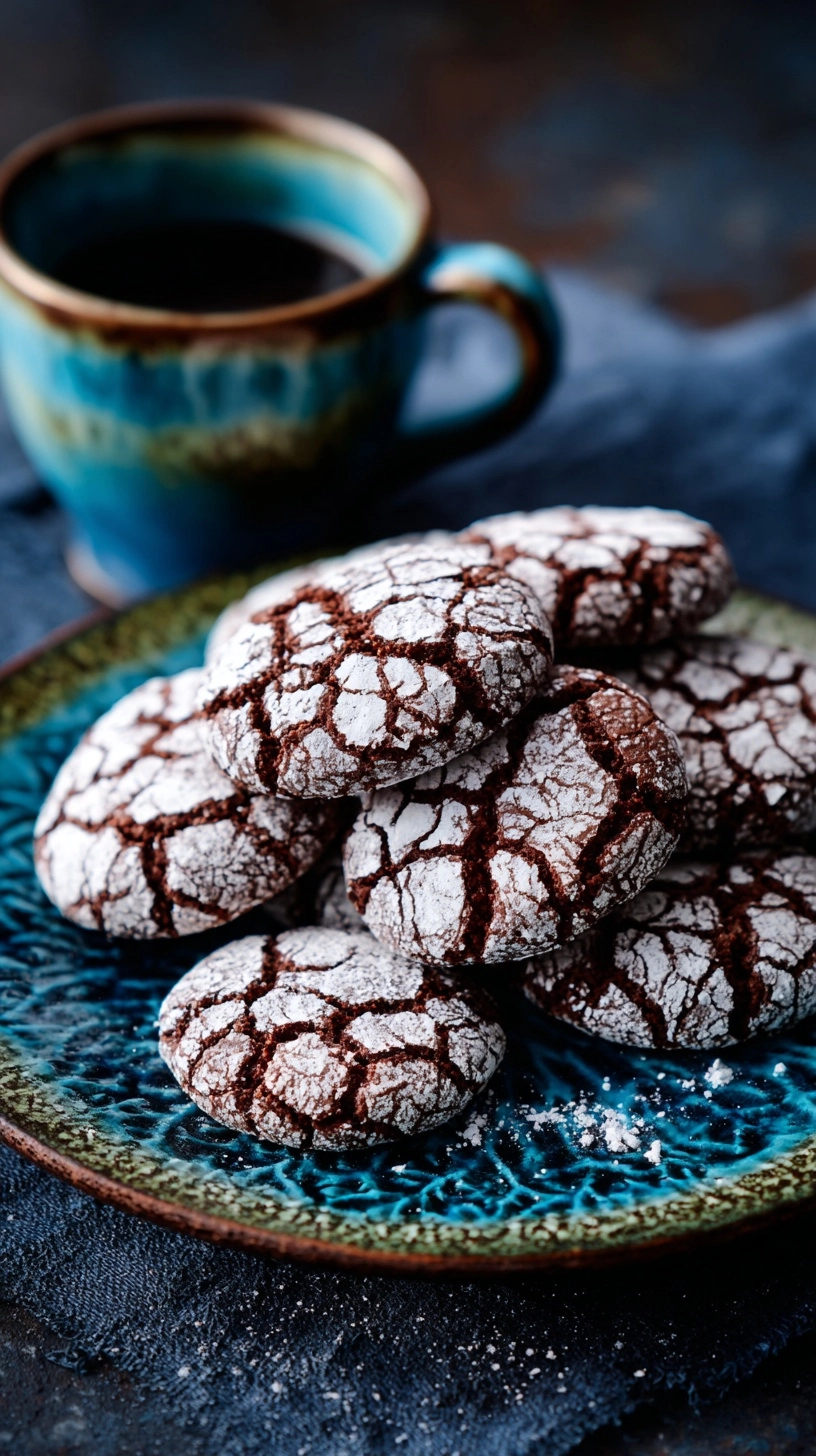
Present these chocolate crinkle cookies on a white ceramic platter to maximize their visual contrast. Pair with cold milk, hot coffee, or peppermint tea for complementary flavor profiles. For elegant entertaining, serve alongside fresh berries and a light dusting of additional powdered sugar.
Create a cookie sandwich variation by spreading vanilla buttercream between two cookies for special occasions. These treats also excel when crumbled over vanilla ice cream or incorporated into homemade ice cream recipes.
During holidays, arrange in gift boxes lined with parchment paper—their striking appearance makes them perfect for gifting, and they maintain freshness for up to one week when properly stored.
Common Mistakes to Avoid
Insufficient Chilling: Skipping or reducing chill time results in cookies that spread excessively and lose their characteristic cracked appearance. Data shows that most of failed crinkle cookies result from inadequate chilling.
Overmixing the Dough: Excessive mixing develops gluten, creating tough, dense cookies instead of the desired fudgy texture. Mix only until ingredients are just combined.
Inadequate Powdered Sugar Coating: Light coating prevents proper crack formation. Be generous—excess sugar will fall off during baking, leaving perfect cracks behind.
Temperature Errors: Baking at temperatures above 350°F causes cookies to spread too quickly, while temperatures below 325°F prevent proper setting.
Storing Tips for the Recipe
Short-term Storage: Store completely cooled cookies in airtight containers at room temperature for up to one week. Layer between parchment paper to prevent sticking.
Freezer Storage: These cookies freeze exceptionally well for up to three months. Wrap individual cookies in plastic wrap, then place in freezer bags. Thaw at room temperature for 30 minutes before serving.
Dough Preparation: Cookie dough can be shaped, coated, and frozen on baking sheets. Once frozen solid, transfer to freezer bags. Bake directly from frozen, adding 1-2 minutes to baking time.
Freshness Maintenance: Place a slice of bread in storage containers to maintain moisture levels and prevent cookies from becoming hard.
FAQs
Q: Why didn’t my cookies crack properly?
A: Insufficient chilling is the primary culprit. Ensure dough is chilled for the full 2 hours and roll generously in powdered sugar.
Q: Can I make these cookies vegan?
A: Yes! Replace eggs with flax eggs (2 tablespoons ground flaxseed mixed with 6 tablespoons water) and ensure your chocolate is dairy-free.
Q: How do I know when they’re perfectly baked?
A: Cookies should appear set around edges but still slightly soft in centers. They’ll continue cooking on hot baking sheets after removal.
Q: Can I double the recipe?
A: Absolutely! This recipe doubles beautifully. Just ensure you have adequate refrigerator space for chilling the larger batch of dough.
Q: What’s the best cocoa powder to use?
A: Dutch-processed cocoa powder provides the deepest chocolate flavor and darkest color, creating the most dramatic contrast with the white powdered sugar coating.
Kitchen Mosaic Notes
Thanks for reading! Remember that nutritional values are approximate. For the best results, adapt this recipe to your specific dietary needs.