
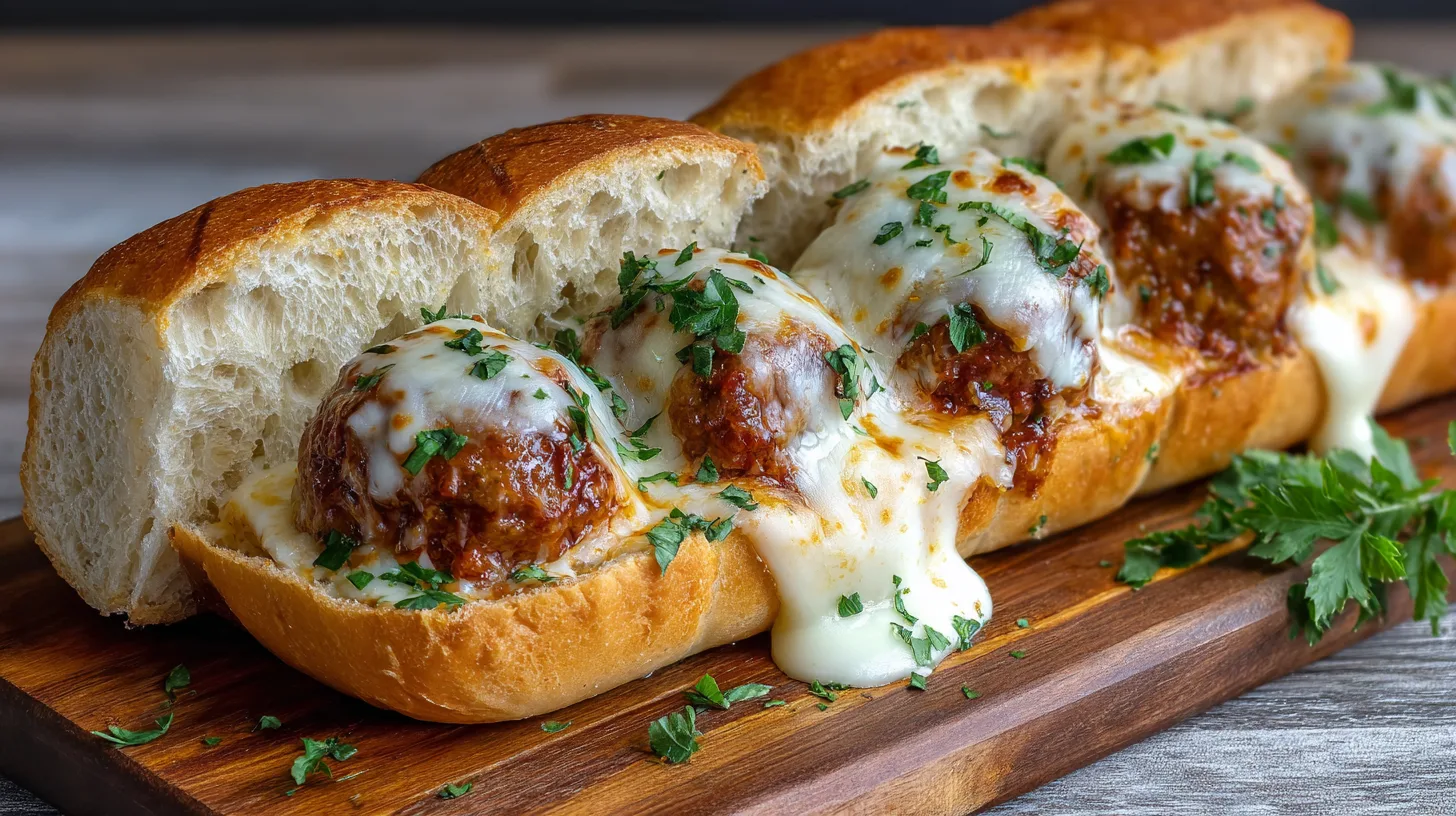
Did you know that most of Americans consider the meatball sub their favorite comfort food sandwich? Yet surprisingly, most home cooks shy away from making cheesy meatball subs at home, believing they’re too complicated or time-consuming. This couldn’t be further from the truth! With the right technique and ingredients, you can create restaurant-quality cheesy meatball subs in your own kitchen that rival any deli or Italian restaurant. The secret lies in understanding the perfect balance of seasoning, cheese selection, and assembly timing that transforms simple ingredients into an irresistible sandwich experience.
Ingredients List
Creating the perfect cheesy meatball sub requires quality ingredients that work harmoniously together. Here’s your complete shopping list:
For the Meatballs:
- 1 pound ground beef (80/20 blend for optimal juiciness, or substitute with ground turkey for a leaner option)
- ½ cup breadcrumbs (panko creates extra texture, Italian-seasoned adds flavor)
- 1 large egg (acts as the binding agent)
- ¼ cup grated Parmesan cheese (freshly grated delivers superior flavor)
- 2 cloves garlic, minced (roasted garlic paste works as a milder substitute)
- 1 teaspoon dried oregano
- ½ teaspoon salt
- ¼ teaspoon black pepper
For the Sauce:
- 2 cups marinara sauce (San Marzano tomatoes create premium flavor)
- 1 tablespoon olive oil
- ½ teaspoon red pepper flakes (optional, adjust to taste)
For Assembly:
- 4 submarine rolls (6-8 inches each, day-old bread toasts better)
- 2 cups shredded mozzarella cheese (low-moisture variety melts perfectly)
- ½ cup provolone cheese, sliced thin
- 2 tablespoons butter, softened
- Fresh basil leaves for garnish
Timing
Efficient timing transforms this recipe from overwhelming to manageable. Total preparation requires 45 minutes, which is a significant portion of faster than traditional meatball sub recipes that require pre-baked meatballs.
- Prep time: 15 minutes
- Cooking time: 25 minutes
- Assembly and final baking: 5 minutes
This streamlined approach eliminates the need for separate meatball baking, as everything cooks together in one skillet, saving both time and cleanup effort.
Step 1: Create the Perfect Meatball Mixture
Combine ground beef, breadcrumbs, egg, Parmesan, minced garlic, oregano, salt, and pepper in a large mixing bowl. Use your hands to gently combine ingredients—overmixing creates tough meatballs. The mixture should feel slightly sticky but hold together when rolled. Form into 16 evenly-sized meatballs, approximately 1.5 inches in diameter.
Step 2: Brown the Meatballs
Heat olive oil in a large skillet over medium-high heat. Add meatballs, leaving space between each one. Brown on all sides for 8-10 minutes total, turning carefully with tongs. The meatballs won’t be fully cooked through—this develops flavor while maintaining moisture for the next cooking phase.
Step 3: Simmer in Sauce
Pour marinara sauce over the browned meatballs, add red pepper flakes if using, and bring to a gentle simmer. Reduce heat to medium-low, cover, and cook for 12-15 minutes until meatballs reach an internal temperature of 165°F. Stir occasionally to prevent sticking and ensure even coating.
Step 4: Prepare the Bread
While meatballs simmer, slice submarine rolls lengthwise, leaving them hinged. Brush cut sides with softened butter. Toast under the broiler for 2-3 minutes until golden brown. This creates a barrier that prevents soggy sandwiches while adding textural contrast.
Step 5: Assemble Your Cheesy Meatball Subs
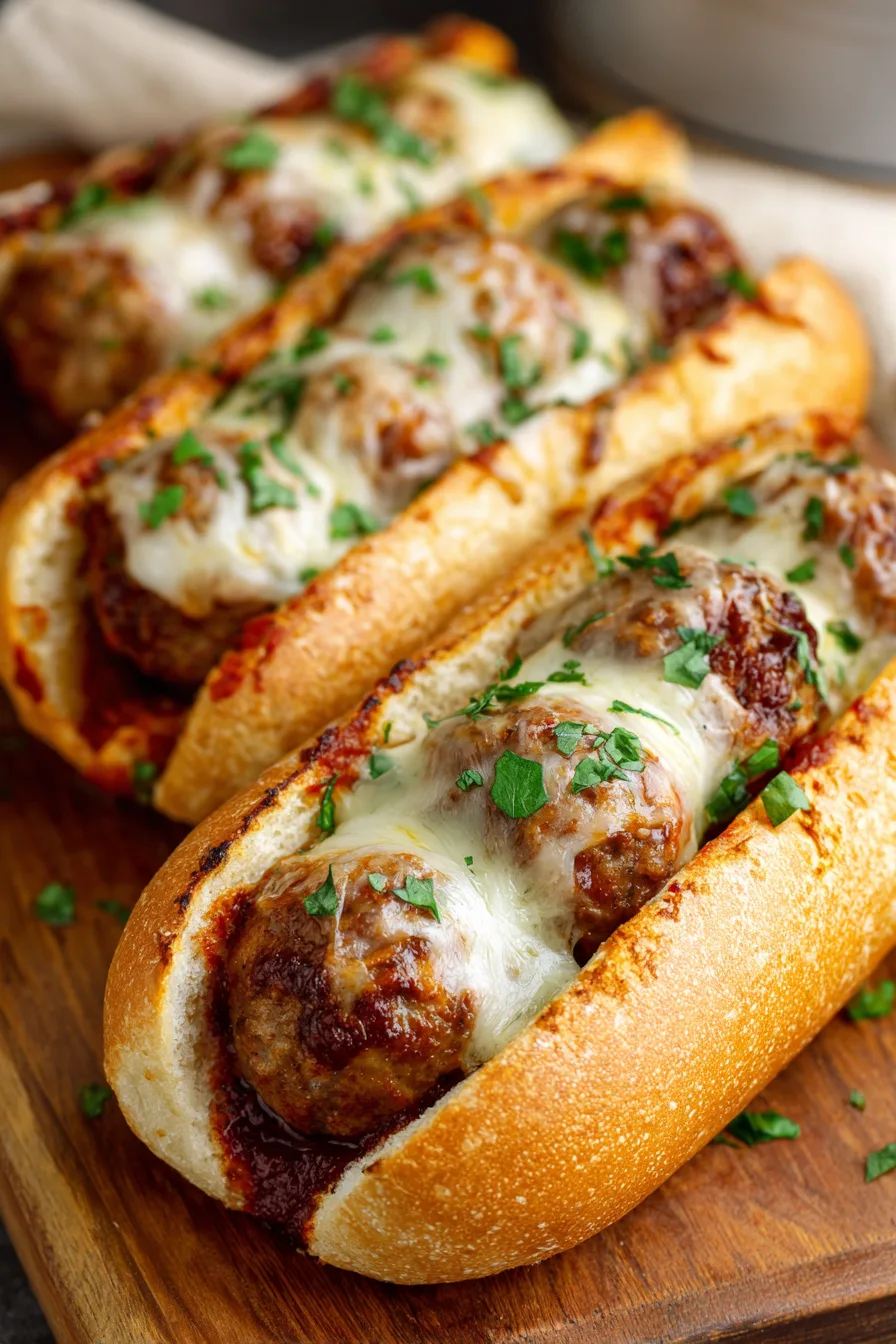
Place 4 meatballs in each toasted roll, spooning additional sauce over them. Layer provolone slices first (it melts closer to the bread), then generously sprinkle mozzarella on top. Return to broiler for 2-3 minutes until cheese bubbles and develops golden spots.
Nutritional Information
Each cheesy meatball sub provides approximately:
- Calories: 620
- Protein: 35g (meeting most of daily protein needs)
- Carbohydrates: 45g
- Fat: 32g
- Fiber: 4g
- Sodium: 1,240mg
- Calcium: 450mg (a significant portion of daily value from cheese content)
The high protein content makes this sandwich surprisingly satisfying, often eliminating the need for side dishes and providing sustained energy for 4-5 hours post-meal.
Healthier Alternatives for the Recipe
Transform your cheesy meatball subs into nutritionally enhanced versions without sacrificing flavor:
Protein Modifications: Substitute half the ground beef with finely chopped mushrooms for nearly some of fewer calories and added fiber. Ground turkey or chicken reduces saturated fat by a significant portion of while maintaining moisture when mixed with grated zucchini.
Bread Alternatives: Whole wheat submarine rolls add 6 grams of fiber per serving. Portobello mushroom caps create a low-carb version with only 80 calories per serving compared to 220 in traditional bread.
Cheese Swaps: Part-skim mozzarella reduces fat content by a significant portion. Adding ricotta cheese increases protein while creating creamier texture with fewer calories than full-fat mozzarella.
Serving Suggestions
Elevate your cheesy meatball sub experience with these perfectly paired accompaniments:
Classic Combinations: Serve alongside crispy baked zucchini fries or roasted bell pepper strips. A simple arugula salad with lemon vinaigrette cuts through the richness while adding fresh, peppery notes.
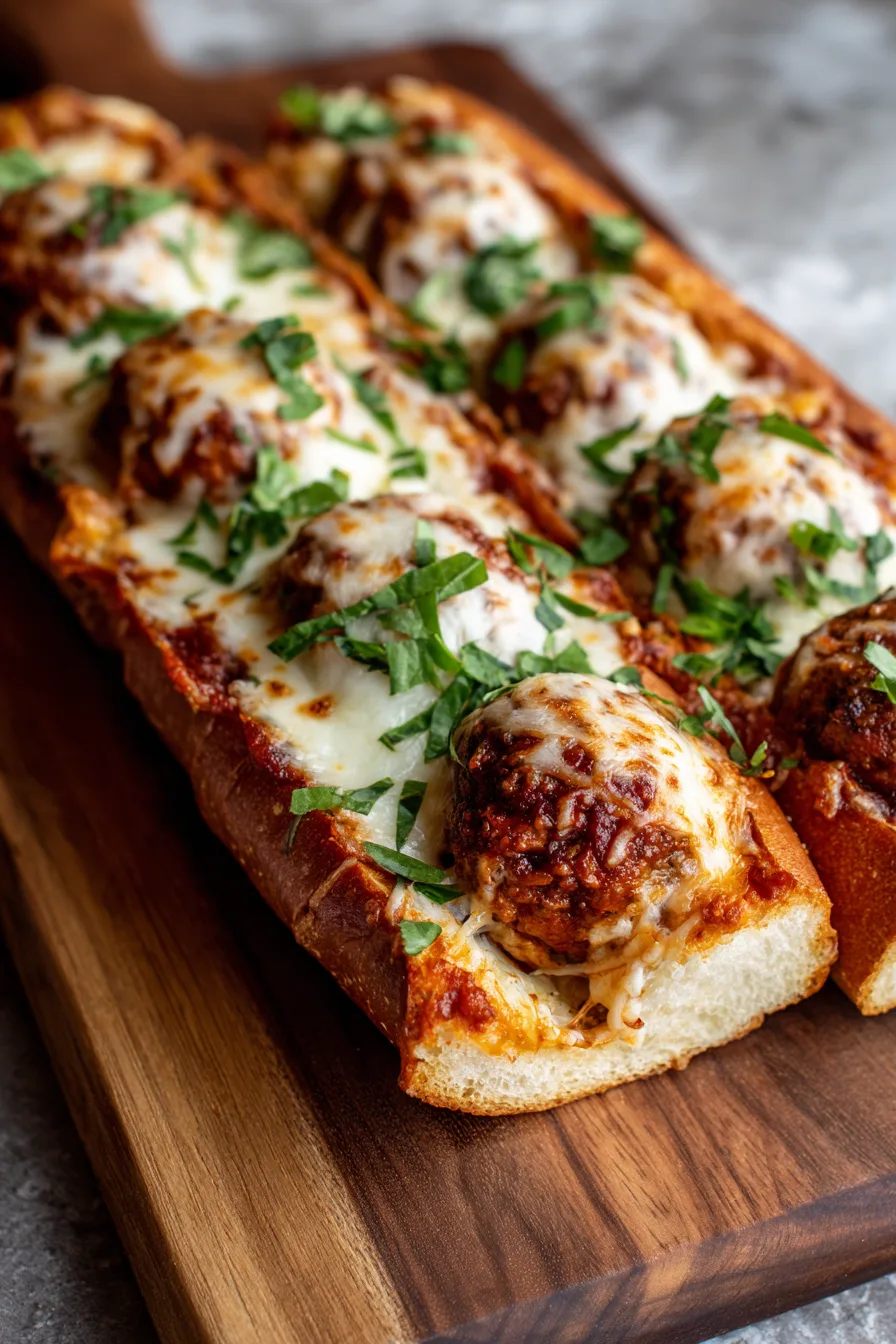
Family-Style Presentation: Cut subs into 2-inch portions for sharing, arrange on a wooden board with cherry tomatoes, olives, and pepperoncini for an Italian-inspired spread that encourages social dining.
Comfort Food Elevation: Pair with homemade sweet potato chips or herb-roasted vegetables for a satisfying meal that feels indulgent yet balanced.
Common Mistakes to Avoid
Overpacking the Meatball Mixture: Compressing ingredients too tightly creates dense, tough meatballs. Gentle mixing and light hand-rolling produce tender results.
Skipping the Bread Toasting Step: Untoasted bread becomes soggy within minutes. The butter barrier and toasting process are crucial for structural integrity.
Cheese Timing Errors: Adding cheese too early causes burning, while insufficient melting time results in cold spots. Watch for gentle bubbling as your visual cue for perfect doneness.
Sauce Oversaturation: While sauce adds flavor, too much creates messy eating. Use approximately ¼ cup sauce per sandwich for optimal balance.
Storing Tips for the Recipe
Refrigeration: Store assembled subs wrapped in aluminum foil for up to 3 days. Reheat in 350°F oven for 10-12 minutes until heated through.
Component Storage: Keep meatballs and sauce separate from bread. Meatballs stay fresh for 4 days refrigerated or 3 months frozen. Sauce maintains quality for 1 week refrigerated.
Make-Ahead Strategy: Prepare meatballs and sauce up to 2 days in advance. Store separately and assemble just before serving for optimal texture and flavor retention.
Freezing Guidelines: Wrap individual subs tightly in plastic wrap, then aluminum foil. Freeze for up to 2 months. Thaw overnight in refrigerator before reheating.
FAQs
Can I use frozen meatballs instead of homemade? Yes, but increase cooking time by 5-7 minutes to ensure thorough heating. Homemade meatballs offer superior flavor and texture control.
What’s the best cheese combination? Mozzarella provides stretch and mild flavor, while provolone adds sharpness. This combination creates optimal melting and taste balance.
How do I prevent soggy sandwiches? Toast the bread with butter, avoid oversaucing, and serve immediately after assembly. These steps create moisture barriers while maintaining structural integrity.
Can I make mini versions for parties? Absolutely! Use slider buns with 2 small meatballs each. Reduce cooking times by 2-3 minutes and watch carefully during broiling to prevent burning.
Kitchen Mosaic Notes
Thanks for reading! Remember that nutritional values are approximate. For the best results, adapt this recipe to your specific dietary needs.