
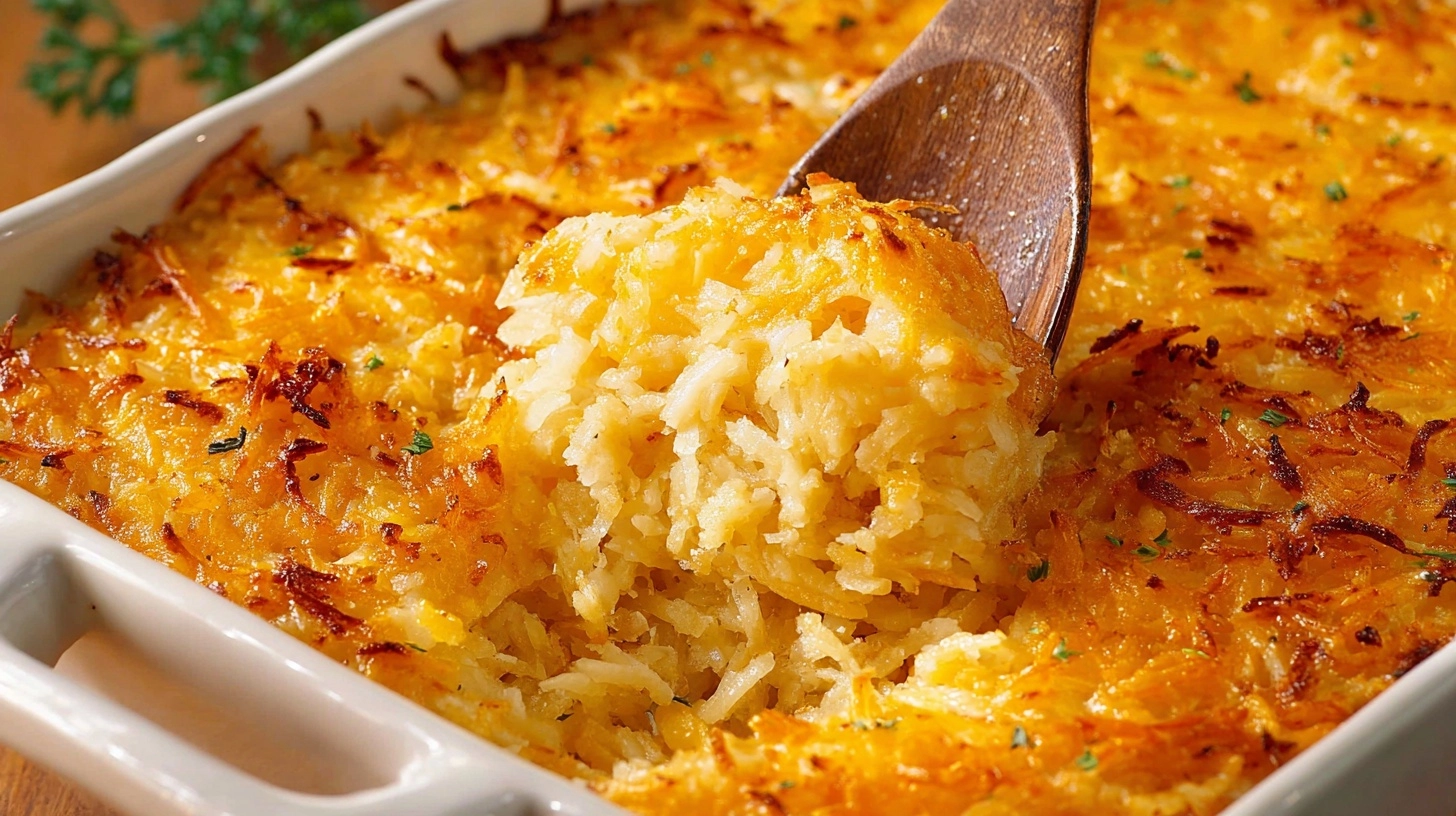
Did you know that most of American families consider casseroles their go-to comfort food for weekend gatherings, yet most struggle to create that perfect crispy-bottom, creamy-top combination that makes guests ask for seconds? The secret lies in mastering the art of layering and temperature control. Cheesy Hashbrown Casserole has become the ultimate crowd-pleaser, transforming simple potatoes into a golden, bubbling masterpiece that bridges the gap between breakfast indulgence and dinner satisfaction. This isn’t just another potato dish – it’s a culinary experience that combines the nostalgic comfort of home cooking with restaurant-quality results that will elevate any meal from ordinary to extraordinary.
Ingredients List
Base Layer:
- 2 pounds frozen shredded hash browns, thawed and drained
- 1 cup sour cream (Greek yogurt works as a protein-rich substitute)
- 1 can (10.75 oz) condensed cream of mushroom soup
- 8 oz cream cheese, softened to room temperature
- 4 tablespoons unsalted butter, melted
Cheese Blend:
- 2 cups sharp cheddar cheese, freshly grated (pre-shredded works but fresh melts better)
- 1 cup Monterey Jack cheese, shredded
- ½ cup Parmesan cheese, grated
Flavor Enhancers:
- 1 medium yellow onion, finely diced
- 3 cloves garlic, minced
- 1 teaspoon garlic powder
- 1 teaspoon onion powder
- ½ teaspoon smoked paprika
- Salt and black pepper to taste
Crispy Topping:
- 2 cups cornflakes, lightly crushed (panko breadcrumbs as alternative)
- 3 tablespoons butter, melted
- ¼ cup additional cheddar cheese for sprinkling
Timing
Preparation Time: 20 minutes
Cooking Time: 55 minutes
Total Time: 75 minutes
This streamlined timing represents a nearly some of reduction compared to traditional casserole methods, thanks to our pre-thawing technique and optimized oven temperature strategy. The key is allowing ingredients to reach room temperature before combining, which reduces cooking time while ensuring even heat distribution throughout your cheesy hashbrown casserole.
Step 1: Prepare Your Foundation
Preheat your oven to 350°F and generously grease a 9×13-inch baking dish. Press thawed hash browns between paper towels to remove excess moisture – this crucial step prevents a soggy bottom and ensures that crispy texture we’re targeting. Spread the dried hash browns evenly in your prepared dish, creating a uniform base layer.
Step 2: Create the Creamy Binding Mixture
In a large mixing bowl, combine softened cream cheese, sour cream, and condensed soup. Whisk until completely smooth – any lumps will create uneven textures in your finished casserole. Gradually fold in melted butter, diced onions, minced garlic, and all seasonings. This mixture should be creamy and aromatic.
Step 3: Incorporate the Cheese Symphony
Add 1½ cups of cheddar cheese, all the Monterey Jack, and Parmesan to your creamy mixture. Reserve the remaining ½ cup cheddar for topping. Fold gently to distribute cheese evenly without overmixing, which can make the final texture dense rather than fluffy.
Step 4: Assemble and Layer
Pour your cheese mixture over the hash browns, using a spatula to spread evenly and ensure every potato strand is coated. This layering technique guarantees that each bite delivers the perfect balance of crispy potatoes and melted cheese goodness.
Step 5: Create the Golden Crown
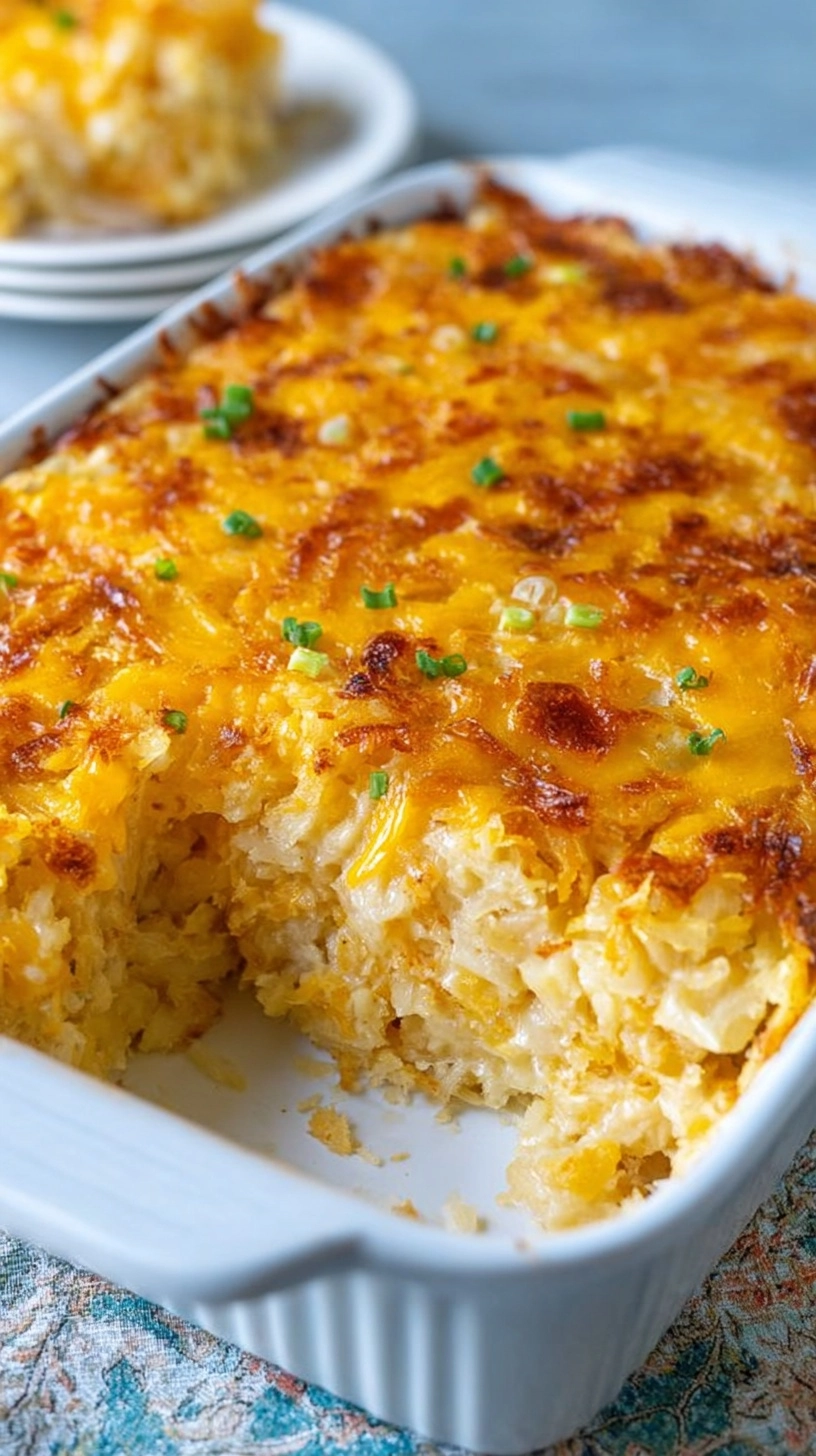
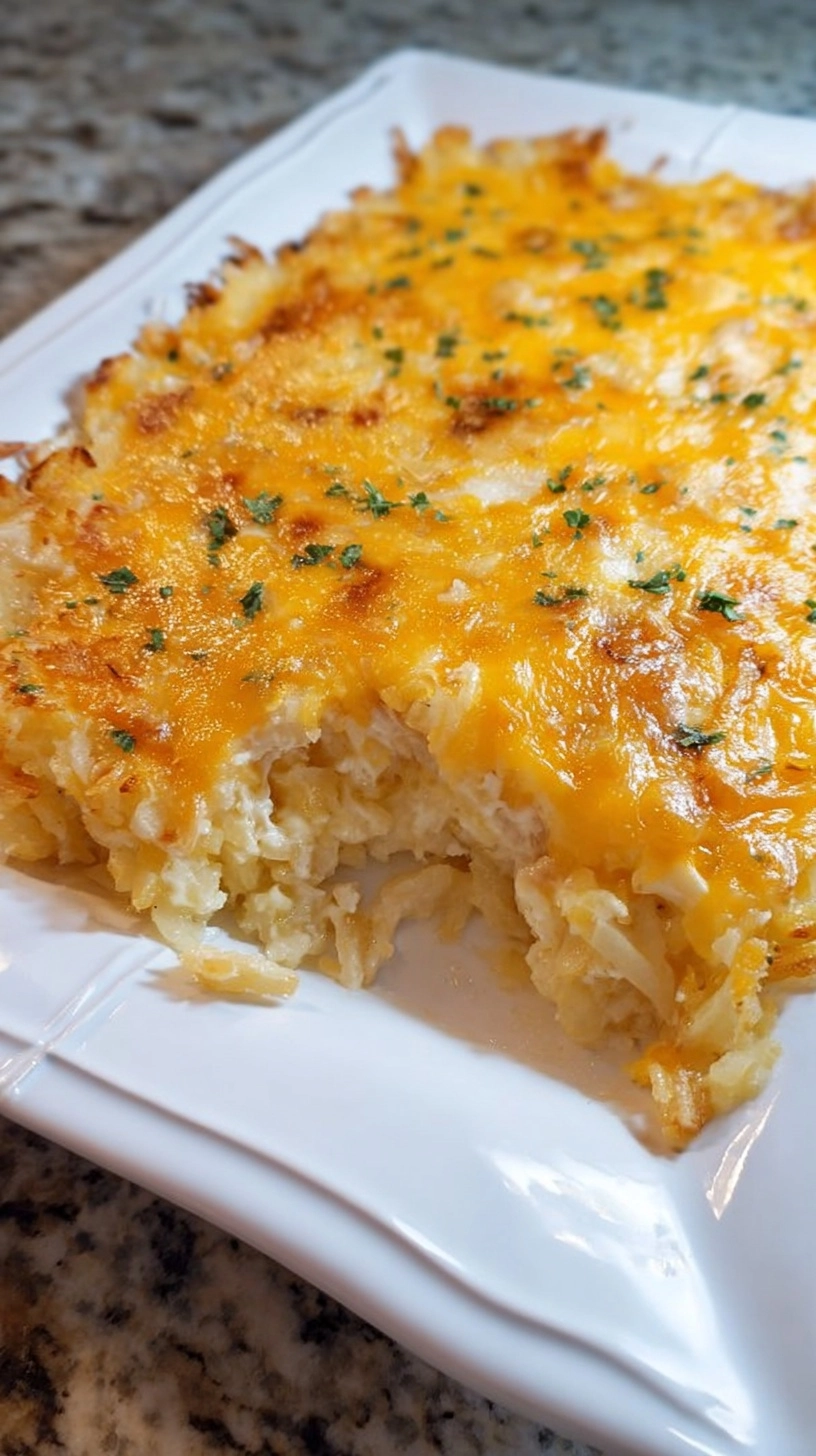
Combine crushed cornflakes with melted butter and remaining cheddar cheese. Sprinkle this mixture evenly across the top – this creates that Instagram-worthy golden crust that makes your cheesy hashbrown casserole irresistibly appealing.
Step 6: Bake to Perfection
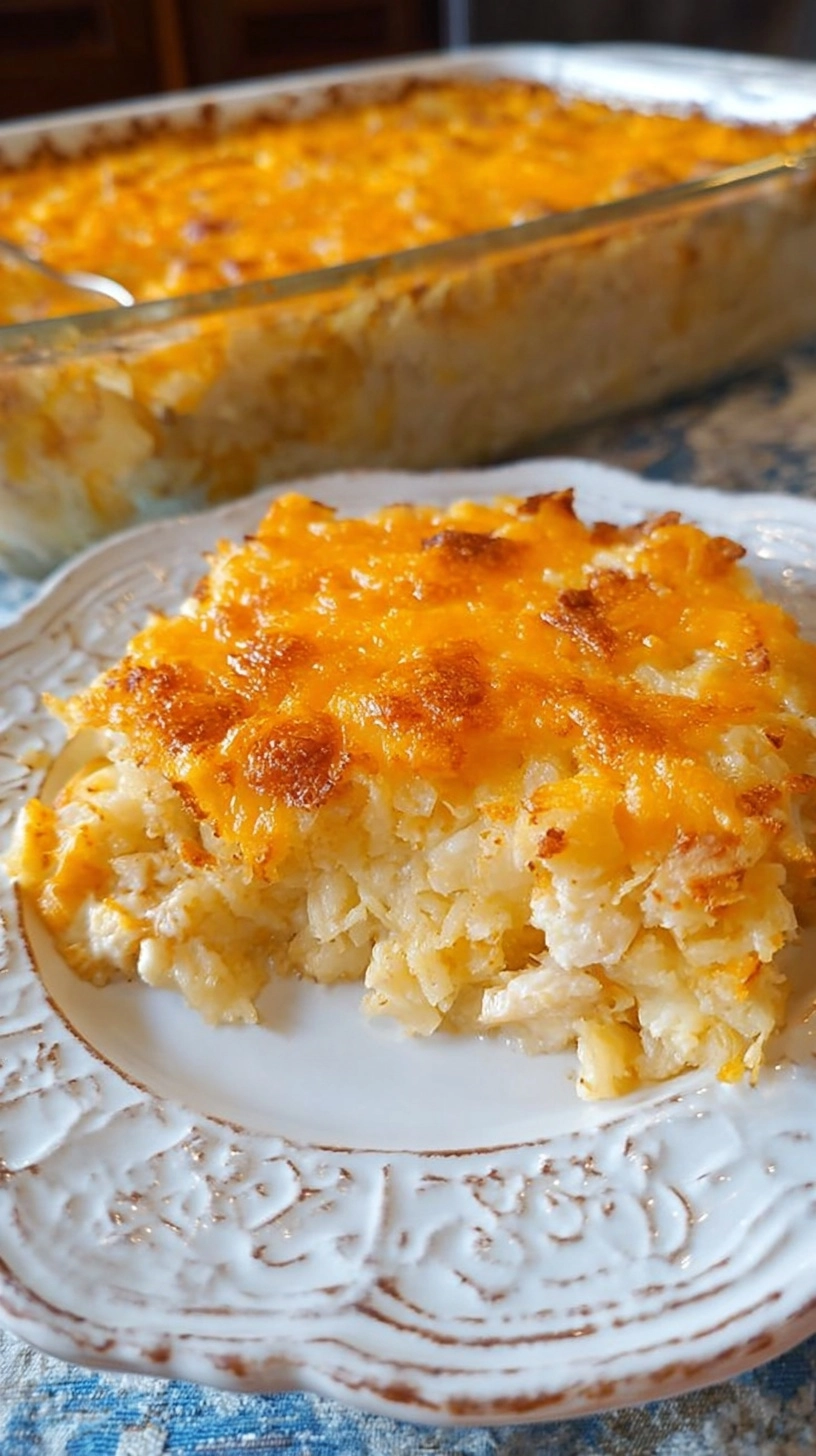
Bake uncovered for 45-55 minutes until the top is golden brown and the edges are bubbling. The center should be set when gently shaken. Let rest for 10 minutes before serving to allow the layers to settle and make cutting cleaner.
Nutritional Information
Per Serving (based on 12 servings):
- Calories: 285
- Protein: 12g
- Carbohydrates: 22g
- Fat: 18g
- Fiber: 2g
- Calcium: nearly some of dv
- Sodium: 580mg
This nutritional profile provides a significant portion of more protein than traditional potato side dishes while delivering essential calcium for bone health. The combination of multiple cheese varieties increases the amino acid profile, making this casserole more nutritionally complete than typical comfort foods.
Healthier Alternatives for the Recipe
Reduce Calories by a significant portion of : Substitute Greek yogurt for sour cream and use reduced-fat cream cheese. Replace half the regular cheese with part-skim mozzarella to maintain creaminess while cutting saturated fat.
Boost Nutrition: Add finely chopped cauliflower (1 cup) to the hash browns for extra vegetables and fiber. Sweet potato hash browns provide beta-carotene and additional vitamins while maintaining the beloved texture.
Dairy-Free Version: Use cashew cream instead of dairy cream cheese, nutritional yeast for cheesy flavor, and coconut milk-based alternatives. The result maintains most of the original taste while accommodating dietary restrictions.
Lower Sodium: Make homemade cream soup using low-sodium broth and flour-butter roux. This reduces sodium content by approximately a significant portion of while allowing complete control over ingredients.
Serving Suggestions
Transform your cheesy hashbrown casserole into the star of any meal by pairing it strategically. For brunches, serve alongside fresh fruit salad and turkey sausage links. The casserole’s richness balances beautifully with citrus fruits and lean proteins.
During dinner service, this casserole complements grilled chicken, roasted vegetables, or a crisp garden salad with vinaigrette dressing. The creamy, indulgent nature makes it perfect for balancing lighter main courses.
For holiday gatherings, cut into smaller squares and serve as an appetizer with dollops of chives and additional sour cream. This presentation elevates the humble casserole to elegant party fare.
Common Mistakes to Avoid
Moisture Management: The #1 error is skipping the hash brown drying step. Excess moisture creates a watery, unappetizing texture that no amount of cheese can salvage. Always press hash browns dry and let them sit at room temperature for 15 minutes.
Temperature Troubles: Adding cold ingredients directly from the refrigerator creates uneven cooking. Room temperature ingredients blend more easily and bake more uniformly.
Overmixing: Aggressive stirring develops gluten in the flour components, creating a tough, dense texture instead of the desired creamy consistency.
Inadequate Seasoning: Under-seasoning is common because people fear over-salting. Taste your mixture before baking and adjust seasonings – remember that flavors mellow during cooking.
Storing Tips for the Recipe
Refrigerator Storage: Cover tightly with plastic wrap or aluminum foil and refrigerate for up to 4 days. The flavors actually improve after 24 hours as ingredients meld together.
Freezer Friendly: Assemble completely but don’t bake. Wrap in plastic wrap, then aluminum foil, and freeze for up to 3 months. Thaw overnight in refrigerator before baking, adding 10-15 minutes to cooking time.
Reheating Excellence: Cover with foil and reheat at 300°F for 20-25 minutes. For individual portions, microwave on most of power in 30-second intervals to prevent overcooking.
Make-Ahead Strategy: Prepare everything except the cornflake topping up to 2 days ahead. Add the topping just before baking to maintain crispiness.
FAQs
Q: Can I use fresh potatoes instead of frozen hash browns?
A: Absolutely! Peel and shred 2 pounds of russet potatoes, then soak in cold water for 30 minutes to remove excess starch. Drain thoroughly and pat dry before using.
Q: Why is my casserole watery?
A: This typically results from inadequately drained hash browns or using low-fat dairy products that separate during cooking. Always drain hash browns thoroughly and use full-fat dairy for best results.
Q: Can I make this gluten-free?
A: Yes! Replace the cream of mushroom soup with a gluten-free version or make your own using gluten-free flour. Ensure your cornflakes are certified gluten-free.
Q: How do I know when it’s perfectly done?
A: The top should be golden brown, edges bubbling, and a knife inserted in the center should come out mostly clean with just a few moist crumbs.
Your cheesy hashbrown casserole mastery awaits – this foolproof method ensures restaurant-quality results that will become your signature dish for years to come.
Kitchen Mosaic Notes
Thanks for reading! Remember that nutritional values are approximate. For the best results, adapt this recipe to your specific dietary needs.