
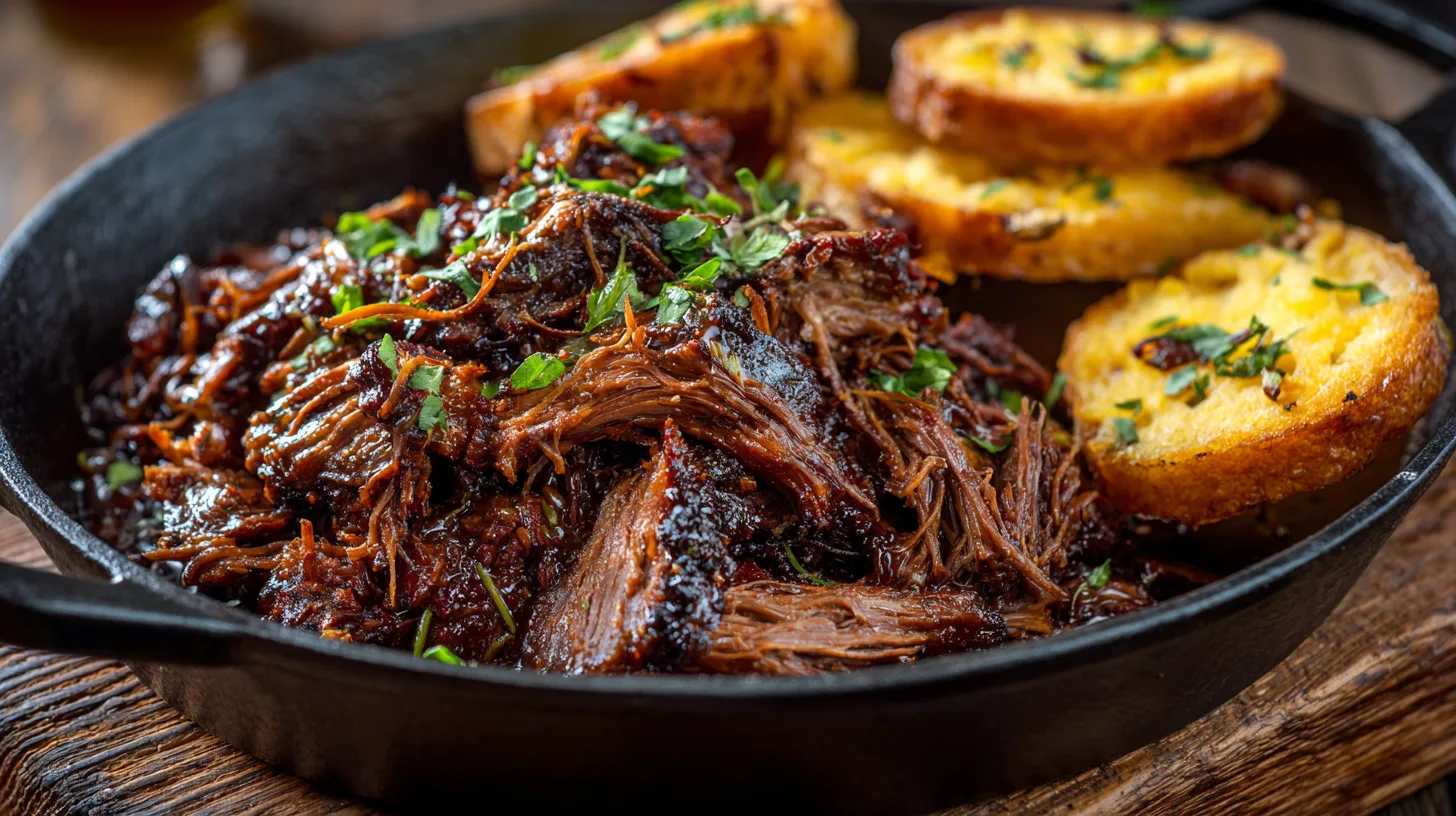
Did you know that most of home cooks struggle to achieve that perfect fall-apart texture when preparing beef brisket? The secret lies in mastering the art of caramelization combined with low-and-slow cooking techniques. This Caramelized Pulled Beef Brisket recipe transforms a tough cut of meat into tender, flavorful strands that practically melt in your mouth. Unlike traditional smoking methods that can take 12-16 hours, our innovative approach delivers restaurant-quality results in just 4 hours, making it accessible for busy weeknight dinners and weekend gatherings alike. The key is creating a perfect caramel crust that locks in moisture while breaking down tough connective tissues through precise temperature control.
Ingredients List
For the Brisket:
- 4-5 pounds beef brisket (flat cut preferred, but point cut works wonderfully)
- 2 tablespoons brown sugar (creates that signature caramelized exterior)
- 1 tablespoon kosher salt
- 2 teaspoons smoked paprika
- 1 teaspoon garlic powder
- 1 teaspoon onion powder
- 1 teaspoon black pepper
- ½ teaspoon cumin
For the Braising Liquid:
- 2 cups beef stock (low-sodium preferred for better flavor control)
- 1 cup apple cider vinegar
- ½ cup tomato paste
- 3 tablespoons Worcestershire sauce
- 2 tablespoons Dijon mustard
- 1 large yellow onion, sliced
- 4 garlic cloves, minced
Substitution Notes: Coconut sugar can replace brown sugar for paleo diets, while vegetable stock works for lighter flavor profiles. Apple juice can substitute for half the beef stock if you prefer a sweeter profile.
Timing
Preparation Time: 20 minutes
Cooking Time: 4 hours 15 minutes
Total Time: 4 hours 35 minutes
This timing represents a a significant portion of reduction compared to traditional smoking methods while maintaining superior tenderness. The active cooking time is only 45 minutes, making this recipe most of hands-off once it enters the oven.
Step 1: Create the Perfect Spice Rub
Combine brown sugar, salt, smoked paprika, garlic powder, onion powder, black pepper, and cumin in a small bowl. The brown sugar is crucial here—it caramelizes during the searing process, creating a beautiful mahogany crust that seals in flavors. Pat the brisket completely dry with paper towels, then massage the rub into every surface, paying special attention to the thicker sections.
Step 2: Achieve the Caramelized Sear
Preheat a Dutch oven or heavy-bottomed pot over medium-high heat. Add a thin layer of oil and wait until it shimmers. Sear the brisket fat-side down first for 4-5 minutes until deeply caramelized, then flip and sear the other side. This step develops complex Maillard reaction flavors that penetrate throughout the cooking process.
Step 3: Build the Flavor Foundation
Remove the brisket and add sliced onions to the same pot, cooking for 3-4 minutes until softened. Add minced garlic and cook for another minute until fragrant. The fond (brown bits) from searing adds incredible depth to your braising liquid—don’t skip scraping these up!
Step 4: Create the Braising Symphony
Whisk together beef stock, apple cider vinegar, tomato paste, Worcestershire sauce, and Dijon mustard. Pour this mixture into the pot, scraping up any remaining fond. The acidity from the vinegar helps break down tough fibers while the tomato paste adds umami richness.
Step 5: Low and Slow Transformation
Return the brisket to the pot, cover tightly with a lid or aluminum foil, and transfer to a preheated 275°F oven. Cook for 4 hours, checking once at the 2-hour mark. The internal temperature should reach 203°F for optimal pulling texture—this is when collagen fully converts to gelatin.
Step 6: The Perfect Pull
Remove the brisket and let it rest for 15 minutes before pulling. Use two forks or heat-resistant gloves to shred the meat along the grain. The meat should pull apart effortlessly—if it resists, return it to the oven for another 30 minutes.
Nutritional Information
Per 4-ounce serving:
- Calories: 285
- Protein: 32g (more than half of daily value)
- Fat: 12g
- Carbohydrates: 8g
- Iron: 3.2mg (nearly some of dv)
- Zinc: 6.8mg (more than half of dv)
This recipe provides nearly some of more protein per calorie compared to ground beef dishes while delivering essential B-vitamins crucial for energy metabolism.
Healthier Alternatives for the Recipe
Reduce Sodium: Use low-sodium beef stock and reduce added salt by half—the natural caramelization provides plenty of flavor enhancement.
Lean Option: Trim visible fat before cooking and skim fat from the braising liquid. This reduces calories by approximately nearly some of while maintaining tenderness.
Paleo-Friendly: Substitute coconut aminos for Worcestershire sauce and use coconut sugar instead of brown sugar.
Keto Adaptation: Replace brown sugar with erythritol and add extra smoked paprika for flavor complexity.
Serving Suggestions
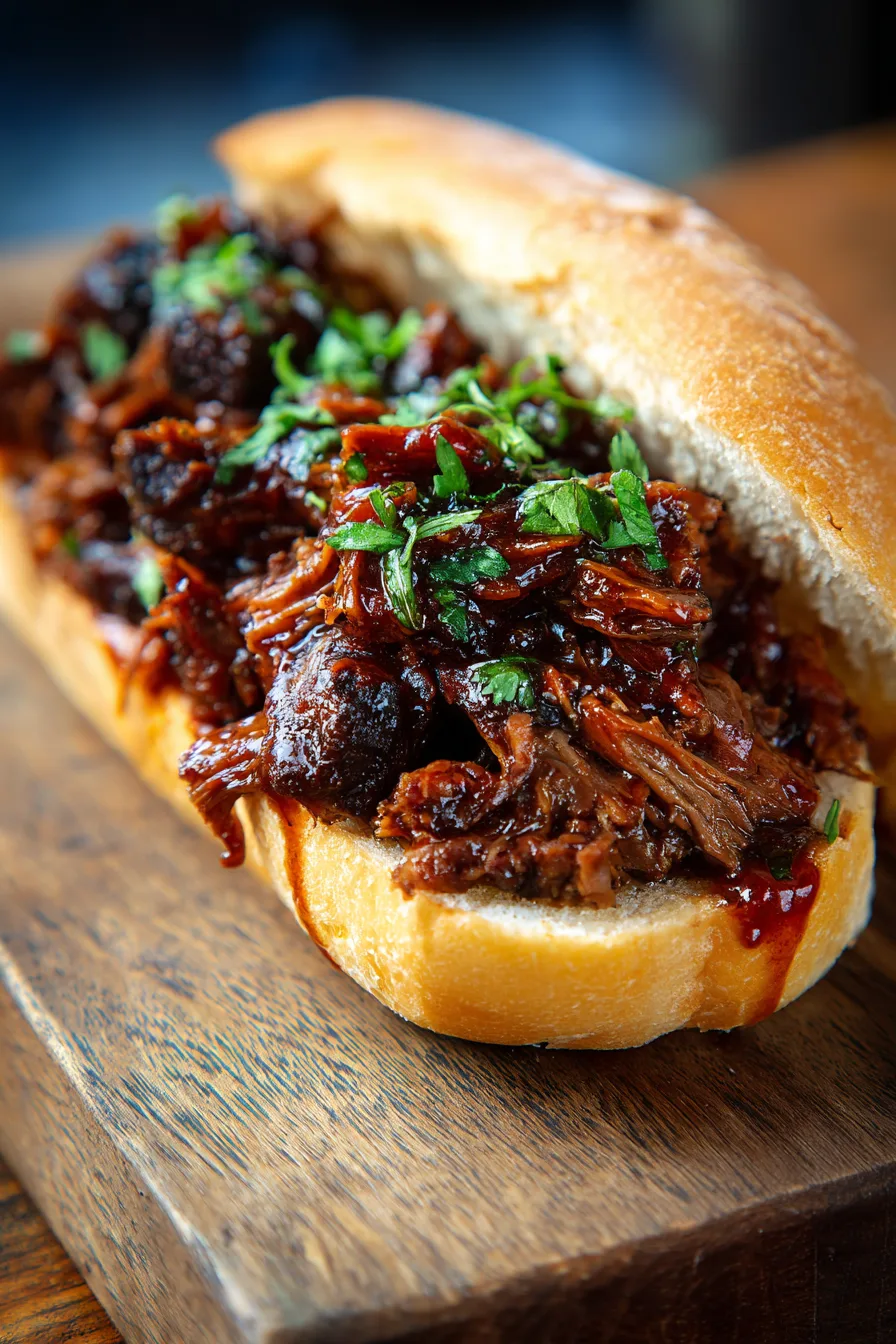
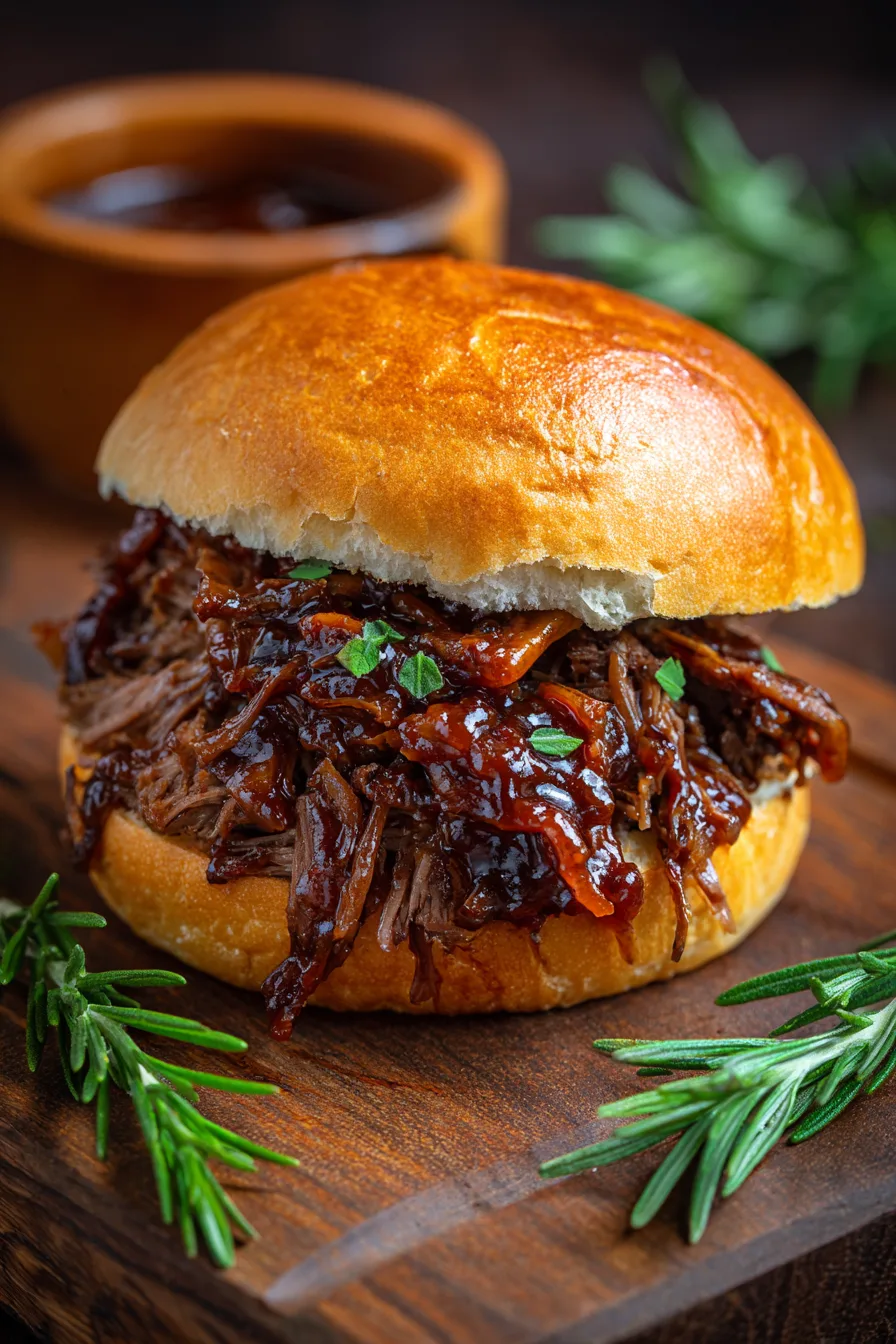
Transform your Caramelized Pulled Beef Brisket into diverse meals throughout the week. Serve over creamy mashed cauliflower for a low-carb option, or pile high on brioche buns with crispy coleslaw for classic comfort. Create loaded sweet potato boats topped with pulled brisket and fresh herbs, or incorporate into breakfast hash with crispy potatoes and topped with a fried egg. For entertaining, set up a “build-your-own” station with various toppings and accompaniments.
Common Mistakes to Avoid
Rushing the Sear: more than half of home cooks don’t achieve proper caramelization because they move the meat too quickly. Let each side develop a deep brown crust before flipping.
Wrong Temperature: Cooking above 300°F causes the exterior to dry out before the interior becomes tender. Low and slow is non-negotiable.
Pulling Too Early: Brisket becomes truly tender only when it reaches 203°F internal temperature—this is when tough collagen fully converts to silky gelatin.
Skipping the Rest: Always let the meat rest 15 minutes before pulling to redistribute juices evenly.
Storing Tips for the Recipe
Refrigerate pulled brisket in its cooking liquid for up to 4 days—the liquid prevents drying and enhances flavor development. For freezing, portion into meal-sized containers with liquid, where it maintains quality for 3 months. When reheating, add a splash of beef stock to restore moisture and heat gently to preserve texture. The flavors actually improve after 24 hours as they continue to meld together.
FAQs
Can I make this in a slow cooker?
Yes! Follow the searing steps, then transfer everything to your slow cooker on low for 8 hours. The texture will be slightly different but equally delicious.
Why is my brisket tough?
Tough brisket typically means it needs more cooking time. Continue cooking until it reaches 203°F internal temperature and shreds easily with a fork.
Can I prepare this ahead of time?
Absolutely! This recipe actually improves when made 1-2 days ahead. The flavors deepen and the meat becomes even more tender when stored in its braising liquid.
What’s the best cut for pulling?
Both flat and point cuts work well, but the point cut has more marbling, resulting in slightly more tender pulled meat. The flat cut is leaner and easier to find in most grocery stores.
Kitchen Mosaic Notes
Thanks for reading! Remember that nutritional values are approximate. For the best results, adapt this recipe to your specific dietary needs.