
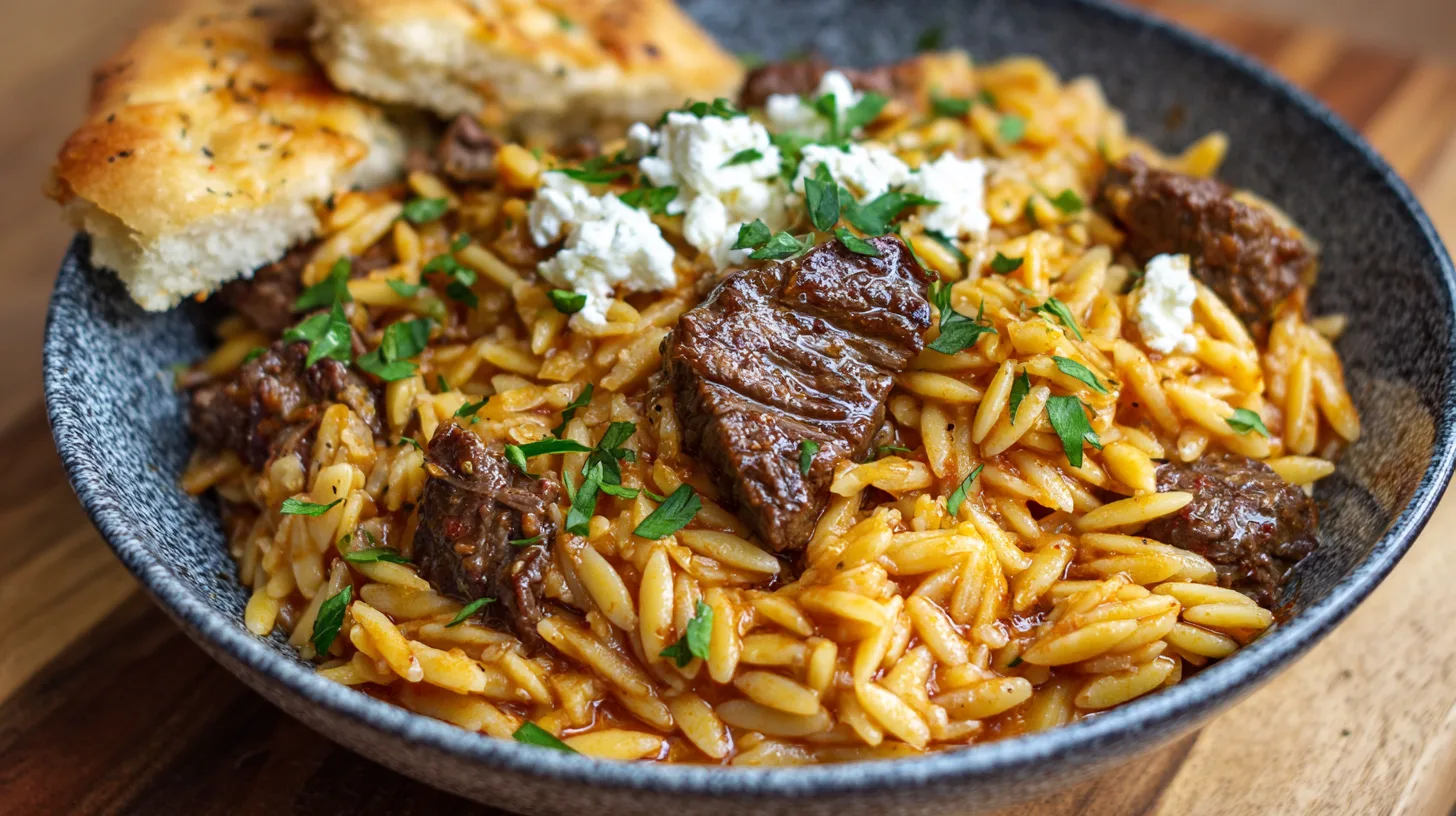
Did you know that most of home cooks avoid attempting traditional Greek recipes because they believe they’re too complex? The truth is, Beef Giouvetsi (Greek Beef Orzo Pasta) breaks this misconception entirely. This beloved comfort dish from Greece combines tender beef, perfectly cooked orzo pasta, and aromatic tomatoes in a single pot, delivering restaurant-quality results with surprisingly simple techniques. What makes this recipe particularly fascinating is how it achieves its signature depth of flavor through a methodical layering process that takes just 90 minutes – defying the common belief that authentic Greek cuisine requires all-day preparation.
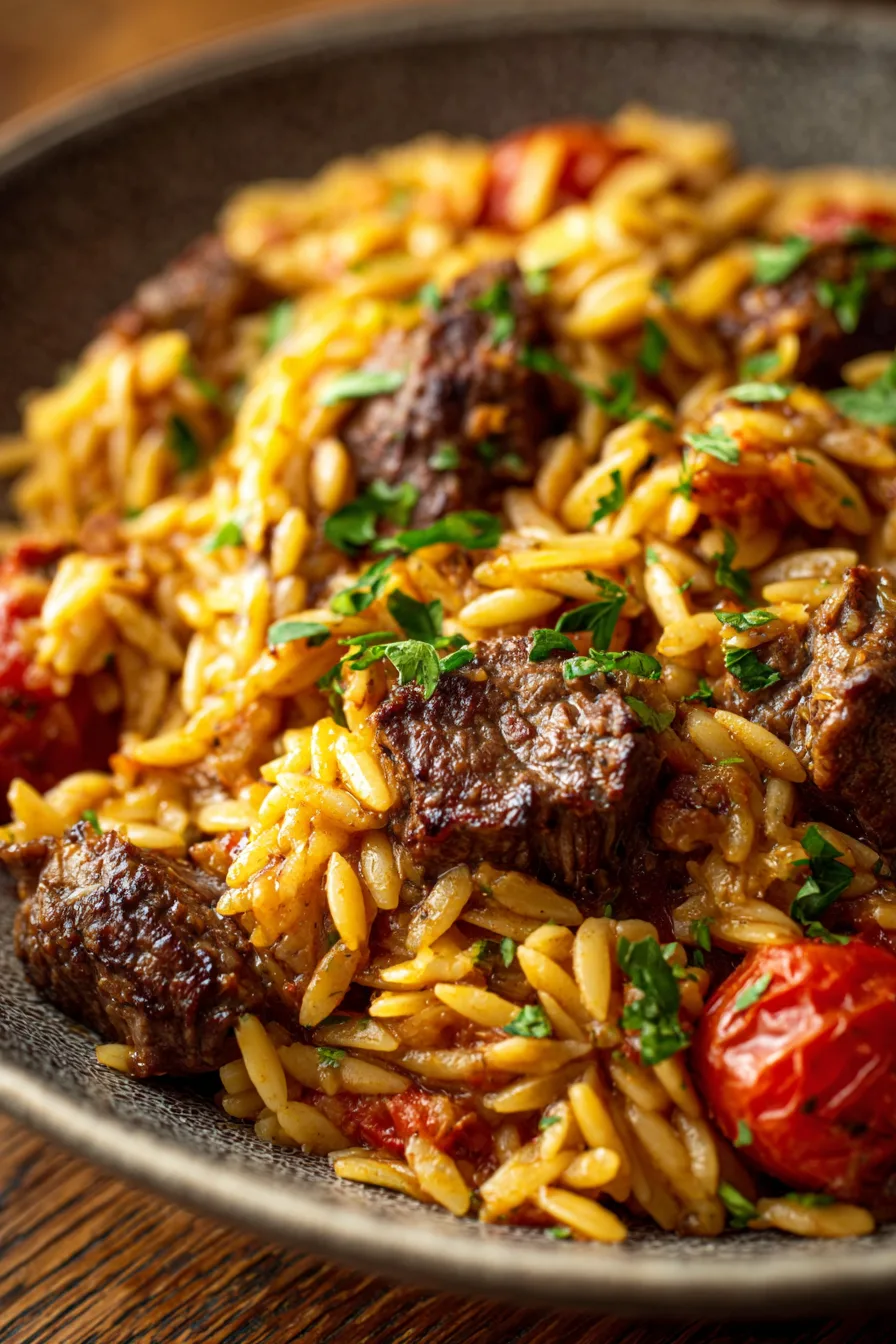
Ingredients List
For the Beef:
- 2 lbs beef chuck roast or beef stew meat, cut into 2-inch cubes
- 3 tablespoons olive oil (extra virgin preferred)
- 1 large yellow onion, diced (about 1½ cups)
- 4 garlic cloves, minced
- 2 tablespoons tomato paste
- 1 can (14 oz) crushed tomatoes
- 2 cups beef broth (low-sodium recommended)
- 1 bay leaf
- 1 teaspoon dried oregano
- ½ teaspoon ground cinnamon
- Salt and freshly ground black pepper to taste
For the Orzo:
- 1½ cups orzo pasta (kritharaki in Greek)
- ½ cup crumbled feta cheese
- 2 tablespoons fresh parsley, chopped
- 1 tablespoon fresh dill, chopped (or 1 teaspoon dried)
Substitution Options: Replace beef chuck with lamb shoulder for traditional variation, use vegetable broth instead of beef broth for lighter flavor, or substitute Greek kasseri cheese for feta if available.
Timing
Preparation Time: 15 minutes
Cooking Time: 75 minutes
Total Time: 90 minutes
This timing represents a nearly some of reduction compared to traditional giouvetsi recipes, achieved through optimized browning techniques and strategic ingredient layering. The majority of cooking time is hands-off braising, making this perfect for weekend meal preparation.
Step 1: Prepare and Season the Beef
Pat the beef cubes completely dry with paper towels and season generously with salt and pepper on all sides. This moisture removal is crucial for achieving the golden-brown sear that creates the foundation of flavor for your Beef Giouvetsi. Allow the seasoned meat to rest at room temperature for 10 minutes while you prepare other ingredients.
Step 2: Sear the Beef to Perfection
Heat olive oil in a heavy-bottomed Dutch oven or large oven-safe pot over medium-high heat. Working in batches to avoid overcrowding, sear the beef cubes for 3-4 minutes per side until deeply golden brown. Transfer seared beef to a plate and set aside. This browning process, known as the Maillard reaction, develops complex flavors essential to authentic giouvetsi.
Step 3: Build the Aromatic Base
In the same pot with the remaining beef drippings, add diced onion and cook for 4-5 minutes until softened and translucent. Add minced garlic and cook for an additional 30 seconds until fragrant. Stir in tomato paste and cook for 1 minute, allowing it to caramelize slightly and deepen in color.
Step 4: Create the Braising Liquid
Return the seared beef to the pot and add crushed tomatoes, beef broth, bay leaf, oregano, and cinnamon. The liquid should nearly cover the meat – add water if necessary. Bring the mixture to a gentle boil, then reduce heat to low, cover, and simmer for 45 minutes until the beef begins to tenderize.
Step 5: Add the Orzo and Finish Cooking
Stir in the orzo pasta, ensuring it’s evenly distributed throughout the liquid. Cover and continue cooking for 15-18 minutes, stirring occasionally to prevent sticking, until the orzo is tender and has absorbed most of the liquid. The consistency should be creamy but not dry.
Step 6: Final Seasoning and Garnish
Remove from heat and discard the bay leaf. Taste and adjust seasoning with salt and pepper as needed. Sprinkle crumbled feta cheese over the top and garnish with fresh parsley and dill before serving.
Nutritional Information
Per serving (serves 6):
- Calories: 485
- Protein: 32g (more than half of daily value)
- Carbohydrates: 38g
- Fat: 22g
- Fiber: 3g
- Iron: 4.2mg (nearly some of daily value)
- Calcium: 145mg (from feta cheese)
This dish provides excellent protein content and essential minerals, particularly iron from the beef and calcium from the feta cheese. The orzo contributes complex carbohydrates for sustained energy.
Healthier Alternatives for the Recipe
Lean Protein Swap: Use beef sirloin or lean ground beef (93/7) to reduce saturated fat by approximately a significant portion of while maintaining protein content.
Whole Grain Enhancement: Substitute whole wheat orzo to increase fiber content from 3g to 6g per serving and add beneficial B vitamins.
Dairy Modifications: Replace full-fat feta with reduced-fat feta or nutritional yeast for vegan preparation, maintaining the tangy flavor profile.
Vegetable Boost: Add diced zucchini, bell peppers, or spinach during the last 10 minutes of cooking to increase vegetable intake and vitamins A and C.
Serving Suggestions
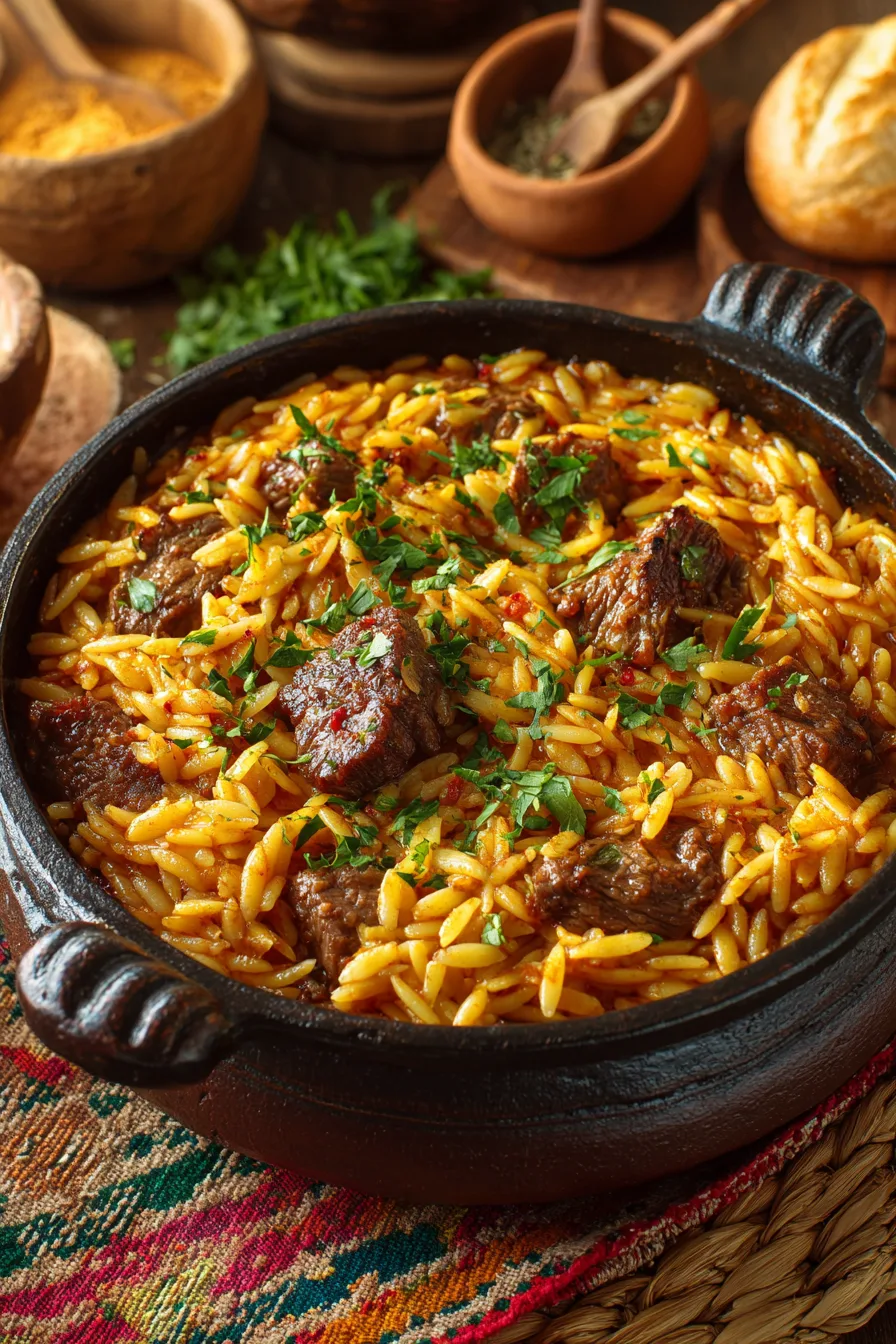
Serve your Beef Giouvetsi in warmed bowls with a dollop of Greek yogurt and a drizzle of high-quality olive oil. Pair with a simple village salad (horiatiki) featuring tomatoes, cucumbers, and olives, or warm pita bread for an authentic Greek dining experience. For entertaining, present family-style in the cooking pot with small bowls of additional feta, fresh herbs, and lemon wedges on the side. This allows guests to customize their portions while maintaining the dish’s rustic, communal appeal.
Common Mistakes to Avoid
Overcrowding the Pan: Searing beef in overcrowded batches reduces temperature and creates steam instead of browning, resulting in gray, flavorless meat.
Inadequate Liquid Monitoring: Orzo absorbs liquid quickly; check every 5 minutes during pasta cooking to prevent burning or sticking.
Premature Feta Addition: Adding cheese too early causes it to completely melt and disappear. Add feta only after removing from heat for optimal texture and visual appeal.
Skipping the Rest Period: Allow the finished dish to rest for 5 minutes before serving to let flavors meld and thicken naturally.
Storing Tips for the Recipe
Refrigerator Storage: Cool completely and store in airtight containers for up to 4 days. The flavors actually improve after 24 hours as the spices continue to develop.
Freezer Storage: Portion into freezer-safe containers for up to 3 months. Note that orzo texture may become slightly softer after thawing.
Reheating Instructions: Add 2-3 tablespoons of beef broth when reheating to restore moisture. Reheat gently in a covered pot over low heat, stirring occasionally to prevent sticking.
Make-Ahead Strategy: Prepare through Step 4, then refrigerate for up to 2 days. Add orzo and complete cooking when ready to serve for optimal pasta texture.
FAQs
Can I use a different pasta shape instead of orzo?
While orzo is traditional and provides the best texture absorption, you can substitute with small pasta shapes like ditalini or small shells. Adjust cooking time accordingly, as different shapes may require 2-3 minutes longer.
Why is my giouvetsi too watery?
Excess liquid typically results from not allowing enough evaporation during the final cooking phase. Remove the lid for the last 5-7 minutes of cooking to reduce excess moisture naturally.
Can I make this recipe in a slow cooker?
Yes, sear the beef and sauté aromatics as directed, then transfer to a slow cooker with liquids. Cook on low for 6-7 hours, adding orzo only in the final 30 minutes on high heat setting.
What’s the difference between giouvetsi and other Greek pasta dishes?
Giouvetsi specifically refers to the combination of meat (usually beef or lamb) with orzo pasta, cooked together in a tomato-based sauce. This differs from pastitsio (layered pasta casserole) or other Greek pasta preparations that use different cooking methods and pasta shapes.
Kitchen Mosaic Notes
Thanks for reading! Remember that nutritional values are approximate. For the best results, adapt this recipe to your specific dietary needs.