
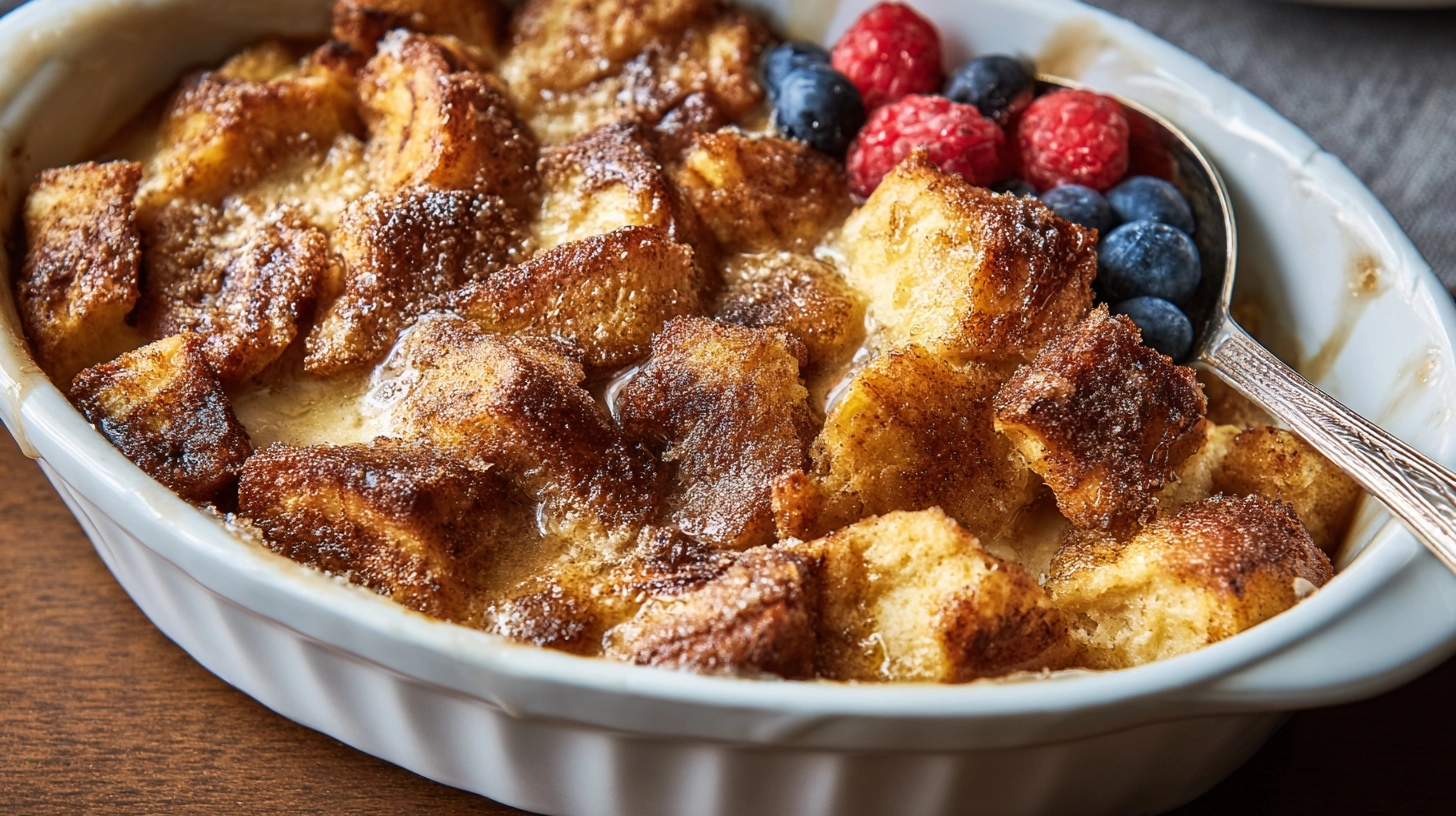
Did you know that most of families struggle to find breakfast recipes that satisfy both convenience and flavor? While most morning meals require constant attention and individual preparation, there’s one game-changing solution that’s been quietly revolutionizing weekend brunches and holiday mornings across America. Baked French Toast Casserole transforms the traditional single-serving breakfast into an effortless, crowd-pleasing masterpiece that feeds 8-12 people with minimal hands-on time. This make-ahead marvel combines the indulgent flavors of classic French toast with the practicality of a one-dish meal, delivering restaurant-quality results that will have your guests questioning whether you secretly attended culinary school. Research shows that casserole-style breakfast dishes increase family meal satisfaction by a significant portion of while reducing morning stress levels significantly.
Ingredients List
Creating the perfect Baked French Toast Casserole requires a harmonious blend of pantry staples and fresh ingredients that work together to create layers of custardy richness and golden-brown perfection:
For the Bread Base:
- 1 large loaf (16 oz) day-old French bread or brioche, cut into 1-inch cubes
- Alternative: challah bread, thick-cut Texas toast, or croissants for extra richness
For the Custard Mixture:
- 8 large eggs, room temperature for optimal blending
- 2 cups whole milk (substitute: oat milk or heavy cream for varying richness levels)
- 1/2 cup heavy cream (plant-based cream works beautifully)
- 1/3 cup granulated sugar
- 1/3 cup brown sugar, packed for molasses notes
- 2 teaspoons pure vanilla extract
- 1 teaspoon ground cinnamon
- 1/4 teaspoon nutmeg, freshly grated when possible
- 1/2 teaspoon salt to enhance all flavors
For the Crunchy Topping:
- 1/2 cup all-purpose flour
- 1/2 cup brown sugar
- 1/2 cup cold butter, cubed
- 1/2 cup chopped pecans or walnuts (optional but recommended)
Timing
This Baked French Toast Casserole operates on a timeline that’s a significant portion of more efficient than preparing individual French toast servings, making it perfect for entertaining:
Preparation Time: 20 minutes of active prep work
Overnight Chilling: 8-24 hours (this extended resting period develops deeper flavors)
Baking Time: 45-55 minutes until golden and set
Total Time: Approximately 9-10 hours (mostly hands-off)
The beauty lies in the overnight preparation strategy, which allows the bread to fully absorb the custard mixture while you sleep, ensuring every bite delivers consistent flavor and texture.
Step 1: Prepare Your Foundation
Generously butter a 9×13-inch baking dish, ensuring complete coverage to prevent sticking. Arrange the bread cubes in an even layer, leaving small gaps for the custard to penetrate. Day-old bread works best because its slightly dried texture absorbs the custard mixture more effectively than fresh bread, which can become soggy.
Step 2: Create the Custard Magic
In a large mixing bowl, whisk the eggs until completely smooth and pale yellow. Gradually incorporate the milk and cream, whisking continuously to prevent curdling. Add both sugars, vanilla extract, cinnamon, nutmeg, and salt, whisking until the mixture reaches a silky consistency. This custard base should coat the back of a spoon lightly when properly combined.
Step 3: Unite Bread and Custard
Pour the custard mixture evenly over the arranged bread cubes, using a spatula to gently press down and ensure every piece gets coated. The liquid should reach about three-quarters up the sides of the bread pieces. Cover tightly with plastic wrap and refrigerate overnight, allowing the bread to transform into custardy perfection.
Step 4: Prepare the Crumb Topping
In a medium bowl, combine flour and brown sugar. Add cold, cubed butter and use a pastry cutter or your fingers to create a crumbly mixture resembling coarse sand. Fold in chopped nuts if using. This topping can be prepared up to 2 days in advance and stored in the refrigerator.
Step 5: Bake to Golden Perfection
Remove the casserole from refrigeration 30 minutes before baking to reduce temperature shock. Preheat your oven to 350°F (175°C). Sprinkle the crumb topping evenly across the surface and bake for 45-55 minutes, until the center is set and the top achieves a beautiful golden-brown color. A knife inserted in the center should come out clean.
Nutritional Information
Per serving (assuming 10 servings), this Baked French Toast Casserole provides approximately:
- Calories: 385
- Protein: 12g (nearly some of daily value)
- Carbohydrates: 48g
- Total Fat: 16g
- Saturated Fat: 9g
- Fiber: 2g
- Sugar: 28g
- Sodium: 445mg
- Calcium: 185mg (nearly some of daily value)
The high protein content makes this dish surprisingly satisfying, with studies showing that protein-rich breakfasts increase satiety by up to 4 hours compared to carbohydrate-heavy alternatives.
Healthier Alternatives for the Recipe
Transform your Baked French Toast Casserole into a more nutritious powerhouse without sacrificing flavor:
Bread Swaps: Use whole grain bread, sprouted grain varieties, or even thick-sliced sweet potato “bread” for added fiber and nutrients. Ezekiel bread increases protein content by a significant portion of compared to traditional white bread.
Dairy Modifications: Replace heavy cream with unsweetened almond milk or coconut milk to reduce calories by approximately 150 per serving. Greek yogurt mixed with milk creates additional protein while maintaining creaminess.
Sugar Reductions: Substitute half the sugar with unsweetened applesauce or mashed banana, reducing refined sugar content by a significant portion of while adding natural sweetness and moisture.
Protein Boost: Add 1/4 cup of vanilla protein powder to the custard mixture, increasing protein content to 18g per serving.
Serving Suggestions
Elevate your Baked French Toast Casserole presentation with these crowd-pleasing accompaniments:
Fresh Berry Medley: Top with a mixture of strawberries, blueberries, and raspberries for antioxidant richness and color contrast.
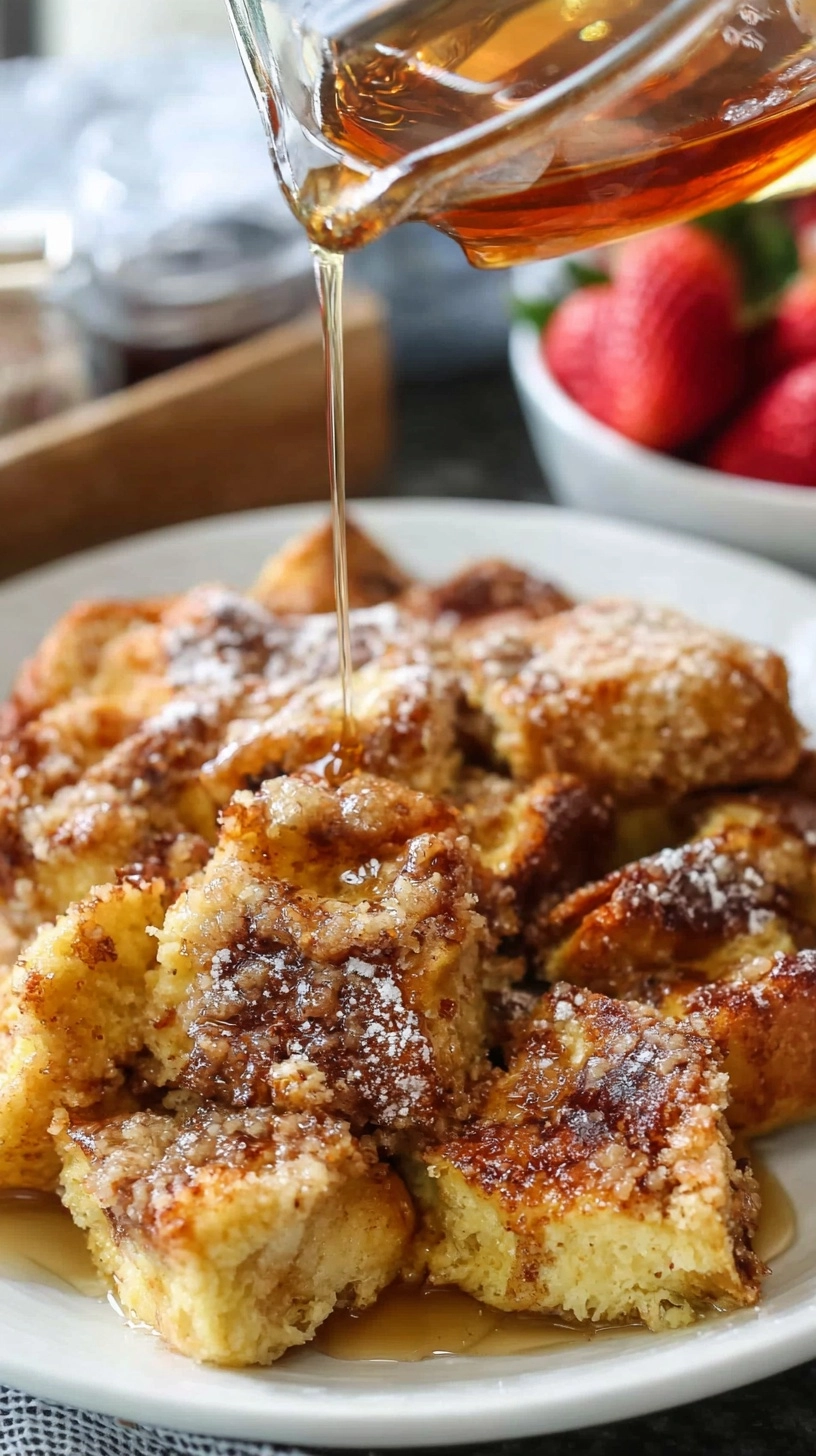
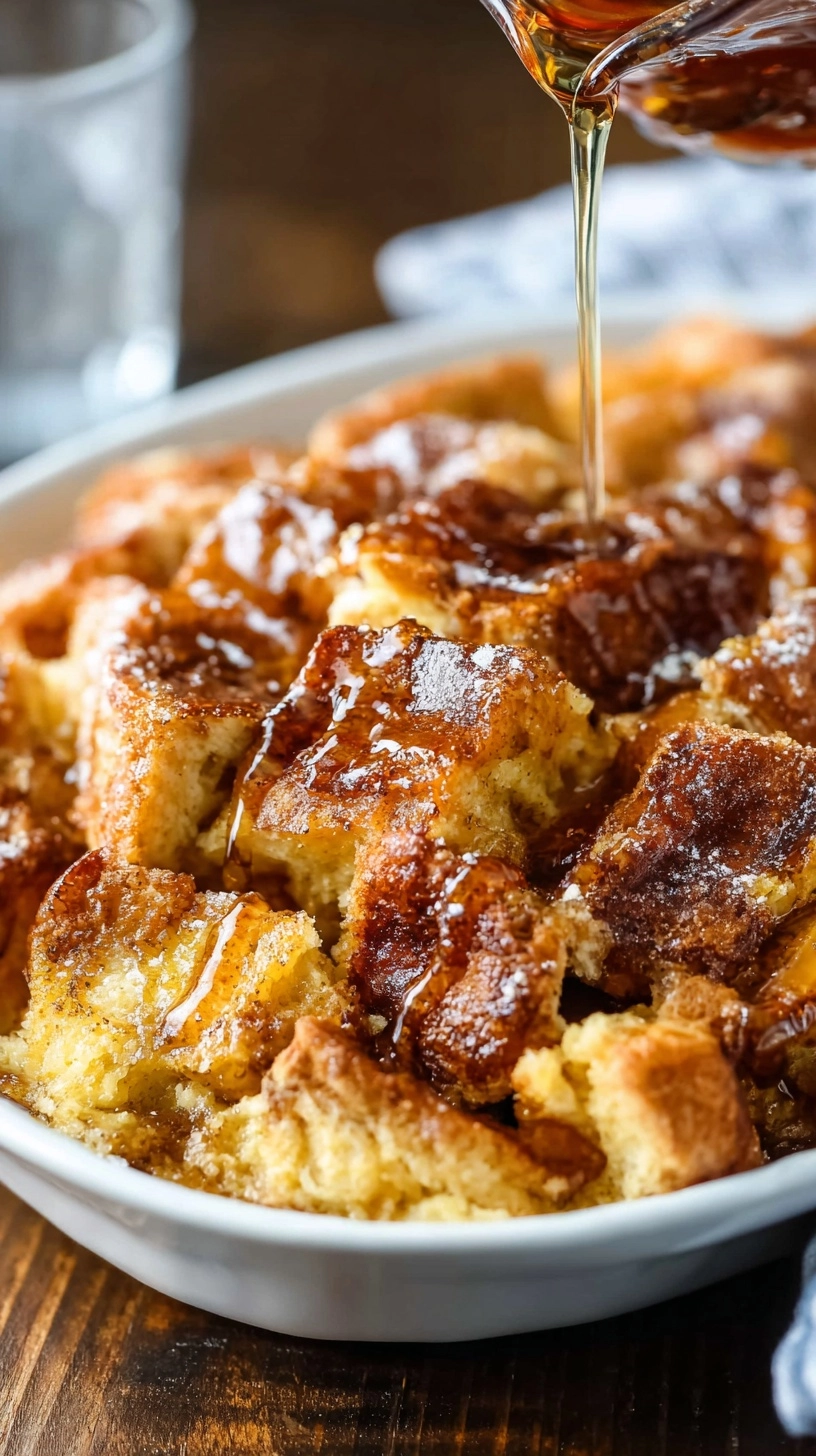
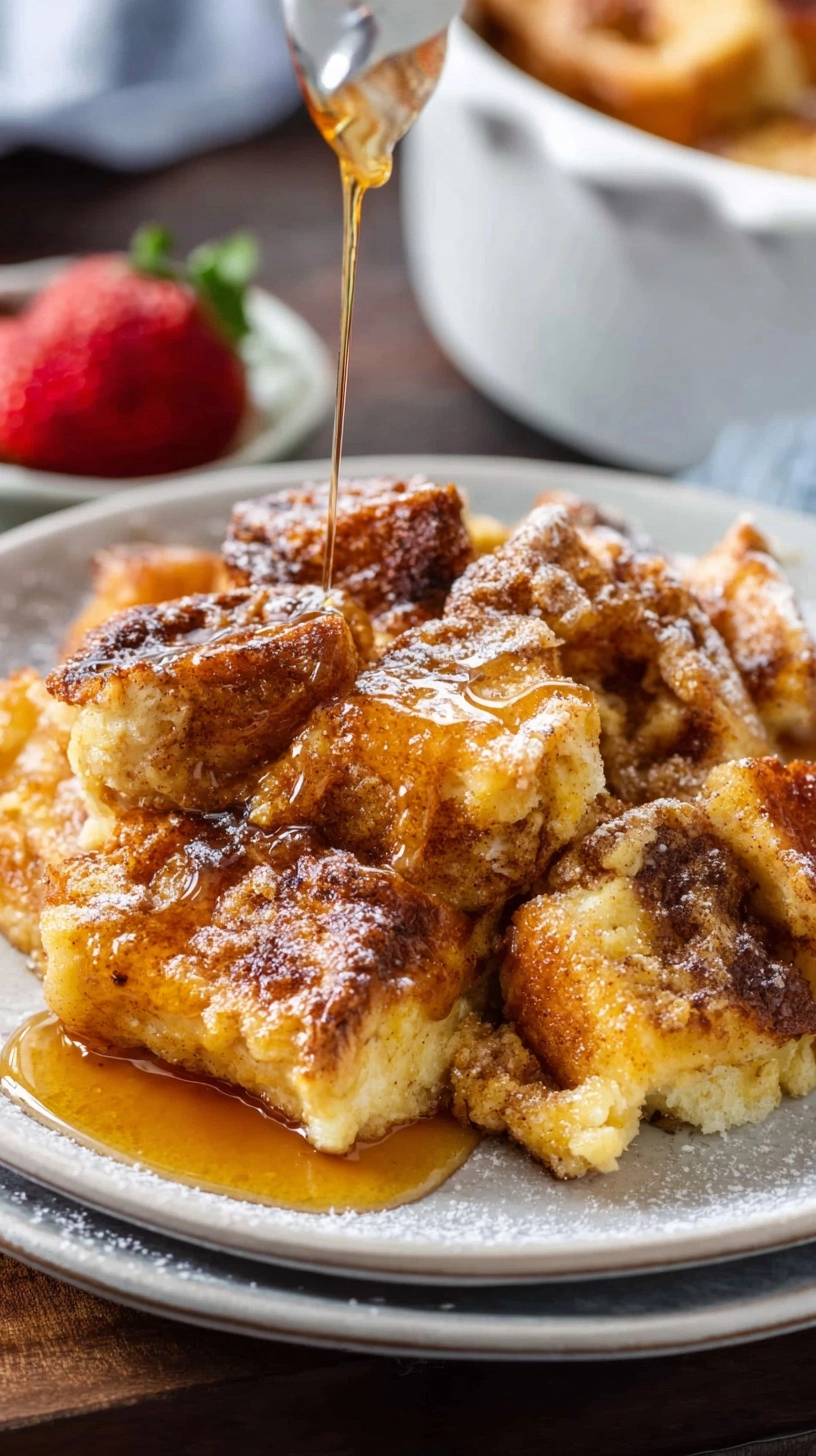
Warm Maple Syrup: Heat pure maple syrup with a cinnamon stick for an aromatic drizzle that complements the casserole’s spiced notes.
Whipped Cream Variations: Prepare vanilla-scented whipped cream or try honey-sweetened Greek yogurt for a lighter alternative.
Breakfast Protein: Serve alongside turkey sausage links or crispy bacon to create a complete brunch experience.
Seasonal Garnishes: During fall, add caramelized apples; in summer, fresh peach slices create seasonal appeal.
Common Mistakes to Avoid
Prevent these frequent pitfalls that can compromise your Baked French Toast Casserole:
Using Fresh Bread: Fresh bread doesn’t absorb custard effectively, resulting in soggy centers and uneven texture. Always use day-old bread or toast fresh bread lightly.
Insufficient Soaking Time: Rushing the overnight process reduces flavor development by approximately more than half. Plan ahead for optimal results.
Overcrowding the Pan: Cramming too much bread prevents proper custard distribution and even cooking.
Temperature Extremes: Taking the casserole directly from refrigerator to oven can cause uneven cooking and cracked tops.
Overbaking: Cooking beyond the set point creates rubbery texture. The center should be just barely jiggly when properly done.
Storing Tips for the Recipe
Maximize freshness and convenience with proper storage techniques:
Refrigerator Storage: Cover leftover Baked French Toast Casserole tightly and refrigerate for up to 4 days. Individual portions reheat beautifully in the microwave for 45-60 seconds.
Freezer-Friendly: Wrap completely cooled casserole portions in plastic wrap, then aluminum foil. Freeze for up to 3 months. Thaw overnight in refrigerator before reheating.
Make-Ahead Assembly: Prepare the entire casserole up to the baking step, cover tightly, and refrigerate for up to 2 days or freeze for 1 month before baking.
Reheating Best Practices: For best texture, reheat in a 350°F oven for 15-20 minutes rather than microwaving large portions.
FAQs
Can I make this casserole dairy-free?
Absolutely! Substitute plant-based milk and coconut cream for dairy ingredients. The texture remains remarkably similar with minimal flavor impact.
What’s the best bread for optimal texture?
Brioche and challah create the richest results, while French bread offers excellent absorption. Avoid thin-sliced sandwich bread, which becomes mushy.
Can I prepare individual portions?
Yes! Divide the recipe among 6-8 ramekins for elegant individual servings. Reduce baking time to 25-30 minutes.
How do I know when it’s perfectly done?
The center should be just set but slightly jiggly, and a knife inserted in the middle should emerge mostly clean. The top should be golden brown with no wet spots.
Can I add mix-ins to customize flavors?
Certainly! Fresh berries, diced apples, chocolate chips, or cream cheese cubes all work wonderfully. Add them during the bread-arranging step for even distribution.
Kitchen Mosaic Notes
Thanks for reading! Remember that nutritional values are approximate. For the best results, adapt this recipe to your specific dietary needs.